Ramaswamy Vows to Cut Red Tape, Boost Ohio Wallets
Synopsis
Entrepreneur and former DOGE co-lead Vivek Ramaswamy posted on X pledging to cut red tape, crush fraud and waste, and deliver direct financial relief to Ohioans, extending his federal efficiency agenda to a state-level political platform.
Key Takeaways
Ramaswamy posted on 25 July 2026 vowing to cut red tape and eliminate fraud and waste for Ohio residents.
He framed opposition to bureaucracy as a pro-people stance, linking deregulation directly to household savings.
Ramaswamy previously co-led the Department of Government Efficiency (DOGE) advisory effort alongside Elon Musk , launched in late 2024 .
The post signals a shift from his federal reform role toward a state-focused political and policy identity in Ohio .
US conservative deregulatory drives dating back to the Reagan era form the policy lineage behind this rhetoric.
Specific legislative proposals or budget measures tied to the pledge are yet to be announced.
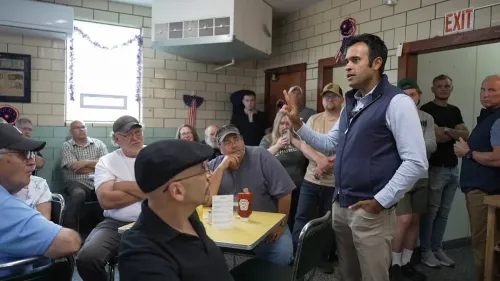
Entrepreneur and former DOGE co-lead Vivek Ramaswamy declared on Friday, 25 July 2026 that he would fight bureaucracy to deliver direct economic relief to Ohio residents, framing government efficiency as a populist cause in a post on X.
Context
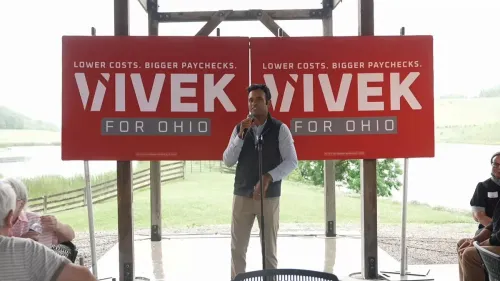
Ramaswamy wrote: 'An opponent of bureaucracy is a proponent of the people. We're going to cut red tape, crush fraud and waste, and put more money in the pockets of hard-working, law-abiding Ohioans.' The statement positions deregulation not as an abstract fiscal goal but as a direct benefit to working-class residents of his home state. It signals that Ramaswamy is actively translating his federal reform experience into a state-level political identity.
Ohio has been central to Ramaswamy's political biography. Born and raised in Cincinnati, he has consistently cited the state's working families as the constituency he most seeks to represent, and the post reinforces that connection ahead of what political observers expect to be a busy legislative cycle.
Policy Backdrop
Ramaswamy co-led the Department of Government Efficiency (DOGE) advisory effort alongside Elon Musk after its launch in late 2024 by then President-elect Donald Trump. The initiative was designed to identify and eliminate waste, duplication, and regulatory excess across the federal government. Ramaswamy has since stepped back from that federal role but has continued to champion its core principles.
The rhetoric of bureaucracy reduction as economic relief has deep roots in US conservative policy. From the Reagan-era deregulatory drive to the 2017-2021 regulatory rollback agenda, successive Republican administrations have framed red-tape cuts as a mechanism for putting money back in citizens' pockets. Ramaswamy's post fits squarely within that tradition while giving it an explicitly Ohio-focused flavour.
Stakeholders and Impact
Ohio taxpayers and small-business owners stand to be the most directly affected if the rhetoric translates into concrete policy. Reduced regulatory compliance costs can lower barriers for small enterprises, while anti-fraud measures in government programmes can redirect funds toward frontline services. Federal employees, whose roles may be restructured or eliminated under efficiency drives, represent the other side of the ledger.
Critics of deregulation argue that red-tape removal can weaken consumer protections and environmental safeguards. Supporters counter that streamlining rules accelerates economic activity and reduces costs passed on to ordinary residents — the 'hard-working, law-abiding Ohioans' Ramaswamy explicitly invokes.
What's Next
Attention will now turn to whether Ramaswamy follows the post with specific legislative proposals or policy platforms tied to DOGE recommendations. State and federal budget cycles in the coming months will provide the first concrete test of how his efficiency agenda translates into actionable change for Ohio. Any formal candidacy announcement or policy rollout for the state would sharpen the stakes considerably.
Point of View
Law-abiding Ohioans' rather than abstract fiscal targets, he anchors efficiency politics in a populist identity that travels well beyond Republican base voters. The framing also pre-empts critics by positioning bureaucracy — not government spending per se — as the villain, making the message harder to oppose. Whether this rhetoric hardens into a formal campaign or policy agenda will determine whether it represents a strategic inflection point or a well-crafted social media moment.
NationPress
23 Oct 2026
Frequently Asked Questions
What did Vivek Ramaswamy say about Ohio in his latest post?
Ramaswamy pledged to cut red tape, crush fraud and waste, and put more money in the pockets of hard-working, law-abiding Ohioans, framing bureaucracy reduction as a direct economic benefit for the state's residents.
What is DOGE and what was Ramaswamy's role in it?
The Department of Government Efficiency (DOGE) was an advisory initiative launched in late 2024 by then President-elect Donald Trump. Ramaswamy served as co-lead alongside Elon Musk, tasked with identifying federal waste, duplication, and regulatory excess.
Is Vivek Ramaswamy running for office in Ohio?
Ramaswamy has not made a formal candidacy announcement as of this post. However, his Ohio-focused messaging and efficiency platform are consistent with a state-level political build-up that observers are watching closely.
How does Ramaswamy's red tape pledge connect to broader US policy trends?
Deregulation as economic relief has been a recurring theme in US conservative politics since the Reagan era, including the 2017-2021 rollback agenda. Ramaswamy's post continues this tradition while giving it a specific Ohio focus.
Who are the stakeholders most affected by Ramaswamy's proposed efficiency measures?
Ohio taxpayers and small-business owners stand to benefit if compliance costs fall, while federal and state employees in regulatory roles could face restructuring. Consumer and environmental advocates typically raise concerns about reduced oversight.