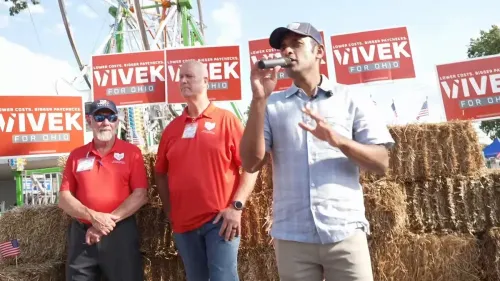
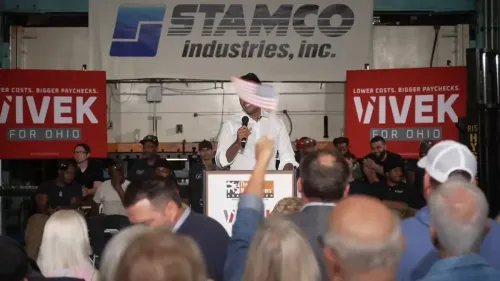
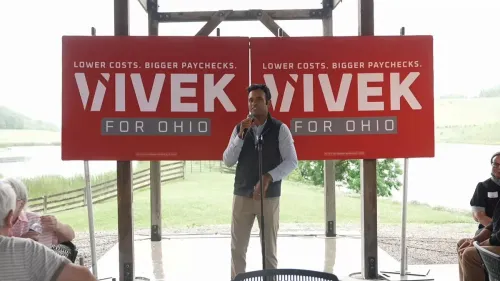
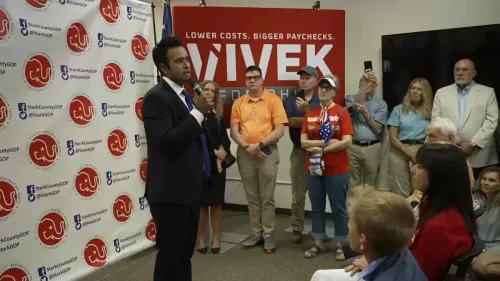
Ramaswamy Pitches Energy, Trades, Zero Income Tax for Ohio
Synopsis
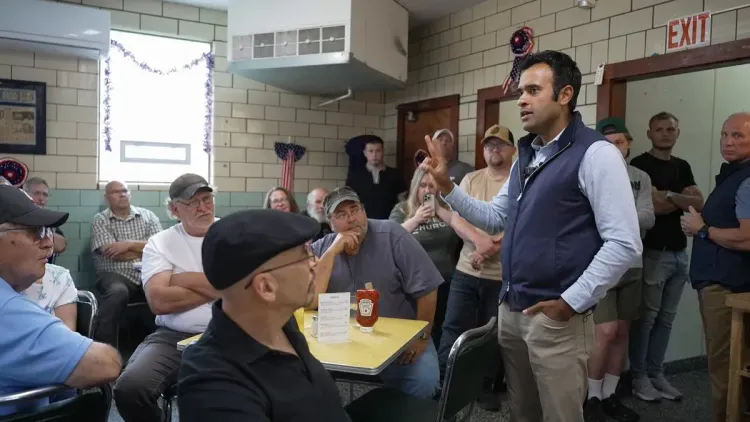
Entrepreneur Vivek Ramaswamy on 2 July 2026 outlined a four-point blueprint for Ohio's economy: unleashing energy production, expanding trades education, eliminating the state income tax, and cutting red tape — framing the package as a path to a near-term economic boom.
Key Takeaways
Vivek Ramaswamy posted a four-point Ohio economic agenda on 2 July 2026 .
The plan centres on energy production expansion and trades-focused workforce development as the two primary levers.
Zero income tax and deregulation are proposed as complementary measures to attract investment.
The proposal echoes tax structures already in place in Texas and Florida , which have no personal income tax.
Ohio General Assembly action on tax reform and energy permitting bills would be required to advance the agenda.
The push addresses a recognised skilled-labour shortage in Ohio 's manufacturing and energy sectors.
Entrepreneur and former DOGE co-lead Vivek Ramaswamy laid out a four-point economic blueprint for Ohio on 2 July 2026, calling for expanded energy production, workforce development through trades education, a zero income tax, and aggressive deregulation to trigger what he described as 'an economic boom next year.'
Context
Posting on X, Ramaswamy identified two primary levers for unlocking Ohio's economic potential: 'Unleash energy production' and 'Workforce development, including through education in the trades.' He then paired those with a call for a zero income tax and cutting red tape, arguing the combination would produce a boom in the near term.
The post marks one of Ramaswamy's most direct articulations of a state-level economic agenda since his return to Ohio after his tenure as co-lead of the US Department of Government Efficiency (DOGE) advisory effort and his 2024 Republican presidential campaign.
Policy Backdrop
Ohio is a Midwestern state with significant manufacturing, agriculture, and energy infrastructure, including natural gas production. During his 2024 presidential run, Ramaswamy consistently championed nationwide energy expansion and sweeping deregulation — themes he is now translating into a state-specific framework.
The proposal to eliminate personal income tax mirrors models already in place in states such as Texas and Florida, which have used the absence of a state income tax as a competitive tool to attract business investment and residents. Ohio currently levies a graduated personal income tax, making abolition a significant fiscal undertaking that would require action by the Ohio General Assembly.
The emphasis on trades education addresses a persistent challenge in industrial states: a widening skilled-labour shortage in sectors such as construction, advanced manufacturing, and energy infrastructure. Workforce policy advocates have long argued that vocational training pipelines are under-resourced relative to four-year college programmes.
Stakeholders and Impact
Ohio workers in the energy and manufacturing sectors stand to be most directly affected by any expansion of production capacity and trades training programmes. Energy producers operating in the state's natural gas fields could see lighter permitting burdens if deregulation proposals advance through the legislature.
Ohio taxpayers would be the primary beneficiaries — or bear the fiscal adjustment — of a zero income tax policy, depending on how the state chose to offset lost revenue. Business groups and chambers of commerce in the state have historically supported lower tax burdens as an investment-attraction tool.
Critics of similar proposals in other states have raised concerns about the distributional impact of income tax elimination, noting that it can shift the relative burden toward consumption-based taxes that weigh more heavily on lower-income households.
What's Next
Attention will now turn to the Ohio General Assembly, where any movement on income tax reform or expanded energy permitting would need to originate. Ramaswamy's public framing of these priorities signals a potential legislative push heading into the next session.
Whether the proposals gain traction will depend on coalition-building within the state legislature and the fiscal mathematics of replacing income tax revenue. His track record of translating national deregulation arguments into concrete policy action — most recently through the DOGE advisory effort — gives his state-level agenda added political weight.
Point of View
Signalling an active role in Ohio policy circles after his DOGE stint. The zero-income-tax plank is the most structurally ambitious element — it would require significant legislative consensus and a credible revenue-replacement mechanism, both of which remain unspecified. The trades-education emphasis, however, lands on genuinely bipartisan terrain, as industrial states across the political spectrum have struggled to close skilled-labour gaps. Taken together, the post reads less as a policy white paper and more as an opening bid to shape the Ohio Republican economic conversation ahead of the next legislative session.
NationPress
1 Oct 2026
Frequently Asked Questions
What is Vivek Ramaswamy's economic plan for Ohio?
Ramaswamy has proposed four measures: expanding energy production, investing in trades and vocational education, eliminating Ohio's personal income tax, and cutting government regulations — a package he says will produce an economic boom.
Does Ohio have an income tax?
Yes, Ohio currently levies a graduated personal income tax. Ramaswamy is calling for it to be reduced to zero, a move that would require approval by the Ohio General Assembly.
Which US states have no income tax?
States such as Texas and Florida have no personal income tax. Proponents argue this attracts businesses and residents; critics note it can shift the tax burden toward consumption-based levies.
What is Vivek Ramaswamy's current role?
Ramaswamy is the founder and executive chairman of Strive Asset Management. He previously served as co-lead of the DOGE advisory effort and ran for the Republican presidential nomination in 2024.
Why is trades education important for Ohio's economy?
Ohio's manufacturing and energy sectors face persistent skilled-labour shortages. Expanding vocational and trades training is seen as a way to fill gaps in construction, advanced manufacturing, and energy infrastructure jobs.