Did a Baloch Group Highlight Oppression by Pakistani Authorities in a UK Seminar?
Synopsis
A recent seminar in London by the Baloch National Movement commemorated the life of human rights activist Banuk Karima Baloch, exposing the severe oppression faced by Balochistan's people under Pakistani governance. The gathering united various communities in solidarity, shedding light on the ongoing struggle for freedom and justice in the region.
Key Takeaways
The BNM seminar commemorated Banuk Karima Baloch's legacy.
Systematic oppression in Balochistan was a central theme.
Speakers called for international attention on human rights violations.
Collective punishment is a common tactic against the Baloch population.
Freedom and justice remain key goals for the Baloch people.
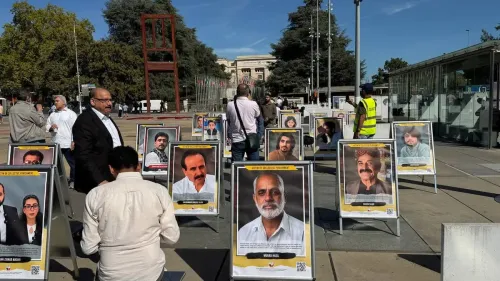
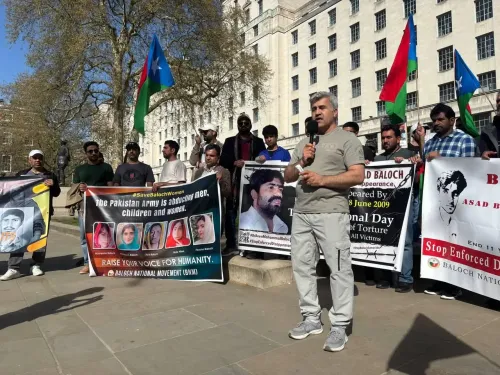
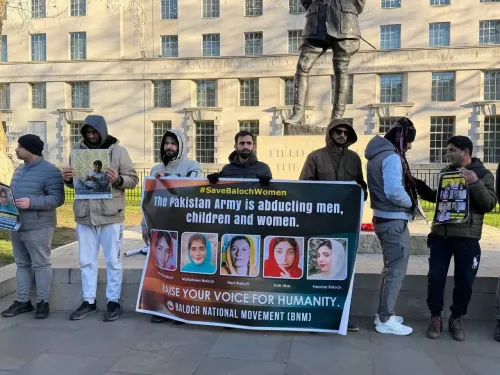
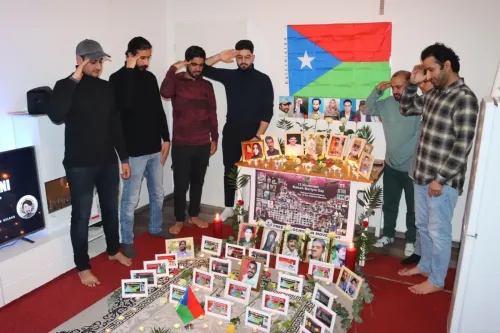
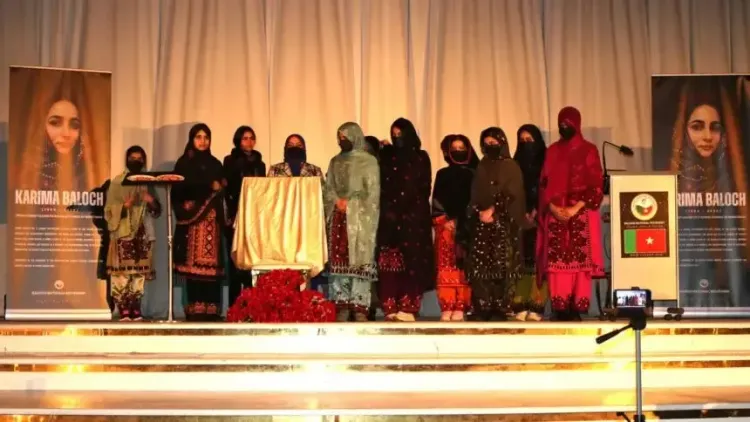
London, Dec 22 (NationPress) The Baloch National Movement (BNM) organized a seminar in London to commemorate the fifth death anniversary of human rights advocate Banuk Karima Baloch, shedding light on the systematic oppression faced by the people of Balochistan at the hands of Pakistani authorities.
This event assembled political leaders, intellectuals, human rights advocates, and representatives from various communities, including Sindhi, Pashtun, and those from Pakistan-occupied Kashmir and Gilgit-Baltistan, all voicing their support for the Baloch cause.
Among the speakers were BNM Chairman Naseem Baloch, writer Naseer Dashti, University of London scholar and SOAS South Asia Centre member Burzine Waghmar, Deputy Organiser of World Sindhi Congress (UK & Europe) Fahmeeda Khushik, human rights activist Noor-e-Maryam Kanwar, representative of Pashtun Tahafuz Movement (PTM), Brakhna Sayyad, and Banuk Karima's cousin, Mehlab Kambar.
During his address, Naseem Baloch underscored that Karima's life and martyrdom illuminated the colonial nature of the Pakistani state and its ongoing repression of oppressed nations.
He criticized Western nations for their selective application of human rights norms, questioning why oppression is condemned in some areas while being overlooked in Balochistan and similar regions.
Naseem stated that Karima confronted not just the military occupation by Pakistan but also the occupation of history, language, resources, and political authority.
He concluded by asserting that freedom is not extremism but a fundamental human instinct, emphasizing that peace in the region can only be achieved if Pakistan's colonial structure is dismantled and oppressed nations are granted freedom.
Meanwhile, Burzine Waghmar sharply criticized Pakistan's human rights record, attributing Karima Baloch's death to the actions of the country's deep state. He noted, 'Pakistan capitalizes on international indifference and impunity to target peaceful activists, even in exile.'
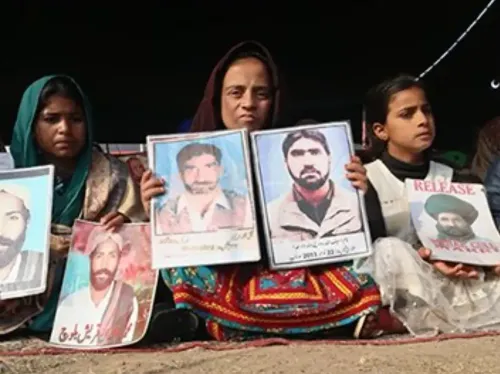
Human rights activist Noor-e-Maryam Kanwar described collective punishment as one of the most brutal tactics employed against the Baloch population.
She highlighted the enforced disappearance of Mahzeb Shafiq's father, a prominent Baloch human rights advocate, illustrating how Pakistani authorities target families to quash dissent.
PTM's Barkhna Syed expressed solidarity with the Baloch cause, remarking that enforced disappearances and collective punishment have become a grim reality in Pashtun areas as well.
Reflecting on Karima's unwavering fight against Pakistani authorities, her cousin Mehlab Kambar underscored her persistent quest for justice, national identity, and collective empowerment.
She recounted how Karima organized rallies and protests for those who have disappeared and tirelessly raised her voice against the genocide occurring in Balochistan.
Point of View
The struggles faced by the Baloch people under Pakistani rule deserve urgent attention. This seminar serves as a vital reminder of the need for international advocacy and support for oppressed communities. As a national editor-in-chief, it is our duty to amplify these voices and foster a dialogue that promotes justice and equality.
NationPress
7 Oct 2026
Frequently Asked Questions
What was the purpose of the seminar held by BNM in London?
The seminar aimed to commemorate the fifth death anniversary of human rights activist Banuk Karima Baloch and highlight the systematic oppression faced by the people of Balochistan under Pakistani authorities.
Who were the key speakers at the seminar?
Key speakers included BNM Chairman Naseem Baloch, author Naseer Dashti, Burzine Waghmar from the University of London, and representatives from various communities and human rights activists.
What issues were raised regarding human rights in Balochistan?
Speakers criticized the selective application of human rights principles by Western governments and addressed issues such as enforced disappearances and collective punishment faced by the Baloch community.
How did the seminar address the legacy of Banuk Karima Baloch?
The seminar honored Karima's legacy by acknowledging her fight against oppression and her efforts to raise awareness about the plight of the Baloch people.
What message did the participants convey about freedom?
Participants emphasized that freedom is a natural human instinct and that peace in the region cannot be achieved until the colonial structures perpetuating oppression are dismantled.