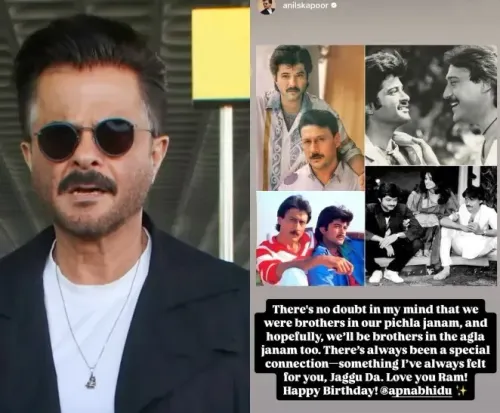
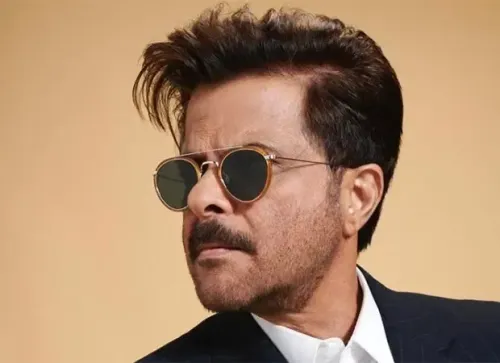
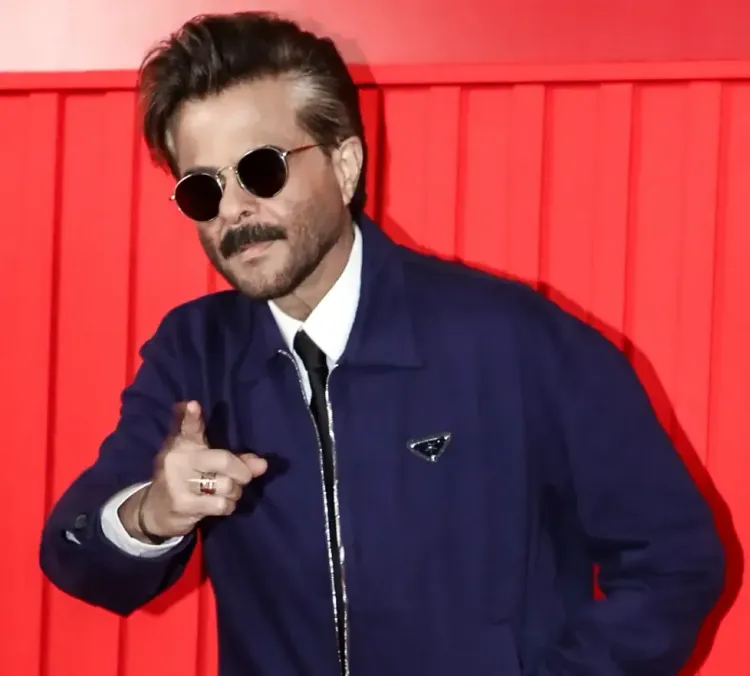
Anil Kapoor on his 'Jakaas' legacy: Auto rickshaw posters, fan memories
Synopsis
Anil Kapoor's "Jakaas" wasn't just a catchphrase—it became a cultural fixture in Indian auto rickshaws, so ubiquitous that children fought over sitting beneath his poster. On The Kapil Sharma Show, he revealed fans still send him photos of these relics, while Rajkummar Rao unpacked how Kapoor's image functioned as a marker of identity in pre-digital India.
Key Takeaways
Anil Kapoor revealed that fans regularly send him photographs of auto rickshaws featuring his posters with the signature " Jakaas " dialogue.
Rajkummar Rao shared a childhood memory of fighting with peers over sitting beneath Anil Kapoor's picture in auto rickshaws, as it conferred a temporary identity.
Ek Ladki Ko Dekha Toh Aisa Laga marks the first on-screen collaboration between Anil and Sonam Kapoor as father and daughter.
The film's title references a song from 1942: A Love Story (1994) , which also starred Anil Kapoor .
The screenplay draws narrative inspiration from P.
Wodehouse's 1919 novel A Damsel in Distress .
Veteran actor Anil Kapoor recalled the enduring cultural footprint of his iconic dialogue "Jakaas" during an appearance on The Kapil Sharma Show, revealing that fans regularly send him photographs of auto rickshaws bearing his posters emblazoned with the signature catchphrase. The revelation came during a segment alongside his daughter Sonam Kapoor and actor Rajkummar Rao, who were promoting their film Ek Ladki Ko Dekha Toh Aisa Laga.
A nostalgic auto rickshaw memory
Rajkummar Rao shared a personal anecdote tied to Kapoor's ubiquitous presence in auto rickshaws across India. "When we were younger, there used to be pictures of Anil Kapoor, Govinda, and others below the seats of auto rickshaws," he recounted. "So we used to fight over who would sit on the seat with Anil Kapoor's picture, as whoever would sit there would be considered Anil Kapoor." The anecdote underscored how deeply Kapoor's image had woven itself into everyday Indian pop culture, becoming a marker of aspiration and identity for an entire generation.
About 'Ek Ladki Ko Dekha Toh Aisa Laga'
The 2019 coming-of-age romantic comedy-drama, directed by Shelly Chopra Dhar, marks the first on-screen collaboration between real-life father and daughter Anil and Sonam Kapoor, who play the same roles in the film. The narrative follows Sweety Chaudhary, a closeted lesbian navigating her identity within a conservative Punjabi household. The ensemble cast includes Juhi Chawla, Regina Cassandra, Abhishek Duhan, Madhumalti Kapoor, Seema Pahwa, Brijendra Kala, Alka Kaushal, and Kanwaljit Singh, with Akshay Oberoi in a special appearance.
Literary and musical roots
The film's title draws from a song in the 1994 film 1942: A Love Story, which also starred Anil Kapoor. The screenplay, penned by Shelly Chopra Dhar and Gazal Dhaliwal, draws narrative inspiration from P. G. Wodehouse's 1919 novel A Damsel in Distress, blending literary heritage with contemporary Indian storytelling.
Why it resonates
Kapoor's "Jakaas" catchphrase transcended cinema to become a cultural shorthand for coolness and confidence in India. The auto rickshaw anecdote—where sitting under his poster conferred a temporary identity—speaks to how film stars functioned as aspirational mirrors in pre-digital India, their images as accessible and omnipresent as public transport itself.
Point of View
Billboards, and auto rickshaw seats. That children fought over sitting beneath his image speaks to how cinema functioned as a democratised mirror of identity in India, where a catchphrase and a poster could temporarily transform you into a star. Few contemporary actors command that kind of cultural penetration anymore; the fragmentation of media has made such universal touchstones rare.
NationPress
24 Sept 2026
Frequently Asked Questions
What did Anil Kapoor reveal about his 'Jakaas' posters on The Kapil Sharma Show?
Anil Kapoor revealed that fans regularly send him photographs of auto rickshaws displaying his posters with his signature " Jakaas " dialogue written on them, underscoring the phrase's enduring cultural resonance.
What memory did Rajkummar Rao share about Anil Kapoor's auto rickshaw posters?
Rajkummar Rao recounted that as a child, his peers would fight over who sat on the auto rickshaw seat beneath Anil Kapoor's picture, as the person sitting there was playfully considered to "be" Anil Kapoor .
What is 'Ek Ladki Ko Dekha Toh Aisa Laga' about?
The 2019 coming-of-age romantic comedy-drama follows Sweety Chaudhary , a closeted lesbian navigating her identity and attempting to come out to her conservative Punjabi family. It marks the first on-screen collaboration between real-life father and daughter Anil and Sonam Kapoor .
Who directed 'Ek Ladki Ko Dekha Toh Aisa Laga' and what inspired it?
The film was directed by Shelly Chopra Dhar , who also co-wrote the screenplay with Gazal Dhaliwal . The narrative was inspired by P. G. Wodehouse's 1919 novel A Damsel in Distress .
Why is the film's title significant?
The title " Ek Ladki Ko Dekha Toh Aisa Laga " references a song from the 1994 film 1942: A Love Story , which also starred Anil Kapoor , creating a thematic and nostalgic link to his earlier work.