Dhaka University suspends 7 teachers; rights group cites academic freedom threat
Synopsis
A Paris-based rights group has condemned Dhaka University's decision to suspend three teachers and remove four others from duties, alleging the moves were politically motivated. With international bodies now being urged to monitor the situation, the episode is shaping up as a test case for academic freedom in post-uprising Bangladesh.
Key Takeaways
Dhaka University suspended 3 teachers and relieved 4 others of duties on 30 July over alleged anti-government activities.
Justice Makers Bangladesh in France (JMBF) condemned the action on 1 August , calling it politically motivated.
JMBF Founder President Shahanur Islam called for independent investigations through due process rather than political targeting.
The rights group urged the UN Special Rapporteurs on expression and education, and the European Union , to monitor the situation.
Critics argue the disciplinary measures risk creating a 'climate of fear' across Bangladesh's public university system.
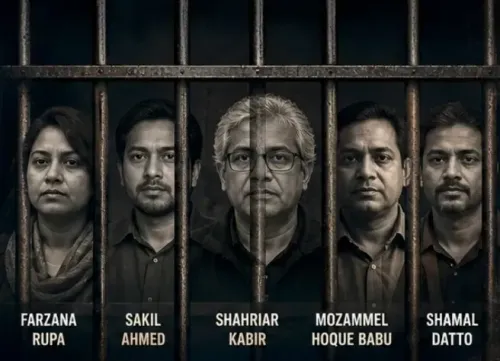
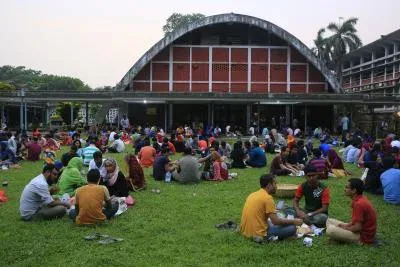
An international human rights organisation has strongly condemned Dhaka University's (DU) decision to suspend three faculty members and strip four others of their academic and administrative roles, warning that the disciplinary actions constitute a direct assault on academic freedom and institutional autonomy in Bangladesh. The condemnation, issued from Paris on 1 August, follows DU's syndicate action on 30 July against the seven teachers over allegations that included activities 'contrary to the spirit of the July mass uprising', anti-government propaganda, and alleged support for a banned organisation.
What the University Did
The Dhaka University syndicate, on 30 July, temporarily suspended three teachers and relieved four others of all academic and administrative duties. The charges cited against the affected faculty, according to local media reports, ranged from perceived anti-government conduct to association with a banned group. No independent investigation process was disclosed ahead of the disciplinary measures being imposed.
Rights Group's Condemnation
Justice Makers Bangladesh in France (JMBF), citing sources, said the disciplinary steps were driven by the teachers' actual or perceived political beliefs and dissenting views rather than any verified institutional misconduct. The organisation warned that such measures amount to more than individual rights violations — they represent, in JMBF's assessment, a broader attack on democratic values within the university system.
'In a democratic society, universities must never serve as instruments for enforcing political conformity. Rather, they should remain safe spaces for independent thought, scholarly research, critical inquiry, and the free exchange of ideas,' JMBF stated. 'Subjecting academics to disciplinary or administrative sanctions because of their political opinions, personal beliefs, or peaceful exercise of freedom of expression creates a climate of fear, undermines academic teaching and research, and damages the international reputation of higher education institutions.'
What the Founder President Said
Shahanur Islam, Founder President of JMBF, acknowledged that credible allegations, where they exist, must be addressed — but through due process, not political targeting. 'Where there are credible allegations against any academic, those allegations should be investigated independently and resolved through due process of law. However, targeting university teachers because of their political beliefs or the peaceful exercise of their freedom of expression is fundamentally incompatible with human rights, academic freedom, and the core principles of a democratic society,' he said.
Islam further called on the Government of Bangladesh to end political interference in universities and to guarantee the fundamental rights, academic freedom, and rule of law for all teachers, researchers, and students — in line with the Constitution of Bangladesh, international human rights law, and Bangladesh's international legal obligations.
International Oversight Urged
JMBF urged the United Nations Special Rapporteur on freedom of opinion and expression, the UN Special Rapporteur on the right to education, the European Union, and global academic and human rights networks to closely monitor the situation and act in accordance with international human rights standards. The organisation emphasised that 'political retaliation, ideological discrimination, and the suppression of dissent have no place in higher education.'
Broader Context
The action comes amid heightened scrutiny of institutional autonomy across Bangladesh's higher education sector following the political upheaval of the so-called July mass uprising. Critics argue that deploying university disciplinary mechanisms to penalise perceived political dissent sets a troubling precedent — one that, if unchecked, could chill academic discourse across the country's public university system. The involvement of a Paris-based rights body signals that the episode is drawing international attention beyond Bangladesh's borders.
Point of View
Creating a precedent that could be applied selectively against any dissenting voice. Universities that discipline faculty on the basis of perceived political allegiance, rather than verified misconduct adjudicated through transparent process, do not merely harm individuals — they corrode the epistemic independence that makes higher education valuable. International scrutiny, now formally requested by JMBF, may be the only near-term check on further escalation.
NationPress
15 Sept 2026
Frequently Asked Questions
Why did Dhaka University suspend the seven teachers?
Dhaka University's syndicate suspended three teachers and removed four others from duties on 30 July over allegations including activities 'contrary to the spirit of the July mass uprising', anti-government propaganda, and alleged support for a banned organisation. The university has not publicly disclosed details of an independent investigation process.
Who is Justice Makers Bangladesh in France (JMBF)?
Justice Makers Bangladesh in France (JMBF) is a Paris-based international human rights organisation focused on Bangladesh. It is led by Founder President Shahanur Islam and has called on international bodies including the UN and the EU to monitor the Dhaka University situation.
What does JMBF say the real reason for the suspensions is?
JMBF, citing sources, contends that the disciplinary measures were imposed because of the affected teachers' actual or perceived political beliefs and dissenting views, rather than any legitimate institutional misconduct. The group characterises this as political targeting incompatible with academic freedom.
Which international bodies has JMBF urged to intervene?
JMBF has urged the UN Special Rapporteur on freedom of opinion and expression, the UN Special Rapporteur on the right to education, the European Union, and global academic and human rights networks to closely monitor the situation and take action consistent with international human rights standards.
Why does this matter for Bangladesh's universities?
Critics argue the case sets a dangerous precedent for political interference in higher education across Bangladesh. If disciplinary mechanisms can be used to penalise perceived dissent, it risks creating a climate of self-censorship that undermines research, teaching, and the country's international academic standing.