Bangladesh police baton-charge student protests, drawing global rights outcry
Synopsis
France-based rights group Justice Makers Bangladesh has condemned Dhaka's police baton-charge on HSC student protesters outside Parliament, invoking the ICCPR, CRC, CAT, and UDHR. With many demonstrators reportedly minors, the crackdown has thrust Bangladesh's treatment of student dissent into the international spotlight — and the government's next move on an independent probe will define how this plays out globally.
Key Takeaways
HSC candidates began protests in Dhaka on 14 July , demanding the resignation of Education Minister ANM Ehsanul Hoque Milon .
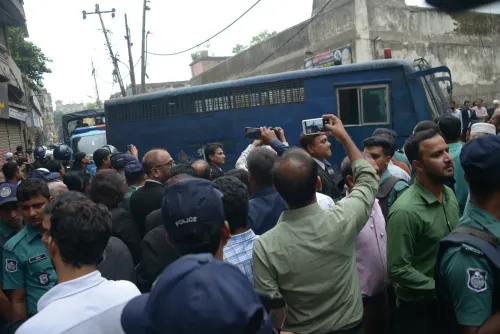
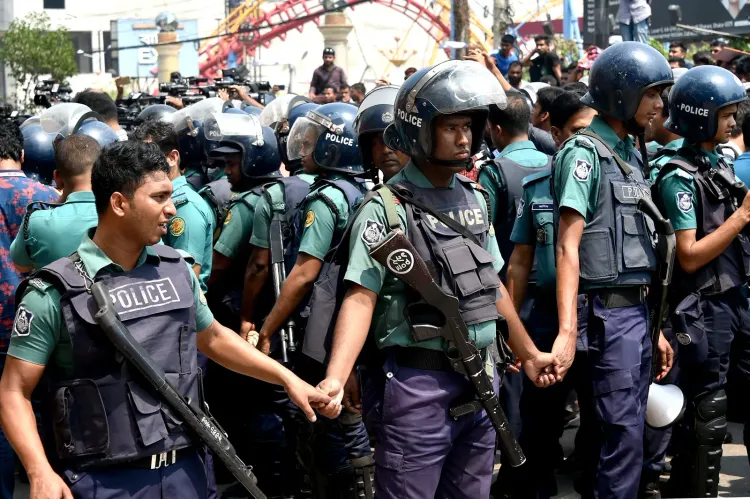
Police used batons to disperse students who attempted to march toward the National Parliament building.
Student grievances included the exam schedule, severe-weather sittings, poor question paper quality, and the minister's reported 'farm chickens' remark.
Justice Makers Bangladesh in France (JMBF) condemned the crackdown, citing violations of the ICCPR , CRC , CAT , and UDHR .
JMBF founder Shahanur Islam called the use of force against student protesters 'particularly alarming' under international standards.
The rights body has demanded an independent, internationally supervised investigation and an end to any retaliation against protesters.
Bangladesh authorities faced sharp international condemnation after police used batons to disperse student demonstrators outside the National Parliament in Dhaka, as protests demanding the resignation of Education Minister ANM Ehsanul Hoque Milon escalated in mid-July. The crackdown has drawn a formal rebuke from a France-based human rights organisation, raising questions about Bangladesh's obligations under multiple international treaties.
How the Protests Began
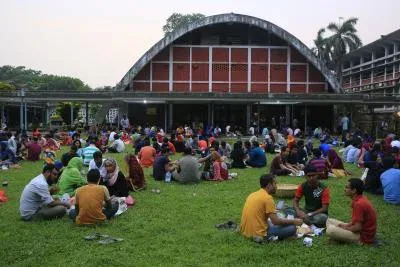
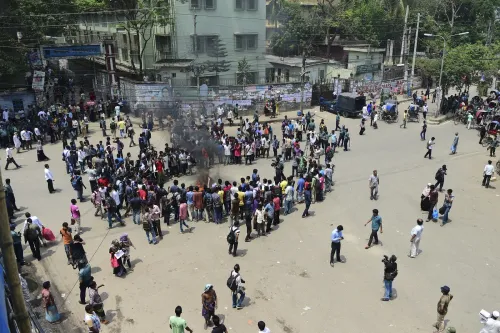
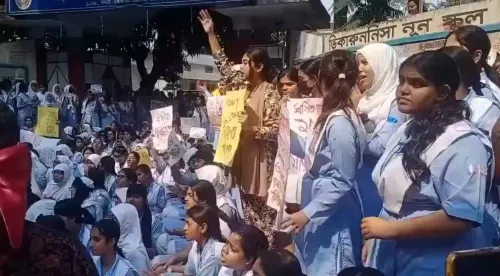
The demonstrations were initiated on 14 July by Higher Secondary Certificate (HSC) candidates who blocked key roads, formed human chains, and took out processions across the capital. Grievances centred on the HSC examination schedule, the decision to conduct exams amid severe weather conditions, and the perceived poor quality of question papers. Students also took strong exception to remarks attributed to the Education Minister, who reportedly described students as 'farm chickens' — a characterisation they termed deeply insulting.
The situation deteriorated when a group of protesters attempted to march toward the Parliament building. Police responded with a baton charge to disperse the crowd, according to reports citing Bangladeshi daily Dhaka Tribune.
International Rights Body Condemns the Crackdown
Justice Makers Bangladesh in France (JMBF) expressed grave concern over the incident, stating that the use of force against a 'peaceful assembly' is inconsistent with rights to freedom of expression, peaceful assembly, and personal liberty guaranteed under Bangladesh's Constitution.
The organisation further noted that the crackdown raises serious concerns under international human rights law, specifically citing the International Covenant on Civil and Political Rights (ICCPR), the Convention on the Rights of the Child (CRC), the Convention against Torture (CAT), and the Universal Declaration of Human Rights (UDHR). Given that many demonstrators were HSC candidates and potentially minors, JMBF argued the state had an obligation to exercise the 'utmost restraint' and ensure their special protection.
What JMBF's Founder Said
Shahanur Islam, Founder President of JMBF, said: 'The unnecessary or excessive use of force in the name of maintaining law and order is never acceptable. The use of force against children and adolescent students is particularly alarming in light of international human rights standards. Peaceful expression should never be met with baton charges; rather, dialogue, tolerance, and respect for the rule of law should guide the State's response.'
Key Demands from the Rights Organisation
JMBF called on Bangladesh authorities to conduct an independent, impartial, and credible investigation under the observation or supervision of international human rights experts, make the findings public, and hold those responsible accountable through appropriate legal proceedings.
The body also urged authorities to provide injured students with adequate medical treatment, rehabilitation, psychosocial support, and effective remedies. Notably, it explicitly called on the government to refrain from harassing, arbitrarily arresting, or taking retaliatory measures against students who participated in the demonstrations.
Broader Context
This is not the first time student-led protests in Bangladesh have attracted international scrutiny. The country has seen recurring cycles of student unrest tied to examination policy, institutional accountability, and political tensions. The involvement of a diaspora-based rights group operating from France signals that the incident has drawn attention well beyond South Asia. How Dhaka responds to the JMBF's demands — particularly on independent investigation — will be closely watched by rights monitors in the coming weeks.
Point of View
And the pattern of deploying force against student demonstrations, followed by international rebuke, followed by limited institutional accountability, has repeated itself. What is different this time is the explicit invocation of child-rights law, given that HSC candidates may be minors — a framing that could draw UN treaty body attention. The government's silence on an independent probe, if it continues, risks escalating diplomatic costs that Dhaka can ill afford amid broader economic pressures.
NationPress
16 Oct 2026
Frequently Asked Questions
Why did HSC students protest outside Bangladesh's Parliament?
HSC candidates protested outside the National Parliament in Dhaka from 14 July, demanding the resignation of Education Minister ANM Ehsanul Hoque Milon over the exam schedule, the decision to hold exams during severe weather, poor question paper quality, and his reported remark likening students to 'farm chickens.'
What action did Bangladesh police take against the protesters?
Police used batons to disperse the student demonstrators after a group attempted to march toward the Parliament building. The crackdown drew immediate condemnation from the France-based rights organisation Justice Makers Bangladesh in France (JMBF).
Who is Justice Makers Bangladesh in France and why did they intervene?
Justice Makers Bangladesh in France (JMBF) is a diaspora-based human rights organisation operating from France. It condemned the crackdown, arguing it violated Bangladesh's constitutional guarantees and multiple international human rights treaties, including the ICCPR, CRC, CAT, and UDHR.
What are JMBF's demands from the Bangladesh government?
JMBF has called for an independent, impartial investigation supervised by international human rights experts, public disclosure of findings, legal accountability for those responsible, medical and psychosocial support for injured students, and a halt to any harassment or retaliation against protest participants.
Why is the involvement of minors significant in this case?
Many of the protesters were HSC candidates who may be minors, which triggers heightened obligations under the Convention on the Rights of the Child (CRC). JMBF argued this required the state to exercise 'utmost restraint' and provide special protection — obligations it says were not met.