Smriti Irani Hails Jind Hydrogen Train as World's Most Powerful
Synopsis
BJP leader Smriti Irani on 17 July 2026 declared the hydrogen train operating from Jind, Haryana, to be the world's most powerful hydrogen train, spotlighting India's push into green rail technology under the National Green Hydrogen Mission and Indian Railways' net-zero roadmap.
Key Takeaways
BJP leader Smriti Irani posted on 17 July 2026 that the hydrogen train from Jind, Haryana , is the world's most powerful hydrogen train.
Indian Railways has been developing hydrogen fuel-cell trains for non-electrified routes as part of its net-zero decarbonisation programme.
The Union Budget 2023 had announced pilot hydrogen trains for heritage and non-electrified routes.
India's National Green Hydrogen Mission , launched in 2022 , underpins the country's broader push into hydrogen transport applications.
India has committed to reaching net-zero emissions by 2070 , with railway hydrogen projects forming a key pillar of that target.
Technical specifications and Railway Board confirmation will be needed to independently verify the 'world's most powerful' claim.
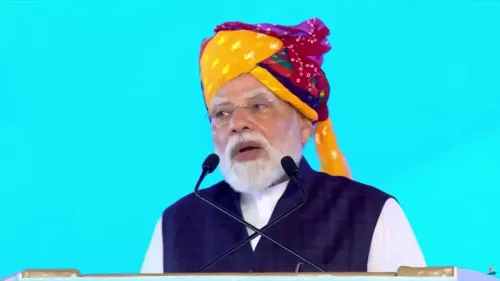
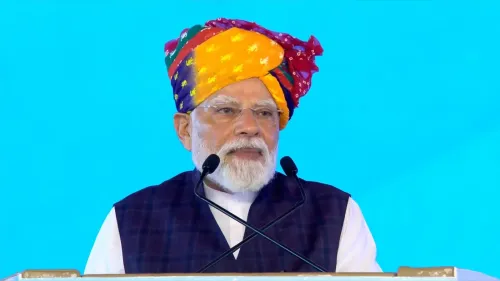
BJP leader and former Union Minister Smriti Irani on Friday, 17 July 2026, took to X to highlight India's hydrogen train initiative, asserting that the hydrogen train originating from Jind, Haryana, is the world's most powerful hydrogen train.
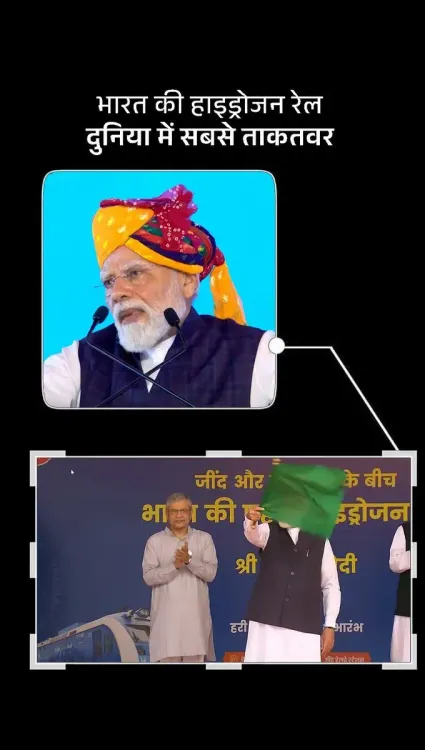
In her post, Irani wrote: 'जींद से चलने वाली hydrogen ट्रेन दुनिया की सबसे ताकतवर hydrogen ट्रेन है' — translated as, 'The hydrogen train running from Jind is the world's most powerful hydrogen train.' The post, which included a video, drew attention to a milestone that India's railway establishment has been working toward as part of its broader green-energy transition.
Context
Jind is a district in Haryana and has been identified as the operational base for this hydrogen-powered rail service. Indian Railways has been pursuing hydrogen fuel-cell train development under its decarbonisation programme, with the aim of reducing dependence on imported diesel and cutting carbon emissions across non-electrified routes. The Jind service, if the claim holds, would represent a significant leap in India's indigenous rail technology capability.
Policy Backdrop
The hydrogen train project sits within a larger policy framework. The Union Budget of 2023 had earmarked pilot hydrogen trains for heritage and non-electrified routes as part of Indian Railways' net-zero roadmap. More broadly, the National Green Hydrogen Mission, launched in 2022, positioned India as an aspirant leader in green-hydrogen applications across sectors including transport. Railway hydrogen initiatives are one of the most visible elements of this mission, offering a way to decarbonise routes where overhead electrification is not yet viable.
India's push into hydrogen rail also fits the country's commitment to reaching net-zero emissions by 2070. Globally, countries including Germany, the United Kingdom, and China have tested or deployed hydrogen trains, making the 'world's most powerful' claim a significant geopolitical and technological statement — one that, if substantiated by technical specifications, would place India at the frontier of fuel-cell rail development.
Stakeholders and Impact
The most immediate beneficiaries of a functional hydrogen train service out of Jind would be rail commuters in Haryana and passengers on connecting routes. For Indian Railways — the world's fourth-largest rail network — a proven high-power hydrogen prototype opens the possibility of scaling the technology to thousands of kilometres of non-electrified track, with direct implications for fuel costs and emission targets.
The announcement also carries political significance. Haryana is an electorally important state, and infrastructure milestones in the region tend to feature prominently in BJP's outreach to voters. Irani's amplification of the Jind train underscores the party's effort to associate itself with visible green-infrastructure achievements.
What's Next
Attention will now turn to whether the Railway Board or the Ministry of Railways releases formal technical specifications that substantiate the 'world's most powerful' description. Commercial rollout timelines for additional hydrogen train routes and independent performance assessments will be critical in determining whether the Jind prototype can be scaled into a fleet-level solution. If verified, the development could accelerate procurement decisions and position India as an exporter of hydrogen rail technology to other emerging economies.
Point of View
The party signals tangible delivery in an electorally significant state rather than speaking in abstract policy terms. The 'world's most powerful' framing, however, raises the stakes: it invites technical scrutiny that the Railways will need to satisfy with verifiable specifications. If the claim is substantiated, it could reframe India's position in the global hydrogen-rail conversation; if it is not, it risks becoming a liability in an era of heightened fact-checking.
NationPress
17 Jul 2026
Frequently Asked Questions
What is the Jind hydrogen train?
The Jind hydrogen train is a hydrogen fuel-cell powered train originating from Jind district in Haryana, developed under Indian Railways' decarbonisation programme. BJP leader Smriti Irani described it on 17 July 2026 as the world's most powerful hydrogen train.
Is India's hydrogen train really the world's most powerful?
Smriti Irani has claimed the Jind hydrogen train is the world's most powerful, but independent technical verification and official specifications from the Railway Board are needed to confirm this. The claim has not yet been independently substantiated as of the date of her post.
What is the National Green Hydrogen Mission?
The National Green Hydrogen Mission was launched by the Indian government in 2022 to accelerate the production and use of green hydrogen across sectors including transport, industry, and energy, as part of India's net-zero-by-2070 commitment.
Why is Indian Railways developing hydrogen trains?
Indian Railways is developing hydrogen fuel-cell trains to decarbonise non-electrified routes, reduce dependence on imported diesel, and meet its net-zero emissions targets. The Union Budget 2023 had announced pilot hydrogen trains for heritage and non-electrified routes.
Which routes will hydrogen trains run on in India?
Indian Railways has initially targeted non-electrified and heritage routes for hydrogen train pilots. The Jind route in Haryana is the service highlighted in Smriti Irani's July 2026 post, with broader commercial rollout timelines yet to be officially announced.