CM Patel's Gujarat secures ₹2,719 cr for Ahmedabad urban infra
Synopsis
The Centre has sanctioned ₹2,719.80 crore for six projects in Ahmedabad under the Urban Challenge Fund — covering sewerage rehabilitation in east and west zones, an Intelligent Water Management System, a 125-TPD sludge facility, and an Integrated Transit Management and Automated Fare Collection System.
Key Takeaways
₹2,719.80 crore sanctioned by the Centre for six urban infrastructure projects in Ahmedabad under the Urban Challenge Fund .
Sewerage rehabilitation across West Ahmedabad (₹852.93 cr) , East Ahmedabad (₹551.35 cr) and older city zones (₹290.24 cr) accounts for the majority of the funding.
An Intelligent Water Management System receives ₹215 crore and a 125-TPD Integrated Sludge Management Facility receives ₹479.25 crore .
The ITMS and AFCS project for public transit technology is approved at ₹331.03 crore .
The Urban Challenge Fund emphasises market-based financing and balanced regional development , extending the logic of earlier missions such as Smart Cities and AMRUT.
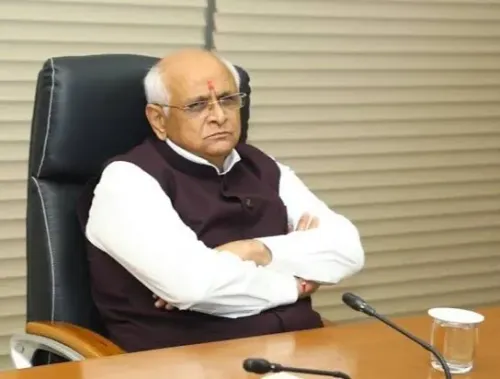
CM Bhupendra Patel and the state government have positioned the sanction as central to Gujarat's citizen-centric urban development vision.
The Chief Minister's Office of Gujarat announced on Friday, 17 July 2026 that the Union Ministry of Housing and Urban Affairs has sanctioned ₹2,719.80 crore for six ambitious infrastructure projects in Ahmedabad under the Urban Challenge Fund, a central scheme designed to push cities toward market-based financing and balanced regional development.
What Was Approved
The post, shared by the official CMO Gujarat handle, lists six project-wise allocations. The largest single grant — ₹852.93 crore — goes toward rehabilitating the main sewerage network in West Ahmedabad, while ₹551.35 crore has been earmarked for the corresponding network in East Ahmedabad. A further ₹290.24 crore covers the rehabilitation of ageing sewer lines across various city zones.
On the technology side, ₹215 crore has been sanctioned for an Intelligent Water Management System, and ₹479.25 crore for a 125-TPD Integrated Sludge Management Facility. The sixth project — an Integrated Transit Management System (ITMS) combined with an Automated Fare Collection System (AFCS) — receives ₹331.03 crore.
Context
The Urban Challenge Fund is framed in the post as flowing from the inspiration of Prime Minister Narendra Modi, with the Ministry of Housing and Urban Affairs acting as the implementing authority. The fund's stated goal is to encourage cities to access market-based credit while pursuing geographically balanced development — a shift from purely grant-driven urban programmes.
Ahmedabad has been a flagship city for central urban schemes since 2015, when it was selected under the Smart Cities Mission and the AMRUT (Atal Mission for Rejuvenation and Urban Transformation) scheme, both of which targeted sewerage, water supply and urban transport upgrades in large mission cities.
Policy Backdrop
Central urban policy over the past decade has consistently bundled sewerage rehabilitation, water management and intelligent transport under technology-driven sustainability frameworks. The Urban Challenge Fund extends this tradition by layering a market-financing incentive on top of physical infrastructure grants — cities that demonstrate creditworthiness and bankable project structures are prioritised for approvals.
The combination of sewerage network overhaul and ITMS-plus-AFCS in a single funding round mirrors the integrated approach piloted under the Smart Cities Mission, where Ahmedabad had earlier received support for command-and-control centre infrastructure and transit technology.
Stakeholders and Impact
The CMO post states that the projects will move Ahmedabad toward becoming 'smarter, cleaner, resilient and globally benchmarked,' with citizens receiving 'higher-quality services.' Residents of both the eastern and western zones of the city stand to benefit most immediately from the sewerage rehabilitation work, which addresses decades-old underground networks.
The ITMS and AFCS projects are expected to improve the efficiency of the city's public bus network by enabling real-time tracking and cashless ticketing. The sludge management facility, rated at 125 tonnes per day, addresses the downstream treatment gap that often limits the effectiveness of sewerage upgrades.
Under Chief Minister Bhupendra Patel, the state government has positioned this sanction as validation of its 'citizen-centric, technology-based and sustainable urban development' vision, according to the post.
What's Next
The immediate milestones to watch are the tendering and award of contracts for each of the six projects, followed by construction timelines and commissioning schedules. The Urban Challenge Fund framework also raises the question of whether other Gujarat cities — such as Surat, Vadodara or Rajkot — may receive approvals under the same instrument in subsequent rounds. Execution quality and adherence to project timelines will determine whether the infrastructure investments translate into the service improvements promised to Ahmedabad's residents.
Point of View
719.80-crore sanction for Ahmedabad is the latest data point in a decade-long pattern of the Centre using flagship cities to road-test integrated urban financing models before scaling them nationally. By bundling sewerage, water intelligence and transit technology in a single fund round, the Urban Challenge Fund signals a maturation of the Smart Cities and AMRUT logic — moving from siloed grants to bankable, multi-sector packages. For Chief Minister Bhupendra Patel, the approval is a political asset ahead of any state electoral cycle, demonstrating Centre-state alignment on Gujarat's urban agenda. The real test, however, will be whether Ahmedabad's municipal machinery can execute six complex projects simultaneously without the cost and time overruns that have plagued earlier mission-city works.
NationPress
17 Jul 2026
Frequently Asked Questions
What is the Urban Challenge Fund and who set it up?
The Urban Challenge Fund is a central government scheme run by the Ministry of Housing and Urban Affairs to encourage Indian cities to adopt market-based financing and pursue balanced regional development. It was set up under the broader urban reform agenda associated with Prime Minister Narendra Modi's administration.
How much money has been approved for Ahmedabad under the Urban Challenge Fund?
A total of ₹2,719.80 crore has been sanctioned for six projects in Ahmedabad under the Urban Challenge Fund, as announced by the Chief Minister's Office of Gujarat on 17 July 2026.
What are the six projects approved for Ahmedabad?
The six projects are: rehabilitation of West Ahmedabad's main sewerage network (₹852.93 crore), rehabilitation of East Ahmedabad's main sewerage network (₹551.35 crore), rehabilitation of old sewer lines across the city (₹290.24 crore), an Intelligent Water Management System (₹215 crore), a 125-TPD Integrated Sludge Management Facility (₹479.25 crore), and an Integrated Transit Management System with Automated Fare Collection (₹331.03 crore).
What is the ITMS and AFCS project in Ahmedabad?
The Integrated Transit Management System (ITMS) and Automated Fare Collection System (AFCS) project, approved for ₹331.03 crore, aims to bring real-time tracking and cashless ticketing to Ahmedabad's public transport network.
What role does CM Bhupendra Patel play in these approvals?
Chief Minister Bhupendra Patel leads the state government that coordinates with the Centre on urban infrastructure schemes. The CMO Gujarat post credits his 'citizen-centric, technology-based and sustainable urban development' vision as being reinforced by the Urban Challenge Fund sanction.