Nadda Highlights 23+ AIIMS, 818 Medical Colleges Under Modi Govt
Synopsis
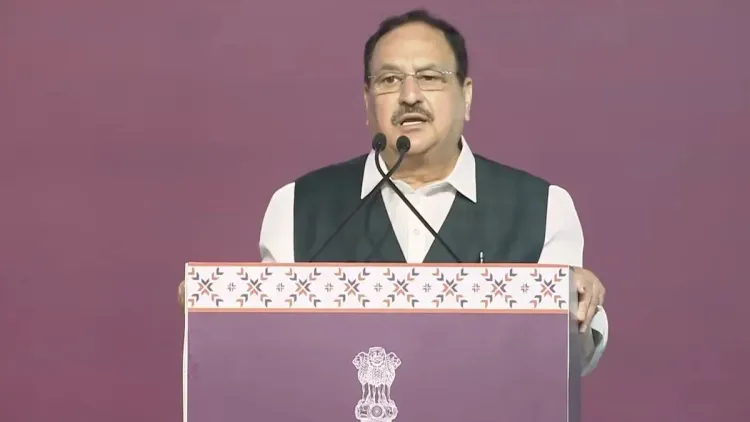
Union Health Minister J. P. Nadda on 17 July 2026 cited 23+ AIIMS, 818 medical colleges, and 1.38 lakh undergraduate seats as evidence of historic expansion in medical education and research under Prime Minister Narendra Modi's government.
Key Takeaways
Union Health Minister J.
Nadda posted on X on 17 July 2026 highlighting medical education expansion under PM Modi.
The post cites 23+ AIIMS now operational or established across India under the Modi government.
India currently has 818 medical colleges with a combined 1,38,000 undergraduate seats , according to Nadda's post.
The Pradhan Mantri Swasthya Suraksha Yojana (PMSSY) and the National Medical Commission Act, 2019 form the core policy framework behind this expansion.
The government has framed bridging the doctor-population gap and strengthening domestic research capacity as twin objectives of this push.
Operationalisation timelines for remaining AIIMS campuses and further NMC seat-sanction revisions remain key items to watch.
Union Health Minister J. P. Nadda on Friday, 17 July 2026, credited the leadership of Prime Minister Narendra Modi for what he described as a historic expansion of medical education in India, pointing to more than 23 AIIMS, 818 medical colleges, and 1,38,000 undergraduate seats now available across the country.
Context
Posting on X, Nadda wrote in Hindi: 'प्रधानमंत्री श्री @narendramodi जी के नेतृत्व में देशभर में 23+ एम्स हैं, तो वहीं 818 मेडिकल कॉलेज हैं, जिनमें 1 लाख 38 हज़ार अंदर ग्रेजुएट सीट हैं।' ['Under the leadership of Prime Minister Shri Narendra Modi, there are 23+ AIIMS across the country, and 818 medical colleges with 1 lakh 38 thousand undergraduate seats.'] He added that 'historically significant work has been done under the Modi government in the field of medical education and research.'
The post, which accompanied a video, comes against the backdrop of sustained government messaging around healthcare infrastructure expansion as a flagship achievement of the National Democratic Alliance administration.
Policy Backdrop
The expansion of All India Institutes of Medical Sciences (AIIMS) campuses traces its origins to the Pradhan Mantri Swasthya Suraksha Yojana (PMSSY), a central scheme designed to correct regional imbalances in tertiary healthcare. The first tranche of six new AIIMS was announced under PMSSY and began turning functional from 2012 onward; successive phases added further campuses under the Modi government after 2014.
On the regulatory side, Parliament enacted the National Medical Commission (NMC) Act in 2019, replacing the older Medical Council of India. The National Medical Commission now governs approvals for new medical colleges and seat additions, and has been credited with accelerating the pace at which both state-run and private institutions have received sanction for fresh intakes.
Annual Union Budgets since 2014 have consistently flagged increases in MBBS seats as a priority, framing the doctor-population gap as a national challenge requiring both new infrastructure and regulatory reform.
Stakeholders and Impact
Medical students and aspirants are the most direct beneficiaries: a larger pool of undergraduate seats means more candidates can enter the medical profession each year without travelling abroad for training. State health departments gain from the addition of centrally-funded AIIMS, which serve as referral hubs and reduce the burden on state tertiary facilities.
Medical faculty and research institutions stand to benefit from the government's stated emphasis on medical research alongside education, though the specific research investments referenced in the post were not detailed. The NMC's oversight role also means that quality benchmarks accompany the quantitative expansion.
What's Next
Attention will now turn to the operationalisation timelines of AIIMS campuses that remain partially functional or under construction, as well as any further revision of NMC regulations on seat sanctions in the upcoming parliamentary session or Union Budget cycle. Observers will also watch whether the research dimension of medical education — flagged by Nadda — translates into dedicated funding announcements. The government's ability to staff new institutions with qualified faculty remains a structural challenge that policy analysts have consistently highlighted alongside the seat-expansion narrative.
Point of View
Positioning the BJP-led government's decade-long investment in medical infrastructure as an electoral and policy credential. The figures — 23+ AIIMS and 818 medical colleges — are consistent with the government's broader narrative of quantitative transformation in public services since 2014. By invoking PM Modi's leadership explicitly, the Health Minister ties the expansion to the party's brand rather than the institutional machinery of PMSSY, which predates the current government. The emphasis on 'historic' achievement signals that this messaging is likely to intensify ahead of any upcoming electoral or budgetary cycle.
NationPress
17 Jul 2026
Frequently Asked Questions
How many AIIMS are there in India in 2026?
According to Union Health Minister J. P. Nadda's post on 17 July 2026, there are more than 23 AIIMS across India, established under the leadership of Prime Minister Narendra Modi. The original AIIMS Delhi was joined by new campuses approved in phases starting from 2012 under the Pradhan Mantri Swasthya Suraksha Yojana.
How many medical colleges are there in India?
As per figures cited by Health Minister J. P. Nadda on 17 July 2026, India has 818 medical colleges offering a combined 1,38,000 undergraduate (MBBS) seats. This reflects a sustained expansion driven by regulatory changes under the National Medical Commission and successive Union Budget allocations.
What is the Pradhan Mantri Swasthya Suraksha Yojana?
The Pradhan Mantri Swasthya Suraksha Yojana (PMSSY) is a central government scheme launched to establish AIIMS-type institutions and upgrade existing medical colleges to address regional imbalances in tertiary healthcare. The first six new AIIMS under the scheme began functioning from 2012 onward.
What is the National Medical Commission and what does it do?
The National Medical Commission (NMC) is the statutory body constituted under the NMC Act of 2019, replacing the older Medical Council of India. It oversees the approval of new medical colleges, regulation of medical education standards, and sanctioning of undergraduate seat increases across India.
How many MBBS seats have increased under the Modi government?
Health Minister J. P. Nadda stated on 17 July 2026 that India now has 1,38,000 undergraduate medical seats across 818 colleges. The government has cited annual additions to MBBS seats in successive Union Budgets since 2014 as part of its effort to bridge the doctor-population gap.