CM Yogi Blames Congress for Partition, Flags Bangladesh Minority Plight
Synopsis
Uttar Pradesh Chief Minister Yogi Adityanath on 17 July 2026 blamed Congress for the 1947 Partition, saying Sikh and Bangladesh-origin communities paid its price, and accused the opposition of staying silent on Dalit killings in Bangladesh — escalating a long-running BJP political narrative.
Key Takeaways
Yogi Adityanath on 17 July 2026 publicly attributed the 1947 Partition of India to the Indian National Congress .
He said the Sikh community and refugees from Bangladesh bore the heaviest human cost of Partition.
He accused opposition parties of remaining silent when Dalit minorities are killed in Bangladesh .
The remarks align with the BJP 's established framing of Partition as a Congress-authored tragedy used to justify policies like the Citizenship Amendment Act (CAA) .
Congress and opposition parties are expected to respond; parliamentary debate on CAA implementation and refugee policy may intensify.
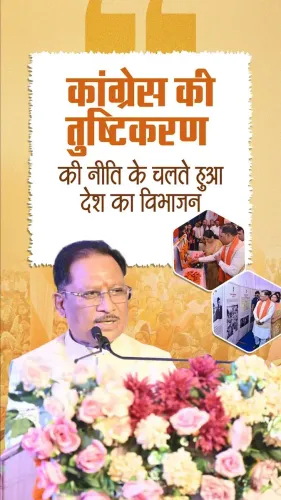
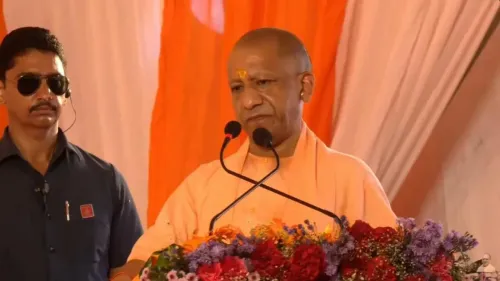
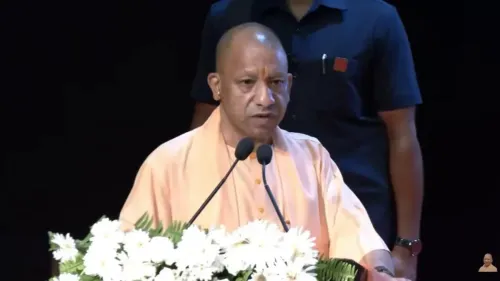
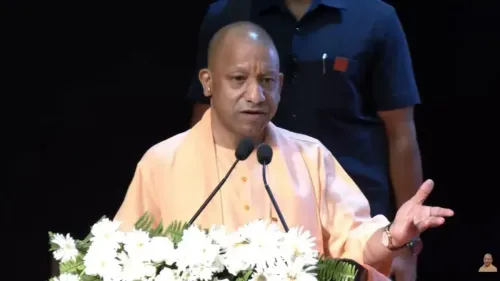
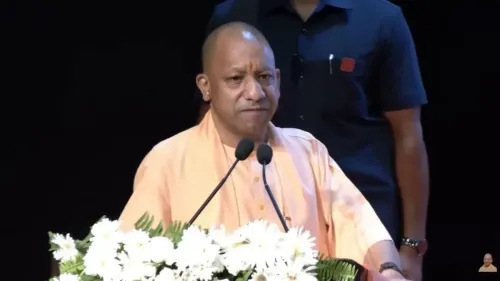
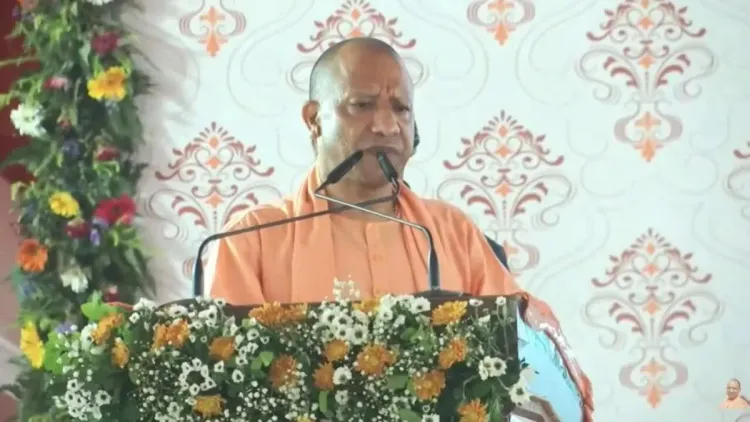
Uttar Pradesh Chief Minister Yogi Adityanath on Friday, 17 July 2026, publicly blamed the Indian National Congress for the 1947 Partition of India, asserting that Sikh communities and refugees from Bangladesh bore the heaviest human cost of that political decision. He further alleged that opposition voices fall silent when Dalit minorities face violence in Bangladesh.
Speaking in Hindi, the Chief Minister said: 'Desh ka vibhajan Congress ke paap ke kaaran hua, lekin khamiyaza Sikh bandhuo aur Bangladesh se aane waale bandhuo ne bhugta' ('The country's Partition happened because of Congress's sin, but the price was paid by our Sikh brothers and brothers who came from Bangladesh'). He added that when a Dalit is killed in Bangladesh today, 'these people's mouths go shut' — a pointed reference to opposition parties.
Context
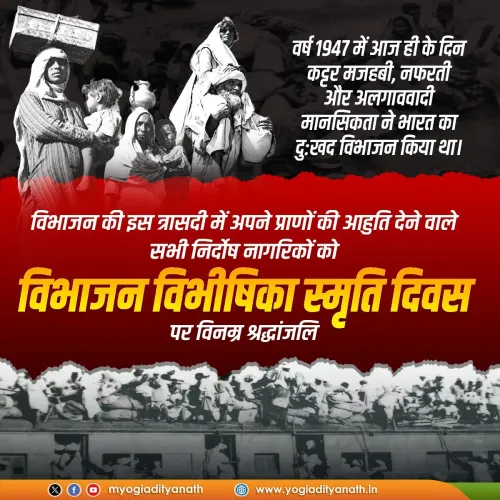
The Partition of India in August 1947 accompanied the transfer of power from British rule and resulted in the creation of Pakistan, including what was then East Pakistan (now Bangladesh). The upheaval triggered one of the largest forced migrations in human history, with the Sikh community in undivided Punjab suffering acute displacement and violence. Millions of Hindu and Sikh refugees crossed borders in both directions, and their rehabilitation remained a defining challenge for the early Indian state.
The Congress-led interim government was in office at the time of Partition, a fact that BJP leaders have consistently invoked to assign political responsibility for the humanitarian fallout. Yogi Adityanath's remarks follow a well-established pattern within the party of framing Partition as a Congress-authored tragedy.
Policy Backdrop
The Citizenship Amendment Act (CAA), enacted in December 2019, was designed to fast-track citizenship for persecuted non-Muslim minorities — including Hindus, Sikhs, and Buddhists — who migrated from Bangladesh, Pakistan, and Afghanistan before 31 December 2014. The BJP positioned the CAA as a corrective measure for communities it argues were abandoned as a consequence of Partition-era decisions.
Yogi Adityanath's statement renews attention to the situation of Dalit and Hindu minorities in Bangladesh, a subject the BJP has raised repeatedly in Parliament and in public forums. By linking historical Partition grievances to present-day minority persecution, the Chief Minister is reinforcing the ideological scaffolding that underpinned the CAA's passage.
Stakeholders and Impact
The Sikh community, particularly in Punjab and across the diaspora, carries a deep collective memory of Partition violence; any political invocation of that trauma tends to draw strong responses. Dalit and Hindu minorities in Bangladesh have periodically been the subject of human-rights concerns, and advocacy groups have documented incidents of communal violence against them, though the specific incident referenced in the post could not be independently verified from available information.
For the Congress party and the broader opposition, the remarks represent a direct political challenge — one that demands a rebuttal on both historical interpretation and contemporary foreign-policy positioning. The framing of opposition 'silence' on Bangladesh minority issues is likely to intensify ahead of any legislative session or state election cycle.
What's Next
Opposition parties, particularly Congress, are expected to respond to the historical characterisation and to the allegation of selective silence on minority rights. Parliamentary debates on CAA implementation and refugee policy could be sharpened by this renewed public framing. Diplomatic observers will also watch whether the remarks prompt any formal response regarding India-Bangladesh bilateral relations, given the sensitivity of minority-rights discourse in that context.
Point of View
Linking a 77-year-old historical grievance to a live contemporary issue — the condition of Dalit and Hindu minorities in Bangladesh. By pairing the two, he simultaneously keeps pressure on Congress over its founding-era legacy and frames the opposition as indifferent to minority suffering abroad. This dual-track attack is especially potent because it invokes both the Sikh community's Partition trauma and the CAA's stated humanitarian rationale, reinforcing the ideological coherence of the BJP's citizenship and refugee policy positions. The timing and tenor suggest the statement is aimed as much at shaping the terms of upcoming legislative or electoral debate as at addressing any single incident.
NationPress
16 Oct 2026
Frequently Asked Questions
Why does BJP blame Congress for the 1947 Partition of India?
The BJP argues that the Congress-led interim government accepted the Partition plan in 1947, making the party politically responsible for the communal violence and displacement that followed. This has been a recurring BJP talking point used to contrast its own stance on minority refugees with Congress's historical record.
What did CM Yogi Adityanath say about Bangladesh Dalits?
Yogi Adityanath alleged that when a Dalit is killed in Bangladesh, opposition parties go silent, accusing them of selective concern for minority rights depending on the political context.
How did the Sikh community suffer during the Partition of India?
The Sikh community, concentrated in undivided Punjab, faced mass displacement and communal violence during the 1947 Partition, with millions forced to migrate from what became West Pakistan to India under extremely violent conditions.
What is the Citizenship Amendment Act and how does it relate to Bangladesh refugees?
The Citizenship Amendment Act, passed in December 2019, fast-tracks Indian citizenship for persecuted non-Muslim minorities — including Hindus, Sikhs, and Buddhists — from Bangladesh, Pakistan, and Afghanistan who arrived in India before 31 December 2014. The BJP has framed it as redress for communities displaced by Partition-era decisions.
What is the situation of Dalit and Hindu minorities in Bangladesh?
Human-rights groups have documented periodic incidents of communal violence against Hindu and Dalit minorities in Bangladesh. The specific incident referenced by Yogi Adityanath in his July 2026 post could not be independently verified from available information at the time of publication.