CM Yogi marks 1975 Emergency anniversary, salutes democracy fighters
Synopsis
On the 51st anniversary of the 1975 Emergency, Uttar Pradesh Chief Minister Yogi Adityanath condemned the Congress-imposed suspension of civil liberties as a 'dark chapter' in Indian democracy and paid tribute to those who fought to defend constitutional rights during the 21-month period.
Key Takeaways
CM Yogi Adityanath posted a tribute on 25 June 2026 , marking the 51st anniversary of the 1975 Emergency .
He called the Emergency a 'dark chapter' that attempted to 'crush the constitutional soul' of India.
The Emergency was proclaimed by Prime Minister Indira Gandhi on 25 June 1975 and lasted 21 months until March 1977 .
Civil liberties, press freedom, and elections were suspended under Article 352 during the Emergency period.
The BJP has marked this anniversary annually since at least 2014 as part of its political and historical narrative against the Congress .
Similar statements from other BJP leaders and central government figures are expected on the same date.
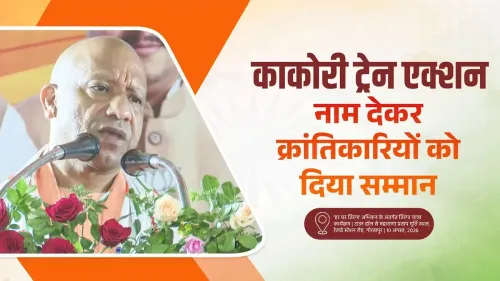
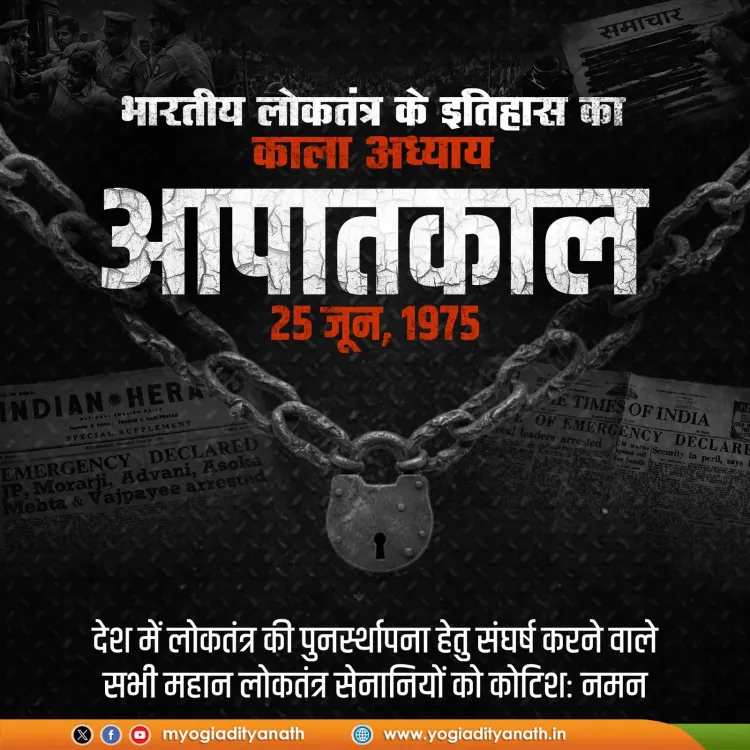
Uttar Pradesh Chief Minister Yogi Adityanath on Thursday, 25 June 2026 paid tribute to those who resisted the 1975 Emergency, calling it a 'dark chapter' in Indian democratic history and condemning the suspension of civil liberties imposed by the Congress government of the time.
Context
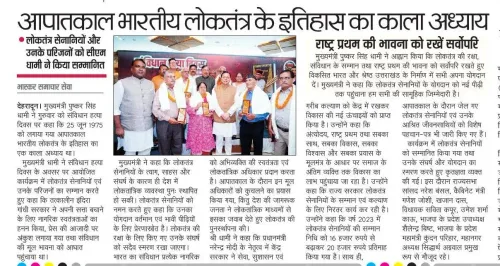
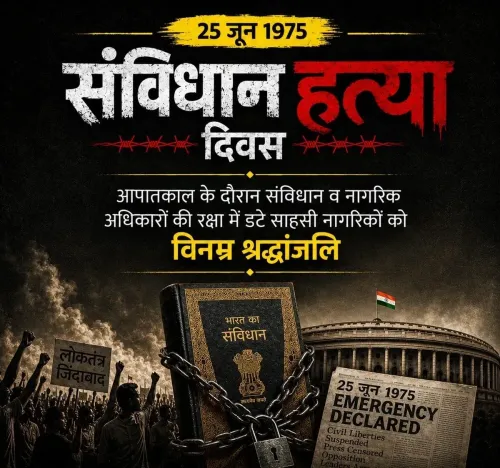
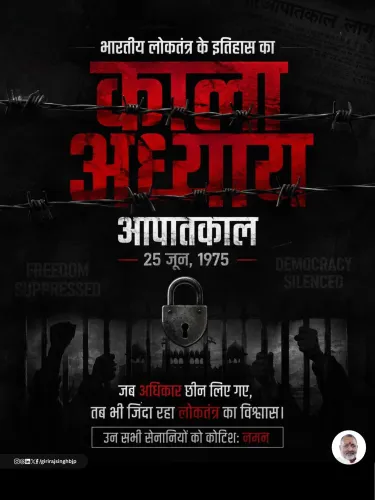
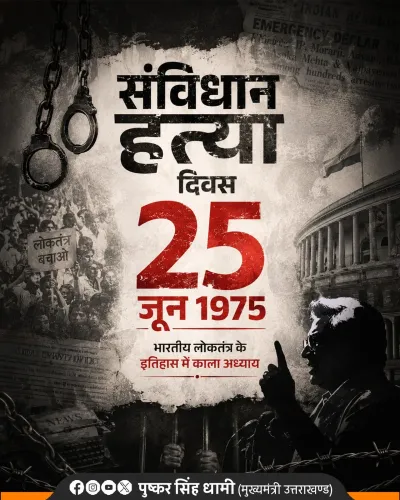
In his post, CM Yogi wrote: '25 जून, 1975 का दिन भारतीय लोकतंत्र के इतिहास का वह काला अध्याय है' ['25 June 1975 is that dark chapter in the history of Indian democracy'], adding that the Emergency was imposed to 'crush the constitutional soul of the nation.' He offered his deepest respects — 'कोटिश: नमन' ['a million salutes'] — to all those who endured hardship while fighting to protect democracy during that period.
The post was published on the 51st anniversary of the proclamation of the Emergency, which began on 25 June 1975 and lasted 21 months until March 1977. During that period, then Prime Minister Indira Gandhi suspended civil liberties, curtailed press freedom, and deferred elections, citing 'internal disturbance' under Article 352 of the Constitution.
Policy Backdrop
The Emergency of 1975–77 remains one of the most contested episodes in post-Independence Indian politics. Opposition leaders, including socialist stalwart Jayaprakash Narayan, were arrested; thousands of political workers were jailed; and fundamental rights were effectively suspended. Forced sterilisation programmes conducted during the period added to the humanitarian criticism of the era.
Since at least 2014, the BJP and its governments have consistently marked 25 June with public statements characterising the Emergency as emblematic of Congress-era authoritarianism. These annual commemorations form part of a deliberate effort to position the BJP as a guardian of constitutional values in contrast to the Congress's record.
Stakeholders and Impact
The post resonates with civil liberties advocates, Opposition parties, and citizens who view the Emergency as a cautionary lesson about the fragility of democratic institutions. For the BJP, the anniversary provides a recurring platform to reinforce its political identity and historical narrative ahead of electoral cycles.
The Indian National Congress, the party in power during the Emergency, has in recent years acknowledged the period as a mistake, though it disputes the BJP's framing of the episode as a defining indictment of the party's democratic credentials. Civil liberties groups and constitutional scholars continue to cite the Emergency in debates over the safeguarding of fundamental rights.
What's Next
Similar tributes and statements from other BJP chief ministers and central leaders are expected throughout the day, as the party traditionally uses 25 June for coordinated messaging on democratic values. References to the Emergency are also likely to surface in upcoming state election campaigns as part of the broader historical narrative the party has built over the past decade.
The annual remembrance underscores how the 1975 Emergency continues to shape political discourse in India — serving not only as a historical marker but as an active instrument in the contest over democratic legitimacy between India's two largest national parties.
Point of View
The statement frames the BJP not merely as a ruling party but as the inheritor of the democratic resistance movement that opposed Congress authoritarianism. The tribute to unnamed 'democracy fighters' also serves to broaden the appeal beyond party lines, echoing the legacy of figures like Jayaprakash Narayan who were not BJP-aligned. Over a decade of consistent Emergency commemorations have embedded this narrative deeply enough that it now functions as a reliable mobilisation tool ahead of state elections.
NationPress
23 Sept 2026
Frequently Asked Questions
Why did Yogi Adityanath post about the Emergency on 25 June 2026?
25 June marks the anniversary of the proclamation of the 1975 Emergency by Prime Minister Indira Gandhi. CM Yogi Adityanath posted a tribute to those who resisted it, calling it a dark chapter in Indian democratic history — continuing a BJP tradition of marking the date annually.
What was the 1975 Emergency in India?
The 1975 Emergency was a 21-month period from 25 June 1975 to March 1977 during which Prime Minister Indira Gandhi suspended civil liberties, press freedom, and elections under Article 352 of the Constitution, citing 'internal disturbance.'
Who were the democracy fighters mentioned by CM Yogi?
CM Yogi referred broadly to all those who endured hardship and resisted the Emergency. Prominent among such figures historically is Jayaprakash Narayan, the socialist leader who led the 'Total Revolution' movement and was jailed during the Emergency period.
Why does the BJP commemorate the 1975 Emergency every year?
The BJP has used 25 June annually since at least 2014 to highlight what it characterises as Congress-era authoritarianism and to position itself as a defender of constitutional values and democratic freedoms in contrast to the Congress's record.
What did Yogi Adityanath say about the Emergency in his post?
He called 25 June 1975 a 'dark chapter' in Indian democratic history, saying the Emergency was imposed to crush the constitutional soul of the nation, and offered his deepest respects to all who fought for democracy during that period despite severe hardship.