Punjab Police Holds 39,000+ Meetings in Yudh Nashian Virudh Drive
Synopsis
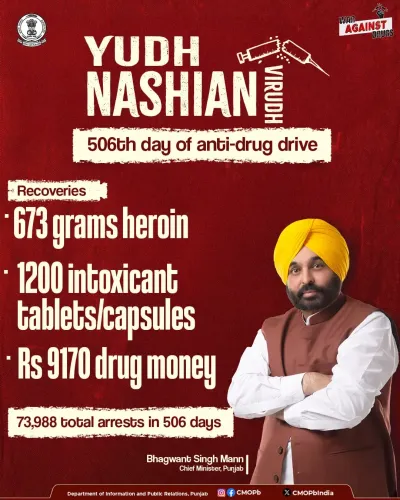
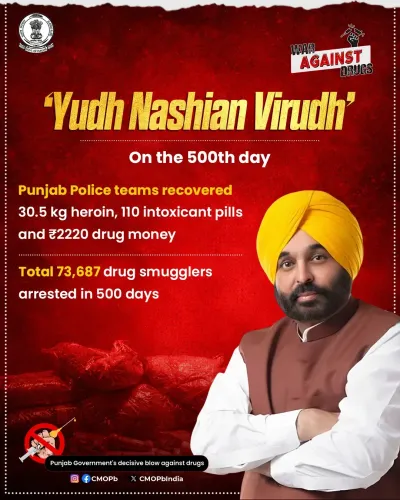
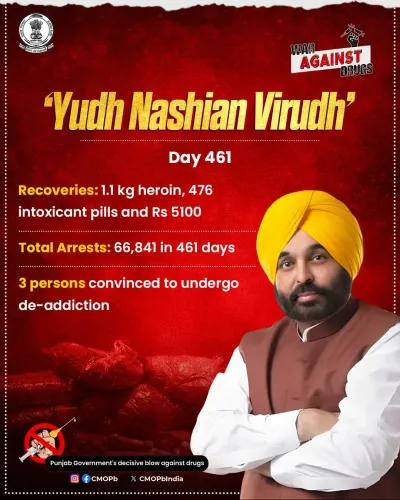
Punjab Police has conducted over 39,000 public meetings under CM Bhagwant Singh Mann's 'Yudh Nashian Virudh' campaign since March 1, 2025, reaching students, youth, and Village and Ward Defence Committees across the state in a large-scale grassroots anti-drug drive.
Key Takeaways
Over 39,000 public meetings have been held by Punjab Police under the Yudh Nashian Virudh campaign since its launch on March 1, 2025 .
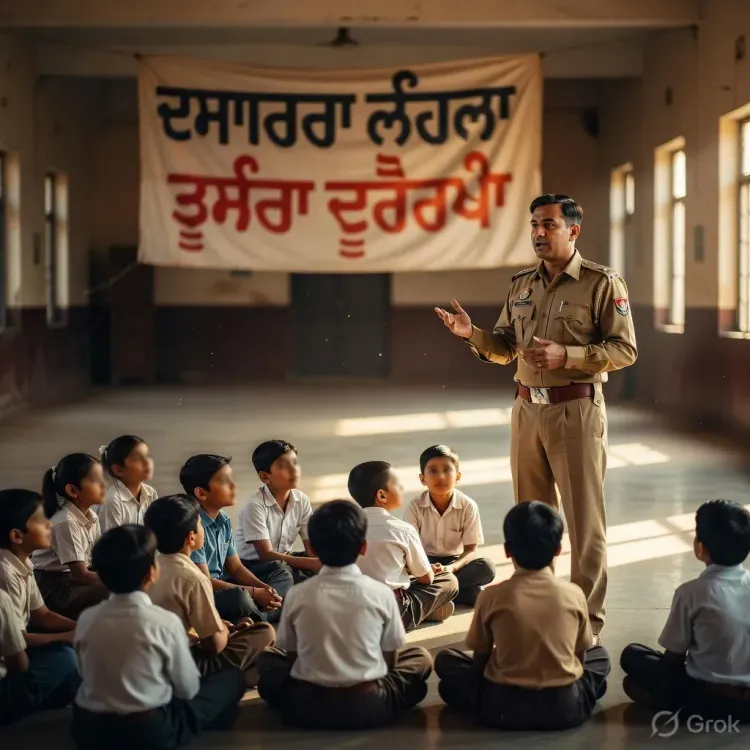
10,605 meetings have been conducted in schools, colleges, and educational institutions to build drug awareness among students.
3,303 Sampark Meetings have targeted youth, identified as the most vulnerable group to drug abuse.
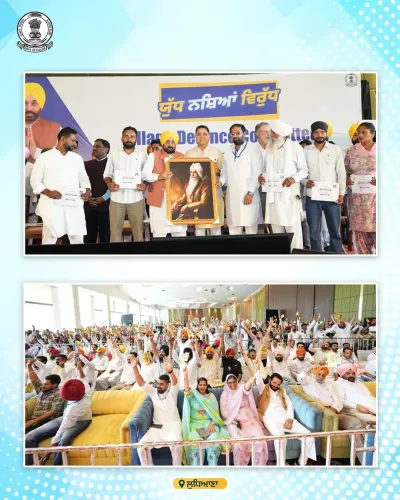
More than 25,328 meetings have been held with Village Defence Committees and Ward Defence Committees across rural and urban Punjab.
The campaign was launched by Chief Minister Bhagwant Singh Mann 's AAP government, which placed drug eradication at the centre of its 2022 electoral mandate.
Impact data on drug seizures and addiction trends has not yet been released alongside the outreach figures.
More than 39,000 public meetings in roughly 17 months — that is the scale at which Punjab Police has been waging Chief Minister Bhagwant Singh Mann's anti-drug campaign, Yudh Nashian Virudh ('War Against Drugs'), since its launch on March 1, 2025. The Chief Minister's Office of Punjab released the milestone figures on Sunday, August 9, 2026, painting a picture of one of the state's most intensive grassroots mobilisation drives in recent memory.
Classrooms, colonies, and village councils: where the campaign is fighting
The numbers break down into three distinct theatres. Punjab Police has conducted 10,605 meetings with students at schools, colleges, and other educational institutions — sessions designed to raise awareness about the dangers of drug abuse, promote healthy lifestyles, and equip young people with tools to resist peer pressure. Separately, 3,303 Sampark Meetings have been organised with a sharper focus on youth, the demographic the state government identifies as most vulnerable to addiction.
The largest slice of the outreach — more than 25,328 meetings — has been held with members of Village Defence Committees (VDCs) in rural areas and Ward Defence Committees in urban neighbourhoods. These community-watch structures, already embedded in local governance, are being repurposed as the campaign's last-mile delivery network, carrying the anti-drug message into every village and every ward.
Why Punjab, and why this model
Punjab has carried the weight of a drug crisis for decades, a problem that has outlasted multiple governments and policing strategies. When the Aam Aadmi Party swept to power in the 2022 assembly elections, CM Bhagwant Singh Mann placed drug eradication at the centre of the administration's identity — a promise that was politically necessary in a state where the issue resonates in nearly every household.
Yudh Nashian Virudh reflects a deliberate shift toward community-embedded enforcement: rather than relying solely on seizures and arrests, the campaign bets on changing social norms at the street and village level. The use of Village Defence Committees and Ward Defence Committees as outreach vehicles mirrors national-level frameworks promoting drug-free villages through local participation — but deploys them at a density that is striking even by those standards.
The numbers the government still needs to answer
Meeting counts measure activity; they do not, by themselves, measure impact. The critical data points — trends in drug seizures, addiction case loads, and rehabilitation outcomes since March 2025 — have not been released alongside these figures. The government has flagged periodic impact reporting as something to watch, and independent assessment of whether 39,000 meetings are translating into fewer addicts will be the real test of the campaign's claim.
For now, the sheer operational footprint signals that the Mann government is treating Yudh Nashian Virudh not as a seasonal drive but as a structural commitment — one that has touched every corner of a state that has waited a long time for exactly that.
Point of View
000-plus meetings in 17 months — signals that the AAP government in Punjab is using the anti-drug campaign as a flagship governance proof-point ahead of future electoral cycles, not merely as a law-enforcement exercise. Routing the drive through Village and Ward Defence Committees is a politically astute move: it embeds the party's brand into existing community structures. However, the absence of outcome data — seizure trends, addiction rates, rehabilitation numbers — means the campaign remains, for now, an exercise in visible activity rather than demonstrated impact. The government's next credibility test is releasing that evidence.
NationPress
23 Sept 2026
Frequently Asked Questions
What is the Yudh Nashian Virudh campaign in Punjab?
'Yudh Nashian Virudh' (War Against Drugs) is a statewide anti-drug campaign launched by the Punjab government under Chief Minister Bhagwant Singh Mann on March 1, 2025, combining police-led awareness meetings with community outreach through schools, youth groups, and local defence committees.
How many meetings has Punjab Police held under Yudh Nashian Virudh?
As of August 5, 2026, Punjab Police has held over 39,000 public meetings since the campaign's launch, including 10,605 sessions in educational institutions, 3,303 Sampark Meetings focused on youth, and more than 25,328 meetings with Village and Ward Defence Committees.
What are Village Defence Committees in Punjab?
Village Defence Committees (VDCs) are rural community groups that support local law-and-order and social welfare efforts. Under the Yudh Nashian Virudh campaign, they are being used as a grassroots network to spread anti-drug awareness in Punjab's villages.
What is the AAP government's approach to the drug problem in Punjab?
The Aam Aadmi Party government, led by CM Bhagwant Singh Mann since 2022, has prioritised drug eradication by combining police enforcement with large-scale community and educational outreach, using existing local structures like Village and Ward Defence Committees as delivery channels.
When did the Yudh Nashian Virudh campaign start?
The Yudh Nashian Virudh campaign was launched on March 1, 2025, by the Punjab government under Chief Minister Bhagwant Singh Mann.