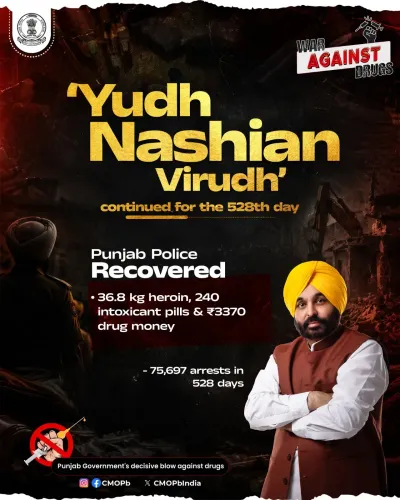
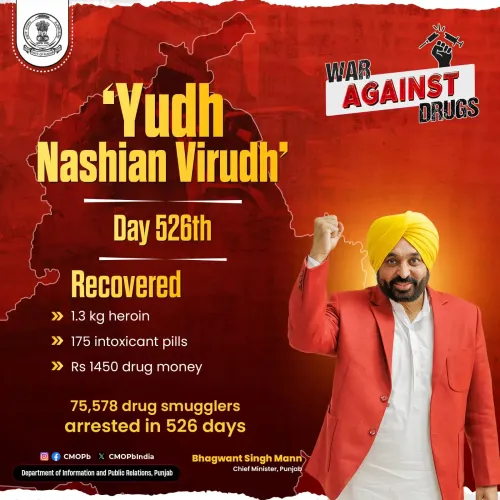
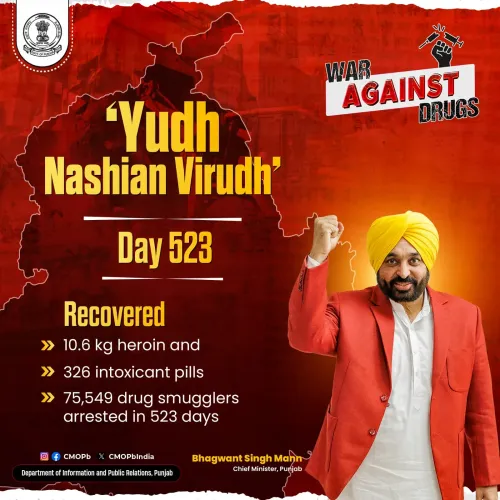
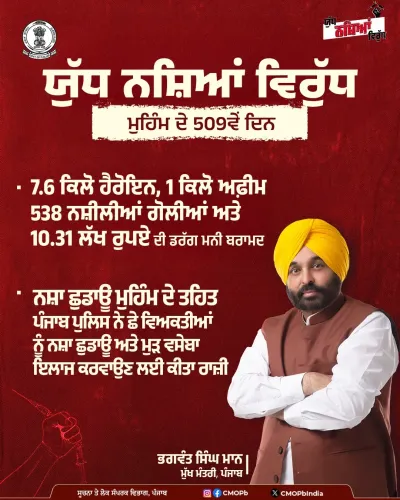
Punjab Police Marks 506 Days of Yudh Nashian Virudh Drive
Synopsis
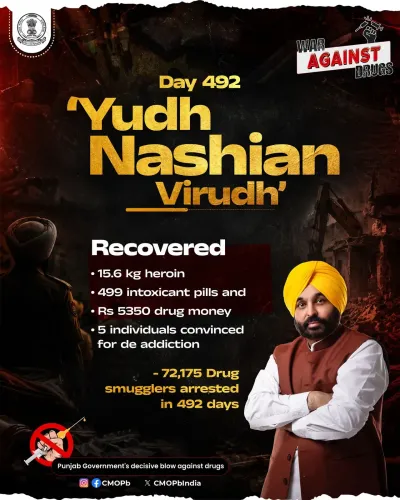
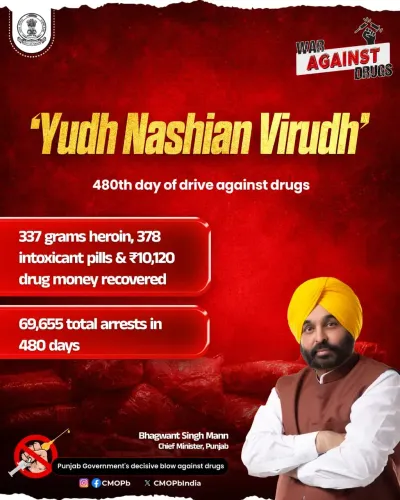
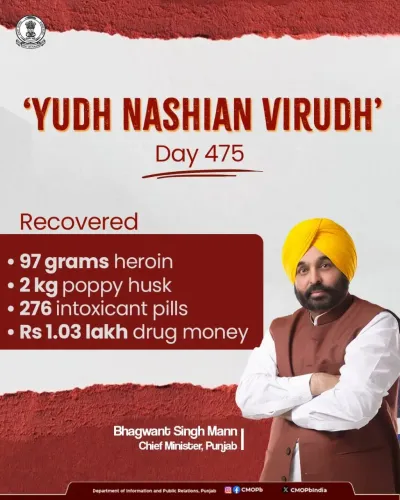
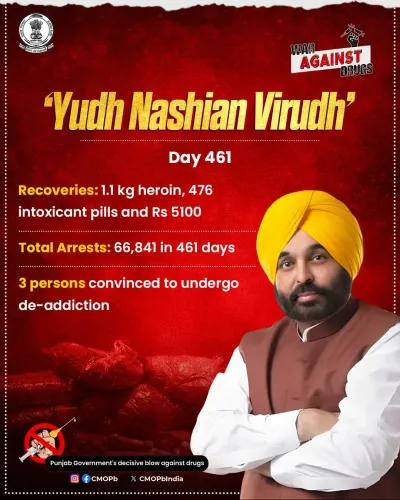
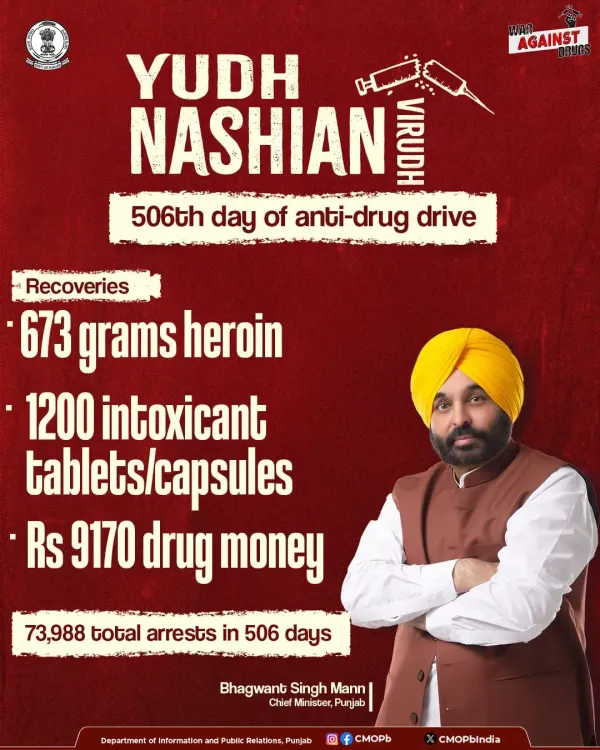
Punjab Police's Yudh Nashian Virudh anti-narcotics drive entered its 506th day on 21 July 2026, with cumulative arrests reaching 73,988. The latest operations netted 673 grams of heroin and 1,200 intoxicant tablets, while 18 persons were persuaded to enter de-addiction treatment.
Key Takeaways
The Yudh Nashian Virudh campaign completed 506 consecutive days of operations as of 21 July 2026 .
Latest seizures include 673 grams of heroin , 1,200 intoxicant tablets/capsules , and Rs 9,170 in drug money.
Total drug smugglers arrested since the campaign began now stands at 73,988 .
18 persons were persuaded to voluntarily undergo de-addiction and rehabilitation in the latest reporting cycle.
The campaign combines supply-side enforcement with demand-side rehabilitation outreach under Chief Minister Bhagwant Mann 's government.
Punjab's border geography and links to the Golden Crescent trafficking corridor make sustained enforcement a long-term state priority.
The Chief Minister's Office of Punjab on Tuesday, 21 July 2026, reported that Punjab Police has sustained its flagship anti-narcotics campaign Yudh Nashian Virudh into its 506th consecutive day, with fresh arrests yielding significant drug seizures and continued rehabilitation outreach.
In the latest round of operations, police teams recovered 673 grams of heroin, 1,200 intoxicant tablets and capsules, and Rs 9,170 in drug money from arrested smugglers. The CMO stated that the cumulative tally of drug smugglers arrested since the campaign's launch has now reached 73,988 over 506 days.
Context
The Yudh Nashian Virudh — loosely translated as 'War Against Drugs' — is a statewide enforcement and rehabilitation drive that Chief Minister Bhagwant Mann's government launched as one of its earliest and most visible governance commitments after the Aam Aadmi Party came to power in March 2022. The campaign combines daily enforcement sweeps targeting supply chains with a parallel effort to persuade active drug users to seek treatment. In the latest update, 18 persons were convinced to voluntarily undergo de-addiction and rehabilitation, underscoring the dual-track nature of the drive.Policy Backdrop
Punjab has long grappled with drug trafficking linked to the Golden Crescent region — the heroin-producing corridor spanning parts of Afghanistan, Iran, and Pakistan — owing to its proximity to the international border. Successive state governments have run enforcement-heavy anti-drug operations since at least the mid-2010s, but the present administration has distinguished its approach through daily public reporting of arrest and seizure numbers, maintaining visible accountability. The campaign also aligns with the central government's Nasha Mukt Bharat Abhiyan, though the state drive operates under its own branding and command structure.Stakeholders and Impact
The primary beneficiaries of the campaign are Punjab's youth, border-district communities, and families affected by addiction — demographics that have borne a disproportionate share of the state's drug crisis. For smuggling networks, the sustained arrest pressure — averaging roughly 146 arrests per day over the campaign's duration — represents a persistent operational disruption. The rehabilitation component, while modest in daily numbers, signals an intent to address demand alongside supply. Families of addicts who have been persuaded to enter treatment represent a quieter but significant human-interest dimension of the campaign.What's Next
The CMO's consistent daily reporting cadence suggests the campaign will continue well beyond the 506-day mark without a declared endpoint. Observers will watch for the release of consolidated quarterly seizure and arrest data by Punjab Police, as well as any announcements on expanding de-addiction centre capacity or deepening coordination with central rehabilitation programmes. Whether the government moves to publish conviction rates alongside arrest figures will be a key indicator of whether the campaign's legal outcomes match its enforcement optics.Point of View
000, the numbers serve as both a performance metric and a political statement for the AAP government, which staked early credibility on tackling Punjab's drug crisis. However, the relatively modest daily rehabilitation numbers — 18 persons in a single cycle — point to an ongoing challenge: converting enforcement momentum into durable demand-side outcomes. The campaign's long-term credibility will hinge on whether prosecution and conviction data eventually accompany the arrest tallies.
NationPress
20 Oct 2026
Frequently Asked Questions
What is Yudh Nashian Virudh?
Yudh Nashian Virudh is a statewide anti-narcotics campaign launched by the Punjab government under Chief Minister Bhagwant Mann after the AAP came to power in March 2022. It combines daily enforcement operations targeting drug smugglers with rehabilitation outreach to persuade addicts to seek treatment.
How many drug smugglers have been arrested in Punjab's anti-drug drive?
As of 21 July 2026 — the 506th day of the campaign — the total number of drug smugglers arrested under Yudh Nashian Virudh has reached 73,988, according to the Chief Minister's Office of Punjab.
What drugs were seized in the latest Punjab Police anti-drug operation?
In the latest round of operations reported on 21 July 2026, Punjab Police recovered 673 grams of heroin, 1,200 intoxicant tablets and capsules, and Rs 9,170 in drug money from arrested smugglers.
What is the de-addiction component of the Punjab anti-drug campaign?
Alongside enforcement, Punjab Police teams actively persuade drug users to voluntarily enter de-addiction and rehabilitation centres. In the latest update, 18 persons agreed to undergo treatment as part of this rehabilitation outreach.
Why is Punjab particularly affected by drug trafficking?
Punjab shares an international border and sits close to the Golden Crescent — a major heroin-producing region spanning parts of Afghanistan, Iran, and Pakistan — making it a transit and consumption hotspot for narcotics. This geographic vulnerability has driven successive state governments to run enforcement-heavy anti-drug campaigns.