Punjab CMO: 74,411 drug smugglers arrested in 509-day drive
Synopsis
Punjab's 'Yudh Nashian Virudh' anti-drug campaign entered its 509th consecutive day on 24 July 2026, with police seizing 7.6 kg heroin, 1 kg opium, 538 intoxicant pills and Rs 10.31 lakh in drug money. Total arrests since the campaign began have reached 74,411.
Key Takeaways
Punjab Police continued the 'Yudh Nashian Virudh' campaign for the 509th consecutive day on 24 July 2026 .
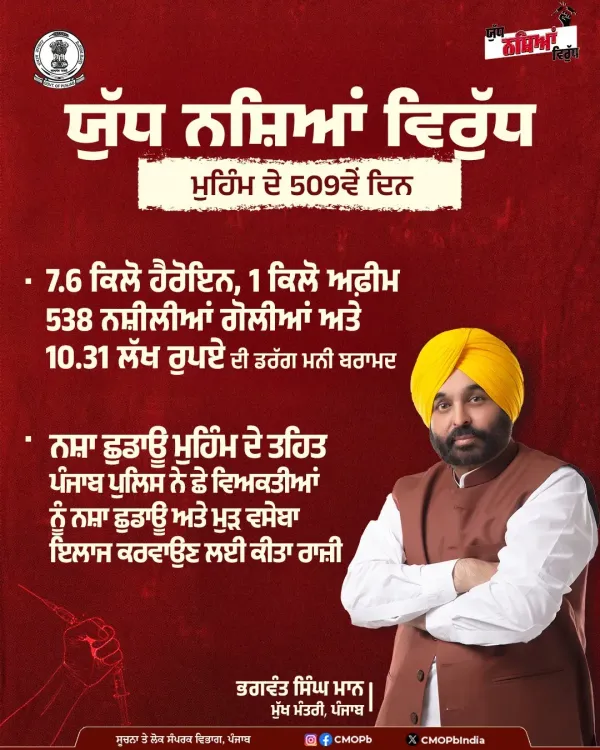
Seizures in the latest operation included 7.6 kg heroin , 1 kg opium , 538 intoxicant pills , and Rs 10.31 lakh in drug money.
Cumulative arrests since the campaign's launch have reached 74,411 drug smugglers over 509 days.
The campaign was launched by the AAP government under CM Bhagwant Mann after it came to power in March 2022 .
Punjab's drug crisis is linked to cross-border trafficking networks along the India-Pakistan border .
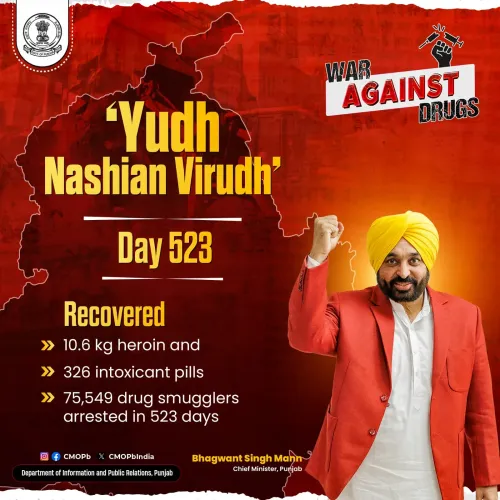
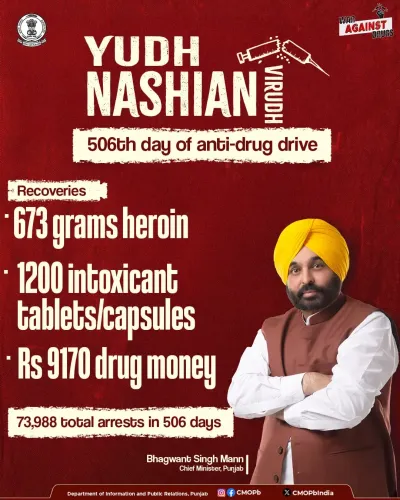
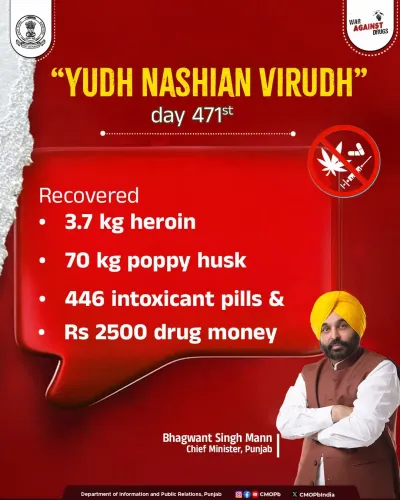
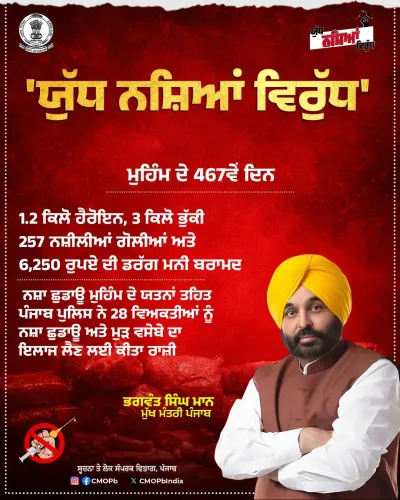
Daily public reporting of enforcement metrics is a deliberate accountability mechanism of the current state government.
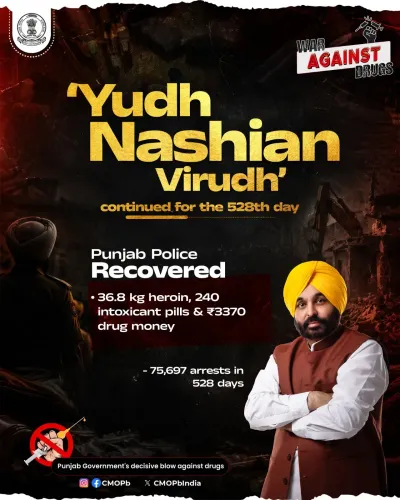
The Chief Minister's Office of Punjab announced on Friday, 24 July 2026 that police teams have sustained the state's flagship anti-narcotics campaign, 'Yudh Nashian Virudh' (War Against Drugs), into its 509th consecutive day, with fresh arrests and significant seizures recorded in the latest operation.
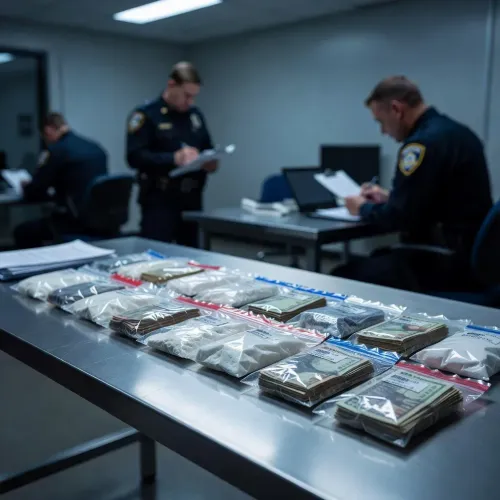
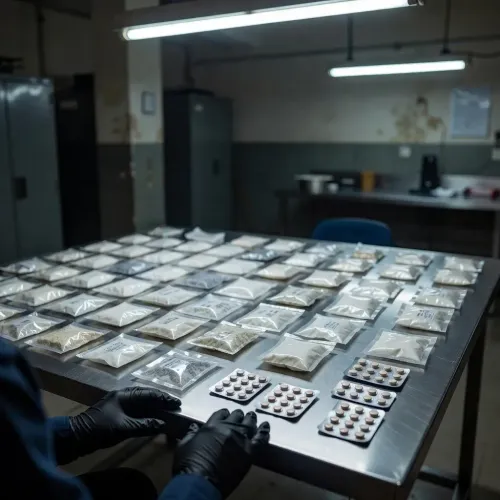
In the day's operations, Punjab Police recovered 7.6 kg of heroin, 1 kg of opium, 538 intoxicant pills, and Rs 10.31 lakh in drug money from the possession of arrested traffickers. The cumulative arrest tally since the campaign began has now reached 74,411 drug smugglers over 509 days.
Context
The post, shared by the official CMO Punjab handle, states in Punjabi and English: 'Police teams have continued its drive against drugs 'Yudh Nashian Virudh' for the 509th day. Following the arrest of the drug smugglers the teams recovered 7.6 kg heroin, 1 kg opium, 538 intoxicant pills and Rs 10.31 lakh drug money from their possession.'
The daily cadence of such updates reflects the government's practice of publicly reporting enforcement metrics to signal accountability and operational continuity to Punjab's citizens.
Policy Backdrop
The Aam Aadmi Party-led government under Chief Minister Bhagwant Mann, which came to power in March 2022, identified drug eradication as a central governance priority from its first days in office. The 'Yudh Nashian Virudh' campaign was launched as a coordinated, sustained enforcement effort involving raids, arrests, and seizures targeting trafficking networks across the state.
Punjab has faced acute opioid and heroin abuse challenges for decades, with cross-border supply routes — particularly along the India-Pakistan border — feeding trafficking networks. Multiple administrations across party lines have prioritised anti-narcotics policing, though the scale and public reporting of the current campaign mark a distinct approach under the AAP government.
Stakeholders and Impact
The campaign's primary beneficiaries are Punjab's youth, who have historically borne the heaviest social cost of the state's drug crisis. Border districts, where trafficking networks are most active, are a particular focus of enforcement operations.
A cumulative tally of 74,411 arrests over 509 days represents a substantial enforcement footprint. Independent verification of these figures has not been established in public records prior to this announcement, and trafficking networks remain active despite sustained pressure, reflecting the structural complexity of cross-border narcotics supply chains.
What's Next
The state government is expected to continue releasing daily or periodic enforcement statistics as part of its public accountability framework for the campaign. Observers will watch for any proposed amendments to Punjab's excise or narcotics laws in the state assembly, which could signal a shift from purely enforcement-led approaches toward broader legislative reform.
The trajectory of seizure volumes and arrest rates in the coming weeks will indicate whether the campaign's operational intensity is being maintained or is beginning to plateau after nearly a year and a half of continuous operations.
Point of View
411 arrests over 509 days is a significant number, but the continued daily seizures of heroin and opium also signal that supply networks remain resilient, raising questions about whether arrests alone can disrupt deeply entrenched cross-border trafficking. The campaign fits a broader AAP pattern — seen in Delhi's governance model — of using transparent, data-driven public dashboards to build political capital. The real test will be whether enforcement intensity translates into measurable reductions in drug availability and abuse rates across Punjab's border districts.
NationPress
23 Oct 2026
Frequently Asked Questions
What is 'Yudh Nashian Virudh' in Punjab?
'Yudh Nashian Virudh' (meaning 'War Against Drugs') is a sustained anti-narcotics campaign run by Punjab Police under the AAP government led by Chief Minister Bhagwant Mann, involving daily raids, arrests of drug traffickers, and public reporting of seizure data.
How many drug smugglers have been arrested in Punjab's anti-drug campaign?
As of day 509 of the campaign on 24 July 2026, a total of 74,411 drug smugglers have been arrested under the 'Yudh Nashian Virudh' drive, according to the Chief Minister's Office of Punjab.
What drugs were seized on day 509 of Punjab's Yudh Nashian Virudh?
On the 509th day of the campaign, Punjab Police seized 7.6 kg of heroin, 1 kg of opium, 538 intoxicant pills, and Rs 10.31 lakh in drug money from arrested traffickers.
Why does Punjab have a serious drug problem?
Punjab has faced acute opioid and heroin abuse for decades, primarily due to its proximity to cross-border trafficking networks along the India-Pakistan border, which have supplied narcotics into the state across multiple administrations.
What is CM Bhagwant Mann doing about drugs in Punjab?
Chief Minister Bhagwant Mann's AAP government launched the 'Yudh Nashian Virudh' campaign after taking office in March 2022, prioritising coordinated police enforcement, daily public reporting of arrest and seizure data, and sustained operational pressure on trafficking networks.