Punjab's anti-drug drive hits Day 593, total arrests cross 85,000
Synopsis
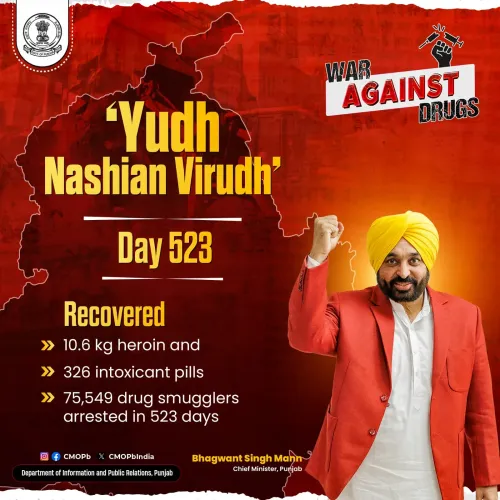
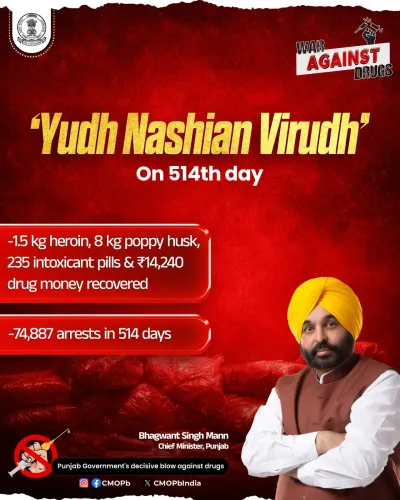
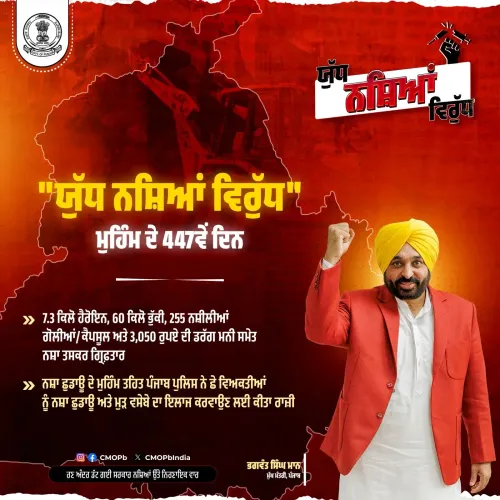
On Day 593 of the Yudh Nashian Virudh drive, Punjab Police seized 3.8 kg heroin, 59 kg poppy husk and ₹4.77 lakh in drug money, pushing total arrests to 85,467 while convincing 28 persons to enter de-addiction treatment.
Key Takeaways
Day 593 of the Yudh Nashian Virudh anti-drug campaign was reported by the Chief Minister's Office of Punjab on 16 October 2026 .
Single-day seizures included 3.8 kg heroin , 59 kg poppy husk , 632 intoxicant pills , and ₹4.77 lakh in drug money.
Cumulative arrests since the campaign launched stand at 85,467 over 593 days, averaging roughly 144 arrests per day .
28 persons were persuaded by Punjab Police on Day 593 to voluntarily enter de-addiction and rehabilitation treatment.
The campaign was launched by Chief Minister Bhagwant Mann 's AAP government after it took office in March 2022 , combining enforcement with rehabilitation outreach.
Daily public reporting of figures is a deliberate accountability mechanism built into the campaign's design.
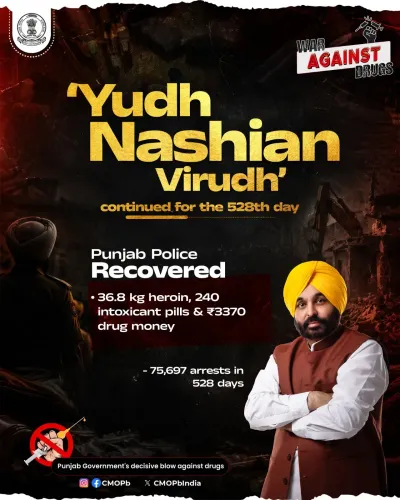
Nearly 85,500 drug smugglers behind bars in under two years — that is the cumulative weight of what Punjab's relentless street-level operation has delivered. On Friday, 16 October 2026, the Chief Minister's Office of Punjab announced the latest haul from the ongoing Yudh Nashian Virudh ('War Against Drugs') campaign, now in its 593rd consecutive day of enforcement action across the state.
What Day 593 seized
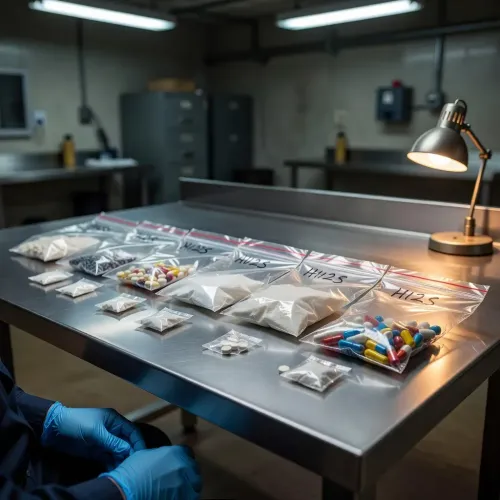
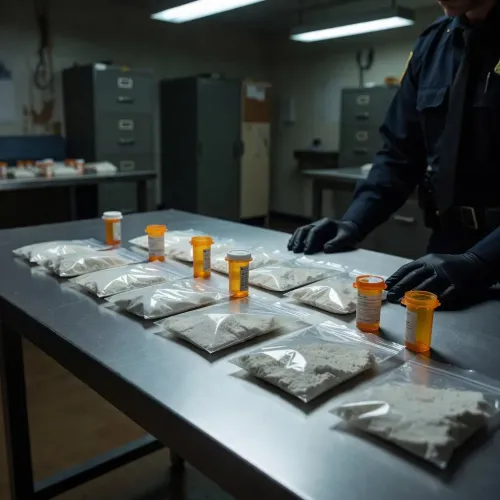
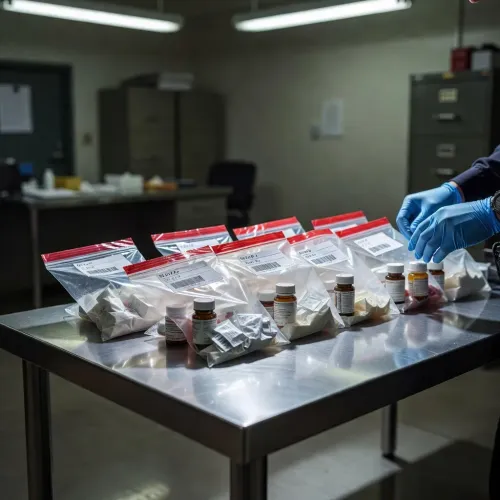
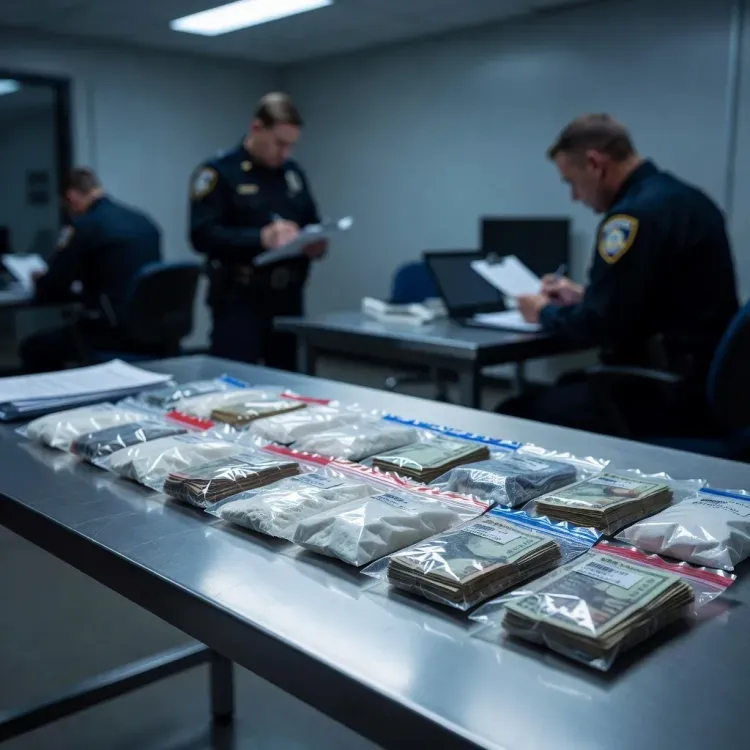
Punjab Police teams operating on 16 October arrested fresh batches of drug smugglers and recovered 3.8 kg of heroin, 59 kg of poppy husk, 632 intoxicant pills, and ₹4.77 lakh in drug money — proceeds that would otherwise have fed back into the supply chain. The single-day seizure snapshot, though modest in isolation, is consistent with the campaign's daily tempo of targeted ground-level operations.
The cumulative picture is starker: the total number of drug smugglers arrested since the drive launched stands at 85,467, spread across 593 days of unbroken enforcement. That works out to roughly 144 arrests per day on average — a pace that few state-level anti-narcotics drives in India have publicly sustained.
The rehabilitation thread inside the enforcement blitz
What distinguishes the Yudh Nashian Virudh model from pure crackdown policing is the parallel de-addiction track. On Day 593 alone, Punjab Police convinced 28 persons to voluntarily undergo de-addiction and rehabilitation treatment. This outreach component — persuading users rather than simply arresting them — reflects the dual-mandate framework Chief Minister Bhagwant Mann's government baked into the campaign when the Aam Aadmi Party took office in March 2022.
Punjab has long been a pressure point for opiate and synthetic drug trafficking, partly because of porous cross-border supply corridors. Successive state governments cycled through enforcement surges and rehabilitation pledges without sustaining both simultaneously. The current administration's daily public reporting — numbers, quantities, and rehabilitation referrals posted each day through the CMO's official channels — is itself a governance choice, creating a public accountability loop that predecessors did not build.
Why the daily drum-beat of numbers matters
Publishing figures every single day for 593 days straight is not just communications strategy — it is a structural commitment. Any gap in the sequence becomes a visible anomaly. That design keeps operational pressure on field units and keeps the issue in front of voters, particularly in constituencies where drug addiction has hollowed out households and dimmed economic participation among the young.
With the total arrest count now past 85,000, the next symbolic threshold — and the next political data point — is 90,000. Whether the pace of de-addiction referrals scales proportionally will be the more important measure of whether enforcement is translating into lasting community recovery.
Point of View
000 arrests, the scale demands scrutiny of conviction rates and court capacity, not just arrest tallies. The real test of the campaign's legacy will be whether the de-addiction referral pipeline — currently a small fraction of total actions — grows into a measurable reduction in drug-use prevalence among Punjab's youth.
NationPress
16 Oct 2026
Frequently Asked Questions
What is Yudh Nashian Virudh?
'Yudh Nashian Virudh' means 'War Against Drugs' in Punjabi. It is a state-wide anti-narcotics campaign launched by Chief Minister Bhagwant Mann's AAP government in Punjab after it took office in March 2022, combining daily police enforcement raids with de-addiction and rehabilitation outreach.
How many drug smugglers have been arrested in Punjab's anti-drug drive?
As of Day 593 of the Yudh Nashian Virudh campaign on 16 October 2026, the total number of drug smugglers arrested stands at 85,467.
What drugs were seized by Punjab Police on Day 593?
On Day 593, Punjab Police recovered 3.8 kg of heroin, 59 kg of poppy husk, 632 intoxicant pills, and ₹4.77 lakh in drug money.
Does Punjab's anti-drug campaign include rehabilitation?
Yes. Alongside enforcement, Punjab Police teams actively convince drug users to voluntarily enter de-addiction and rehabilitation treatment. On Day 593 alone, 28 persons were persuaded to undergo such treatment.
Why is Punjab particularly affected by the drug problem?
Punjab's geographic location near international borders has historically made it vulnerable to cross-border drug trafficking, particularly opiates and synthetic narcotics. High rates of drug use among the state's youth have been a persistent social and political issue across successive state governments.