Punjab CM Office: 67,833 Drug Smugglers Arrested in 467 Days
Synopsis
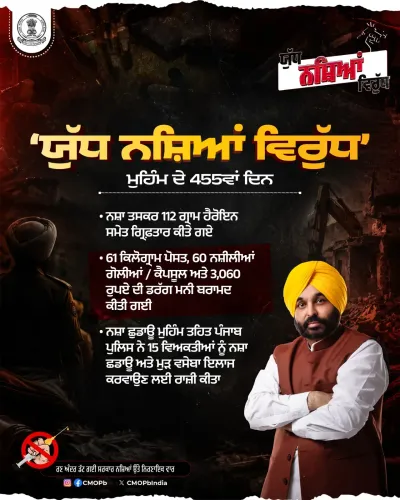
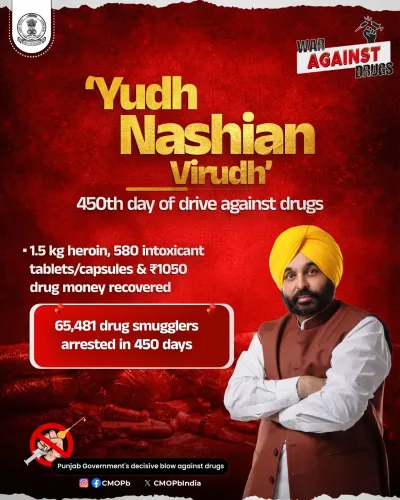
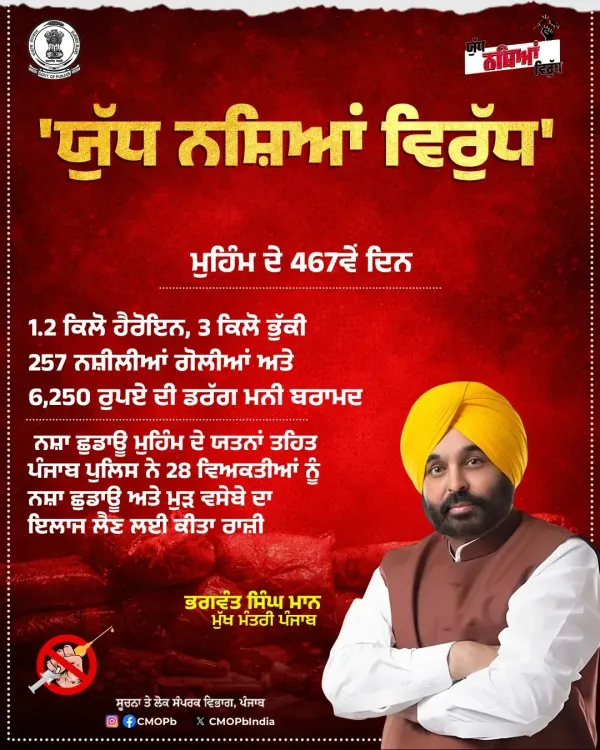
Punjab's 'Yudh Nashian Virudh' anti-drug campaign marked its 467th consecutive day on June 11, 2026, with police recovering 1.2 kg heroin, 3 kg poppy husk, 257 intoxicant pills, and Rs 6,250 in drug money. Total arrests under the drive have reached 67,833.
Key Takeaways
Punjab Police completed the 467th consecutive day of the 'Yudh Nashian Virudh' anti-drug campaign on June 11, 2026 .
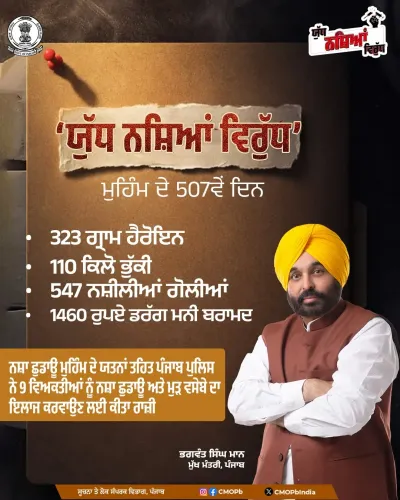
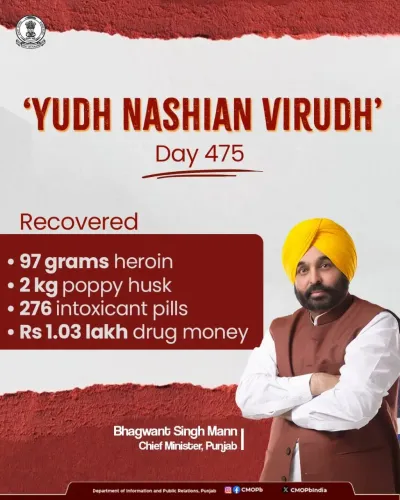
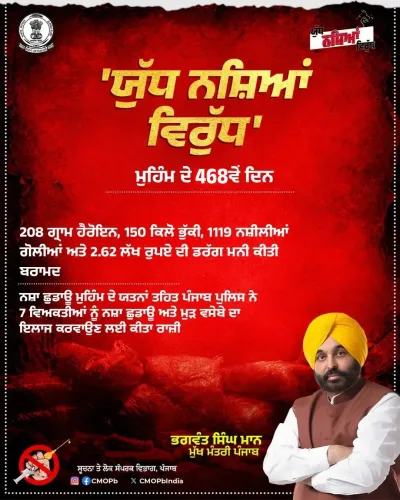
Day 467 recoveries included 1.2 kg heroin , 3 kg poppy husk , 257 intoxicant pills , and Rs 6,250 in drug money.
Cumulative arrests under the campaign have reached 67,833 drug smugglers in 467 days.
The campaign was launched after the 2022 Punjab assembly elections as a sustained police-led anti-narcotics operation.
Daily public reporting of arrests and seizures forms a core part of the administration's governance-delivery communication strategy.
Punjab's proximity to international drug-trafficking corridors makes sustained enforcement a long-term public-health and security priority.
The Chief Minister's Office of Punjab announced on Thursday, June 11, 2026, that the state's anti-drug campaign 'Yudh Nashian Virudh' completed its 467th consecutive day of operations, with police teams making fresh arrests and recovering narcotics including heroin, poppy husk, and intoxicant pills. The cumulative tally of drug smugglers arrested under the drive has now reached 67,833 since the campaign's launch.
What the Day's Operations Recovered
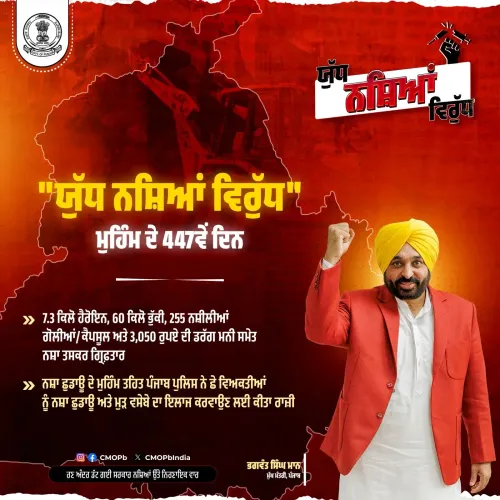
On day 467, Punjab Police teams arrested drug smugglers and seized 1.2 kg of heroin, 3 kg of poppy husk, 257 intoxicant pills, and Rs 6,250 in drug money from their possession. The recoveries, though a single day's haul, reflect the scale and granularity of the daily enforcement push that the administration has maintained without interruption.
The official post, shared in both Punjabi and English, carried the hashtags #ਯੁੱਧ_ਨਸ਼ਿਆਂ_ਵਿਰੁੱਧ ('Yudh Nashian Virudh') and #ਨਸ਼ਾ_ਮੁਕਤ_ਪੰਜਾਬ ('Drug-Free Punjab'), signalling the government's intent to keep the campaign in public view.
Context: Punjab's Drug Crisis and the Campaign's Origins
Punjab has faced a long-documented narcotics crisis involving heroin, synthetic pills, and poppy husk — substances that have devastated communities, particularly among the state's youth. Successive state governments have prioritised enforcement alongside de-addiction programmes to address the crisis.
Following the 2022 Punjab assembly elections, the current government launched 'Yudh Nashian Virudh' ('War Against Drugs') as a sustained, police-led operation targeting smugglers and trafficking networks across the state. Daily reporting of arrests and seizures has been a central feature of the campaign's public communication strategy.
Policy Backdrop: Performance Metrics as Governance Delivery
The daily disclosure of arrest figures and seizure quantities serves as a visible performance metric for the administration, demonstrating governance delivery on internal security and public health. Reaching 67,833 arrests in 467 days averages to roughly 145 arrests per day, underscoring the operational tempo Punjab Police has sustained.
The campaign has targeted not just street-level peddlers but also supply chains, with drug money seizures — even small amounts such as Rs 6,250 recorded on a single day — forming part of the evidentiary trail used in prosecution. Border districts of Punjab, given the state's proximity to international drug-trafficking corridors, have historically been focal points of such enforcement drives.
Stakeholders and Impact
The primary beneficiaries of the campaign are Punjab's youth, who have been disproportionately affected by drug dependency. Families of addicts, de-addiction centres, and local community bodies have been identified as key stakeholders in the broader anti-drug ecosystem the government seeks to build around the enforcement drive.
For Punjab Police, the campaign has meant an extended operational commitment, with teams conducting raids, making arrests, and filing cases on a daily basis. The sustained nature of the drive — now past the 15-month mark — sets it apart from earlier episodic crackdowns that tended to lose momentum after initial publicity.
What's Next
Analysts and civil-society observers will watch for the release of periodic consolidated statistics covering total seizures by substance type, district-wise breakdowns, and conviction rates — data points that would allow a fuller assessment of the campaign's judicial impact beyond arrest numbers. Any announced expansion of the drive into new districts or intensified operations along border areas would mark the next significant escalation of 'Yudh Nashian Virudh'.
As the campaign crosses the 467-day milestone without a single day's break, the Punjab government appears committed to maintaining the anti-drug drive as a flagship governance initiative — one that will likely feature prominently in its political messaging ahead of future electoral cycles.
Point of View
Metric-driven enforcement — a governance model designed as much for public accountability as for operational impact. Averaging roughly 145 arrests per day, the numbers give the Punjab government a credible counter-narrative to longstanding criticism that the state has been unable to break the grip of narcotics on its youth. However, arrest figures alone do not capture conviction rates or the disruption of upper-level trafficking networks, which remain the harder — and more consequential — test of the campaign's durability. As the drive crosses the 15-month mark, the administration's ability to translate enforcement volume into measurable reductions in drug availability will determine whether 'Yudh Nashian Virudh' is remembered as a structural intervention or a prolonged publicity exercise.
NationPress
21 Sept 2026
Frequently Asked Questions
What is 'Yudh Nashian Virudh' in Punjab?
'Yudh Nashian Virudh' (meaning 'War Against Drugs') is a sustained anti-narcotics enforcement campaign launched by the Punjab government after the 2022 assembly elections, under which Punjab Police conduct daily raids, arrest drug smugglers, and seize narcotics across the state.
How many drug smugglers have been arrested under Yudh Nashian Virudh?
As of day 467 of the campaign (June 11, 2026), a total of 67,833 drug smugglers have been arrested under the 'Yudh Nashian Virudh' drive.
What was seized on day 467 of Punjab's anti-drug campaign?
On the 467th day of the campaign, Punjab Police recovered 1.2 kg of heroin , 3 kg of poppy husk , 257 intoxicant pills , and Rs 6,250 in drug money from arrested smugglers.
Why does Punjab have such a severe drug problem?
Punjab's drug crisis is linked to its proximity to international drug-trafficking corridors, socio-economic factors, and historically porous borders. Heroin, synthetic pills, and poppy husk have been the most prevalent substances, affecting the state's youth disproportionately.
Is Yudh Nashian Virudh still ongoing in 2026?
Yes. As of June 11, 2026 , the campaign is on its 467th consecutive day with no reported break in daily operations, making it one of the longest uninterrupted anti-drug enforcement drives in Punjab's recent history.