Punjab Police Marks Day 457 of 'Yudh Nashian Virudh' Drive
Synopsis
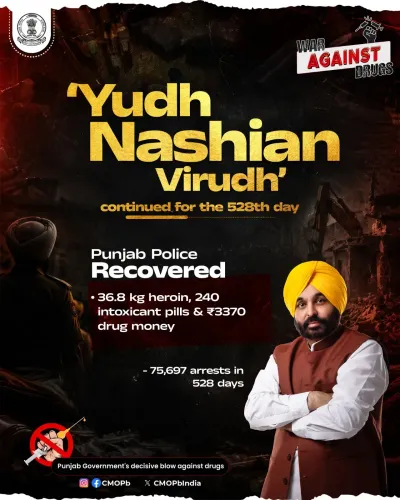
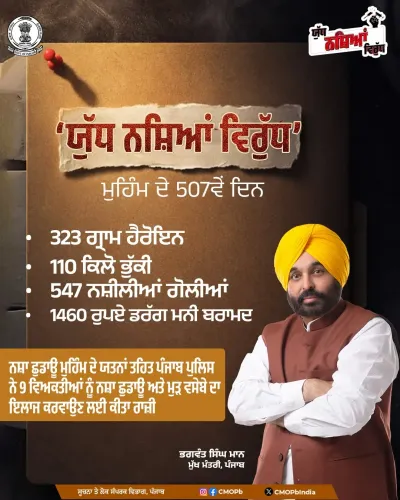
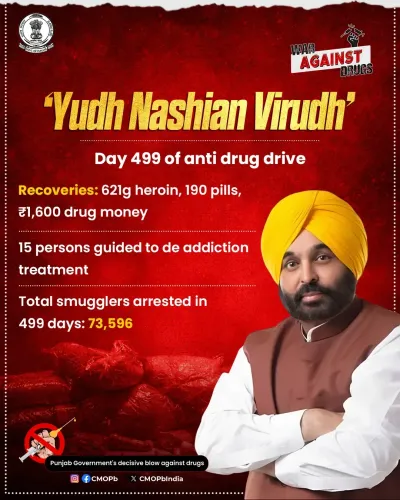
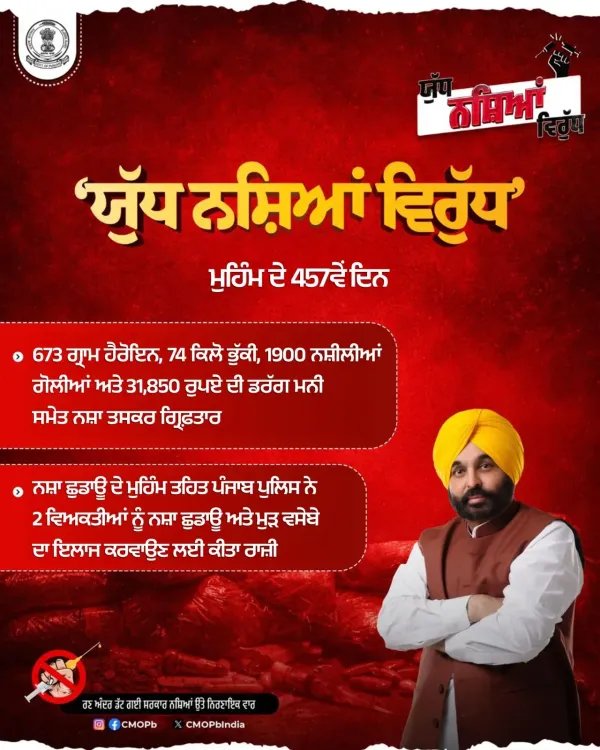
Punjab Police sustained the 'Yudh Nashian Virudh' anti-narcotics drive into its 457th day on 2 June 2026, seizing 673 grams of heroin, 74 kg of poppy husk, 1,900 intoxicant pills, and Rs 31,850 in drug money. Cumulative arrests since the campaign began have reached 66,093.
Key Takeaways
Day 457 of the Yudh Nashian Virudh campaign was observed on 2 June 2026 with fresh arrests and seizures.
Police recovered 673 grams of heroin , 74 kg of poppy husk , and 1,900 intoxicant pills in the latest operation.
Rs 31,850 in drug money was also seized from arrested traffickers.
Cumulative arrests under the campaign have reached 66,093 over 457 days.
The campaign was launched after Chief Minister Bhagwant Mann's AAP government took office in March 2022 with a zero-tolerance drug policy.
Civil society has called for district-wise conviction data and greater investment in de-addiction infrastructure alongside enforcement.
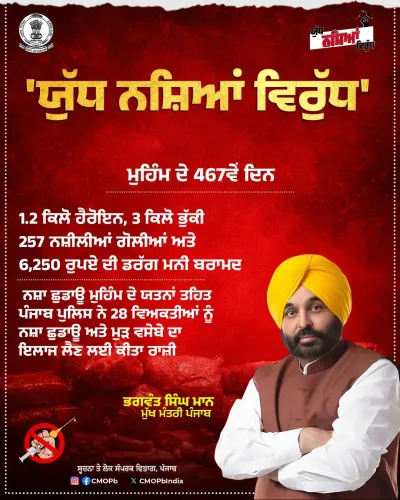
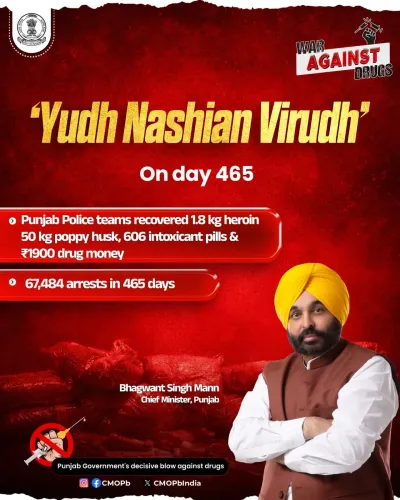
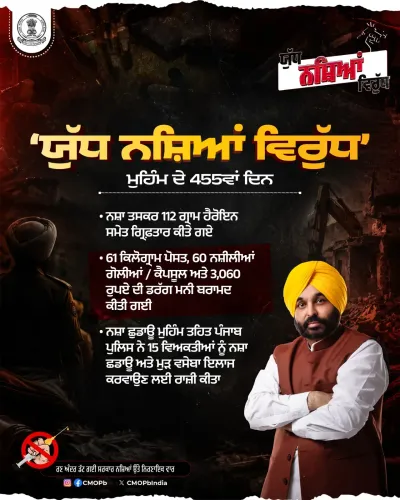
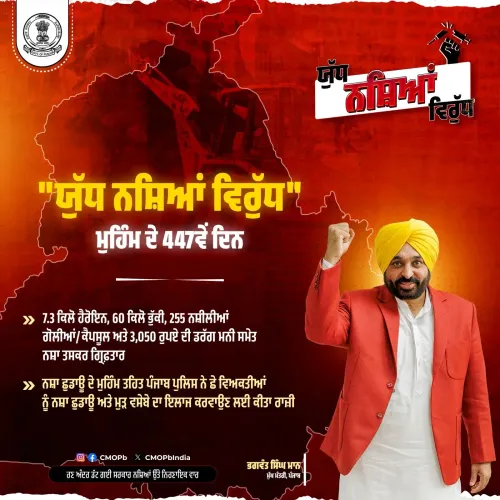
The Chief Minister's Office of Punjab announced on Tuesday, 2 June 2026 that Punjab Police teams have sustained their anti-narcotics campaign Yudh Nashian Virudh ('War Against Drugs') into its 457th consecutive day, arresting fresh drug smugglers and seizing contraband including heroin, poppy husk, and intoxicant pills.
What the Day's Operation Yielded
In the latest round of operations, police recovered 673 grams of heroin, 74 kg of poppy husk, 1,900 intoxicant pills, and Rs 31,850 in drug money from the arrested traffickers. The CMO's post stated that the cumulative number of drug smugglers arrested since the campaign began has now reached 66,093 across 457 days.
The official post, shared in both Punjabi and English, quoted directly: 'With this, the number of total drug smugglers arrested has reached to 66,093 in 457 days.'
Context: A Campaign Built on Daily Accountability
Punjab's drug crisis has deep structural roots — the state shares a long border with Pakistan, through which cross-border heroin flows have historically fed local distribution networks. Synthetic pills and poppy husk have compounded the problem, particularly among young males in rural and border districts.
The Yudh Nashian Virudh campaign was launched after the Aam Aadmi Party government led by Chief Minister Bhagwant Mann came to power in March 2022, declaring a zero-tolerance policy on narcotics. A distinguishing feature of this drive has been the daily public reporting of arrests and seizures — a format designed to signal sustained institutional pressure on drug networks.
Policy Backdrop: Continuity and Criticism
Previous state-wide anti-drug operations between 2017 and 2021 under the preceding government also recorded thousands of arrests and significant heroin seizures, but drew criticism for limited long-term impact on addiction prevalence. Independent surveys have continued to show high rates of drug dependency among young men in the state, raising questions about whether arrest-volume metrics alone reflect ground-level change.
The current administration has leaned heavily on the campaign's visibility, with the CMO's office issuing near-daily updates that serve both a law-enforcement communication and a political signalling function.
Stakeholders and Impact
The primary beneficiaries of sustained enforcement are Punjab's border districts and the state's youth population, where addiction rates have historically been highest. Families of those in recovery and de-addiction service providers watch the campaign closely, though civil society voices have consistently argued that enforcement must be paired with expanded rehabilitation infrastructure.
Drug smugglers and trafficking networks operating along the India-Pakistan border corridor face the most direct pressure from the ongoing operations.
What's Next
Analysts and opposition legislators are expected to press for district-wise conviction data — not just arrest figures — to assess whether the campaign translates into lasting disruption of supply chains. Budget allocations for de-addiction centres and border infrastructure in the next Punjab assembly session will be a key indicator of whether the government intends to match enforcement with rehabilitation investment. The campaign's daily cadence shows no sign of slowing, and the CMO's office is likely to continue its public reporting as a governance accountability marker.
Point of View
093 cumulative arrests is a headline-grabbing milestone, but the absence of conviction rates and rehabilitation outcomes leaves the campaign's structural impact difficult to assess independently. Punjab's drug problem is deeply entangled with cross-border smuggling networks and socioeconomic vulnerability, challenges that arrest numbers alone cannot resolve. The real test for the administration will come when the next assembly session reveals whether enforcement budgets are matched by commensurate spending on de-addiction and border management.
NationPress
20 Sept 2026
Frequently Asked Questions
What is 'Yudh Nashian Virudh' in Punjab?
'Yudh Nashian Virudh' — meaning 'War Against Drugs' — is a sustained anti-narcotics campaign run by Punjab Police since the Bhagwant Mann-led AAP government came to power in March 2022. It involves daily raids, arrests of drug smugglers, and public reporting of seizures by the Chief Minister's Office.
How many drug smugglers have been arrested in Punjab's anti-drug campaign so far?
According to the Chief Minister's Office of Punjab, a total of 66,093 drug smugglers have been arrested under the 'Yudh Nashian Virudh' campaign in 457 days as of 2 June 2026.
What drugs were seized by Punjab Police on day 457 of the campaign?
On the 457th day of the campaign, Punjab Police seized 673 grams of heroin, 74 kg of poppy husk, 1,900 intoxicant pills, and Rs 31,850 in drug money from arrested traffickers.
Why is Punjab particularly vulnerable to drug trafficking?
Punjab shares a long border with Pakistan, through which cross-border heroin flows have historically supplied local distribution networks. The state also has significant poppy cultivation in nearby regions and faces distribution of synthetic drugs, making it one of India's most drug-affected states.
Has Punjab's anti-drug campaign reduced drug addiction in the state?
While the campaign has recorded tens of thousands of arrests and large seizures, independent surveys continue to show significant drug dependency prevalence among young males in Punjab. Experts argue that enforcement must be accompanied by expanded rehabilitation infrastructure and conviction-based outcomes to demonstrate lasting impact.