Punjab Police Arrests 67,484 Drug Smugglers in 465-Day Drive
Synopsis
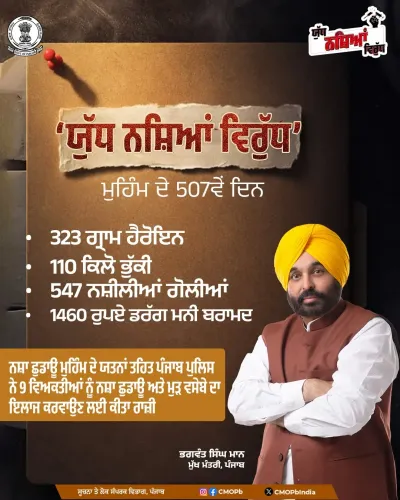
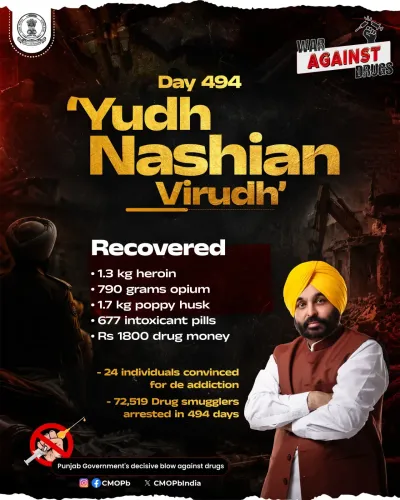
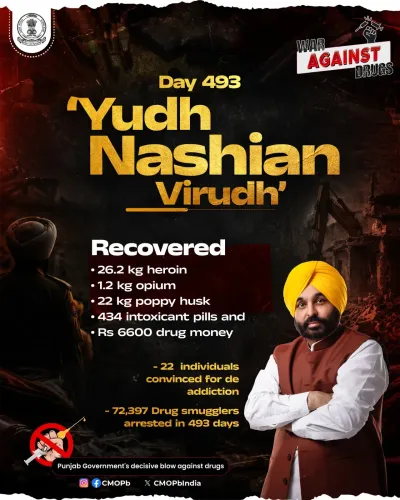
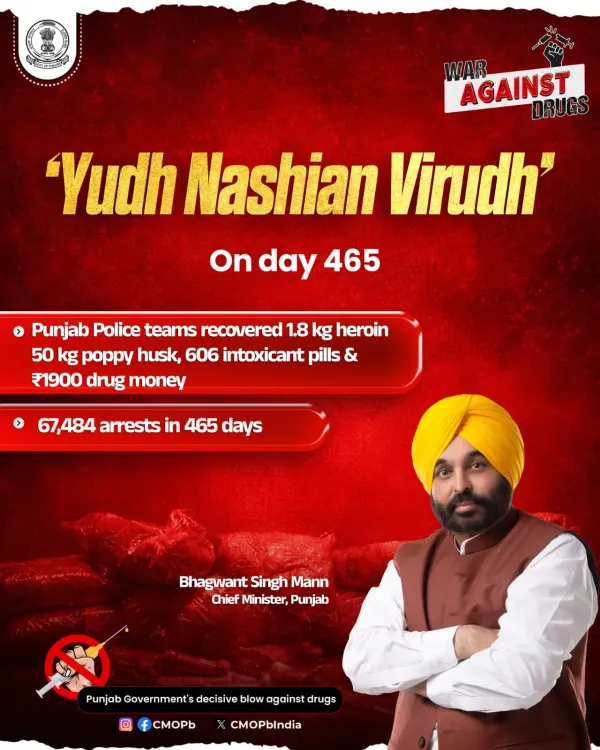
Punjab Police's Yudh Nashian Virudh campaign completed 465 consecutive days of anti-drug operations on June 9, 2026, pushing total arrests to 67,484. The latest sweep recovered 1.8 kg heroin, 50 kg poppy husk, 606 intoxicant pills and Rs 1,900 in drug money, as per the Chief Minister's Office of Punjab.
Key Takeaways
The Yudh Nashian Virudh anti-drug drive completed its 465th consecutive day on June 9, 2026 .
Cumulative arrests since the campaign began have reached 67,484 drug smugglers .
The latest operational sweep recovered 1.8 kg of heroin , 50 kg of poppy husk , and 606 intoxicant pills .
Rs 1,900 in drug money was also seized from arrested smugglers in the latest round.
Punjab shares a 553-km border with Pakistan , a key trafficking corridor for heroin and synthetic drugs.
The campaign was intensified after the 2022 Punjab assembly elections and features daily public reporting of arrest and seizure data.
The Chief Minister's Office of Punjab announced on Tuesday, June 9, 2026, that the state's sustained anti-drug campaign Yudh Nashian Virudh ('War Against Drugs') has entered its 465th consecutive day, with fresh arrests and significant narcotics seizures reported across the state.
What Was Seized
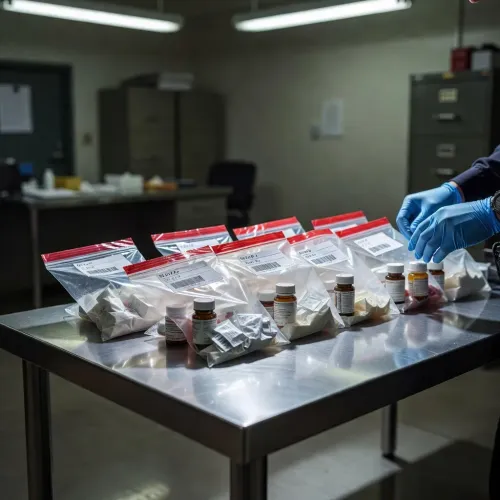
In the latest operational sweep, Punjab Police teams arrested drug smugglers and recovered 1.8 kg of heroin, 50 kg of poppy husk, 606 intoxicant pills, and Rs 1,900 in drug money from their possession. The recoveries span the three primary narcotics categories that have historically dominated trafficking in the state: opiates, raw plant-based substances, and pharmaceutical intoxicants.
The CMO's post stated directly: 'The total number of drug smugglers arrested has reached 67,484 in 465 days,' underlining the cumulative scale of enforcement action since the campaign began.
Context
Punjab shares a 553-km border with Pakistan, a corridor long identified as a primary entry point for heroin and synthetic drugs into India. The state has recorded high rates of opiate and pharmaceutical drug abuse across multiple districts, with border communities and youth bearing a disproportionate burden of addiction-related harm.
The Yudh Nashian Virudh campaign was intensified following the 2022 state assembly elections, building on earlier special task force structures established in the mid-2010s. The current administration has made daily public reporting of seizure and arrest data a defining feature of the drive, positioning transparency as part of the campaign's accountability framework.
Policy Backdrop
Anti-drug campaigns in Punjab have been a recurring feature of successive state governments, each inheriting a trafficking problem shaped by geography and cross-border smuggling syndicates. What distinguishes the present campaign is its unbroken daily cadence — 465 days of continuous operations — and the systematic aggregation of arrest and seizure data into publicly reported running totals.
The campaign encompasses enforcement across heroin seizures, poppy husk recoveries, and pharmaceutical pill interceptions, reflecting the multi-substance nature of the state's drug challenge. Coordination with central agencies and border-security forces remains a structural component of such operations, given the cross-border origin of a significant share of the narcotics intercepted.
Stakeholders and Impact
The primary beneficiaries of sustained enforcement are Punjab's youth and border-district communities, which have faced the most acute social and public-health consequences of drug trafficking networks. Each arrest and seizure is intended to disrupt supply chains that feed local distribution rings.
For the state government, the daily reporting cadence serves both an operational and a political function — demonstrating consistent follow-through on a campaign promise that was central to the 2022 electoral mandate. Civil-society groups and de-addiction practitioners, however, have consistently noted that enforcement alone must be paired with rehabilitation infrastructure to produce durable reductions in substance abuse.
What's Next
With the campaign now past the 465-day mark and cumulative arrests exceeding 67,000, attention will turn to whether the government announces linked investments in de-addiction centres or formal cross-border coordination mechanisms with central security agencies. The daily reporting rhythm is expected to continue, with each update adding to the cumulative record that the administration has made a signature accountability metric of its anti-drug agenda.
Point of View
The Punjab administration converts police enforcement into a visible, quantifiable accountability metric. At over 67,000 arrests in 465 days, the numbers signal operational intensity, but they also invite scrutiny of conviction rates and rehabilitation outcomes — metrics the government has been less vocal about. The campaign fits a broader pattern across Indian states where police-led anti-drug drives are deployed both as genuine law-enforcement tools and as political signalling on issues with high public salience. The next inflection point will be whether enforcement data is accompanied by investment announcements in de-addiction and border-security infrastructure, which would indicate a shift from campaign optics to systemic reform.
NationPress
19 Sept 2026
Frequently Asked Questions
What is Yudh Nashian Virudh in Punjab?
Yudh Nashian Virudh, meaning 'War Against Drugs,' is an ongoing anti-drug enforcement campaign run by Punjab Police that involves daily arrests of drug smugglers and seizures of heroin, poppy husk, and intoxicant pills, with results reported publicly each day.
How many drug smugglers have been arrested in Punjab's anti-drug drive?
As of the 465th day of the campaign on June 9, 2026, a total of 67,484 drug smugglers have been arrested under the Yudh Nashian Virudh campaign, according to the Chief Minister's Office of Punjab.
What drugs were seized by Punjab Police on June 9, 2026?
Punjab Police recovered 1.8 kg of heroin, 50 kg of poppy husk, 606 intoxicant pills, and Rs 1,900 in drug money during the latest sweep on the 465th day of the Yudh Nashian Virudh campaign.
Why is Punjab particularly affected by drug trafficking?
Punjab shares a 553-km border with Pakistan, which has long served as a major entry route for heroin and synthetic drugs into India, making the state especially vulnerable to cross-border trafficking networks.
When did the Yudh Nashian Virudh campaign start?
The campaign was intensified following the 2022 Punjab assembly elections, building on earlier anti-narcotics task force structures; the 465-day count referenced in the June 9, 2026 update places its operational start in early 2025.