CM Bhagwant Mann chairs Yudh Nashian Virudh review at PPA Phillaur
Synopsis
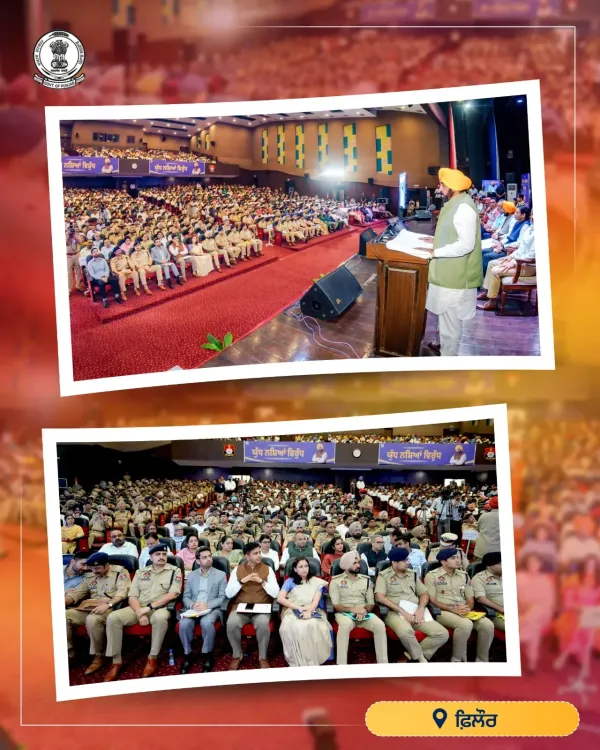
Chief Minister Bhagwant Singh Mann presided over a state-level review of Punjab's 'Yudh Nashian Virudh' anti-drug campaign at PPA Phillaur on 16 October 2026, discussing campaign progress and enforcement actions in a high-visibility event tied to AAP's core 2022 governance pledge.
Key Takeaways
CM Bhagwant Singh Mann chaired a state-level event at Punjab Police Academy, Phillaur on 16 October 2026 .
The event was dedicated to the 'Yudh Nashian Virudh' ('War Against Drugs') campaign — AAP Punjab's flagship anti-narcotics drive.
Detailed discussions covered the campaign's progress and actions undertaken against narcotics trafficking and abuse.
PPA Phillaur is Punjab's primary police training institution, placing enforcement leadership at the centre of the review.
Drug eradication was a core AAP election manifesto promise when the party came to power in March 2022 .
Campaign outcomes — seizure data, conviction rates, rehabilitation numbers — remain the metrics to watch as the drive continues.
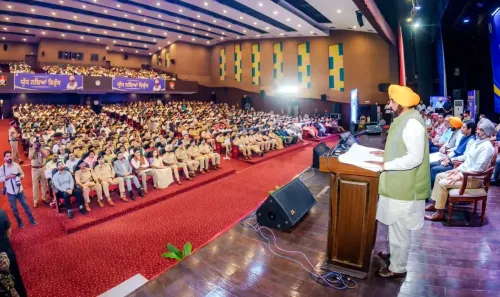
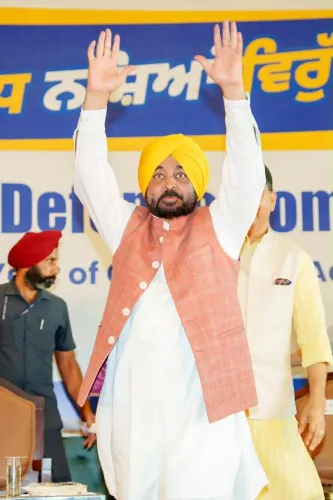
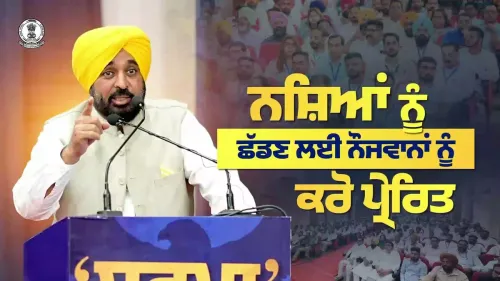
At the Punjab Police Academy in Phillaur, Jalandhar district, a state-level campaign review became a statement of political intent on Friday, 16 October 2026. Punjab Chief Minister Bhagwant Singh Mann presided over a flagship event dedicated to the 'Yudh Nashian Virudh' — Yudh Nashian Virudh ('War Against Drugs') — campaign, putting the government's most prominent governance pledge front and centre before the public.
What unfolded at PPA Phillaur
The choice of the Punjab Police Academy (PPA), Phillaur — the state's principal training institution for police personnel — as the venue was itself a signal. It placed enforcement machinery at the heart of the anti-drug narrative. During the event, the progress of the campaign and the suite of actions undertaken against narcotics trafficking and abuse were discussed in detail, according to the Chief Minister's Office of Punjab.
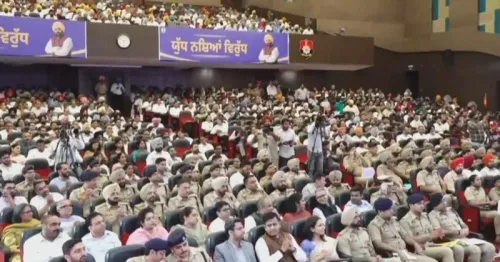
The gathering brought together Punjab Police leadership and officials involved in the campaign's execution, with CM Mann steering deliberations on what has been achieved and where pressure needs to be maintained.
The pledge that launched a campaign
The Aam Aadmi Party swept into power in Punjab in March 2022 on a manifesto that placed drug eradication alongside school reform and corruption-free governance as its three defining promises. For a state that has carried the weight of a severe drug abuse crisis for decades — one that has hollowed out households, disrupted livelihoods, and strained the Punjab Police — it was a pledge that resonated deeply.
'Yudh Nashian Virudh' formalised that promise into a structured enforcement-and-awareness campaign, blending police action with public mobilisation. State-level events like the one at Phillaur serve a dual function: they hold the administration publicly accountable to its own benchmarks, and they signal to enforcement agencies that political attention — and scrutiny — remains live.
Why Punjab's drug crisis demands sustained attention
Punjab's narcotics problem has never been a single-government failure or success — it is a decades-long structural challenge rooted in geography, cross-border trafficking routes, and socioeconomic pressures on the state's youth. Every administration since the 1990s has announced drives; outcomes have varied sharply. The current campaign's credibility, analysts note, will ultimately rest on verifiable data: seizure volumes, conviction rates, and rehabilitation enrolments — figures the state is expected to publish as the campaign matures.
The Punjab youth remain the most directly affected demographic, and the campaign's long-term value will be measured in whether enforcement translates into reduced addiction prevalence on the ground — not just in headlines.
With the Chief Minister himself in the chair at Phillaur, the message to both officials and the public is unambiguous: the war on drugs in Punjab is not a press-release exercise. Whether the numbers back that claim is the next chapter to watch.
Point of View
CM Mann is deliberately fusing political accountability with enforcement symbolism — a pattern consistent with AAP's 2022 campaign branding. The 'Yudh Nashian Virudh' campaign sits at the intersection of Punjab's most emotionally charged electoral promise and its most stubborn governance challenge, making these public reviews a necessary performance of intent. However, with precise outcome statistics from the October 2026 event not yet publicly released, the administration's credibility will ultimately be tested by verifiable data — seizure volumes, conviction rates, rehabilitation enrolments — rather than the optics of high-profile gatherings. The broader pattern in Punjab is one where successive governments have announced anti-drug drives with fanfare; AAP's differentiation, if it materialises, must come through sustained, measurable outcomes over the full term.
NationPress
16 Oct 2026
Frequently Asked Questions
What is the 'Yudh Nashian Virudh' campaign in Punjab?
'Yudh Nashian Virudh' — meaning 'War Against Drugs' — is the Punjab state government's flagship anti-narcotics campaign, combining police enforcement with public awareness to tackle drug abuse and trafficking across the state.
Where is the Punjab Police Academy (PPA) Phillaur located?
The Punjab Police Academy (PPA) Phillaur is located in Phillaur , Jalandhar district , Punjab, and serves as the state's primary training institution for police personnel.
When did Bhagwant Mann become Chief Minister of Punjab?
Bhagwant Singh Mann became Chief Minister of Punjab in March 2022 after leading the Aam Aadmi Party to a landslide victory in the state assembly elections.
What was discussed at the Yudh Nashian Virudh event at Phillaur on 16 October 2026?
According to the Chief Minister's Office of Punjab, the event focused on the progress of the 'Yudh Nashian Virudh' campaign and the actions undertaken against narcotics trafficking and abuse, with CM Mann presiding over the discussions.
Why is drug abuse such a significant issue in Punjab?
Punjab has faced a long-standing drug abuse crisis rooted in cross-border trafficking routes, socioeconomic pressures, and geographic vulnerability, making it a central public health and governance concern that has driven electoral mandates for multiple governments.