CM Bhagwant Mann Cites 70,000 Drug Arrests, Punjab's Turnaround
Synopsis
Punjab CM Bhagwant Mann met VDC volunteers in Ludhiana, citing 70,000 drug arrests over 500+ campaign days, 882 NEET qualifiers, and 68,500 jobs as evidence that the once-stigmatised 'Udta Punjab' is transforming into a state defined by education and health.
Key Takeaways
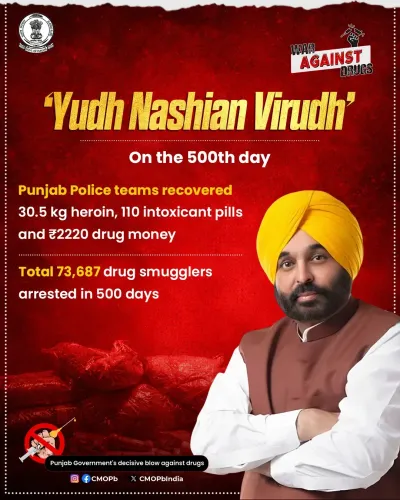
70,000 drug traffickers arrested through joint police-VDC volunteer action since the campaign began, according to CM Bhagwant Mann.
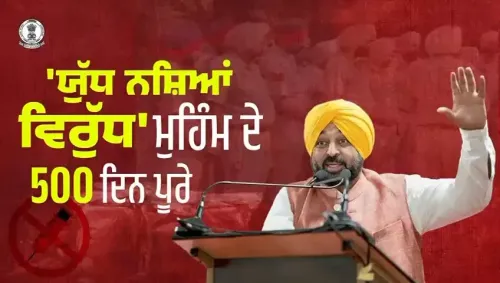
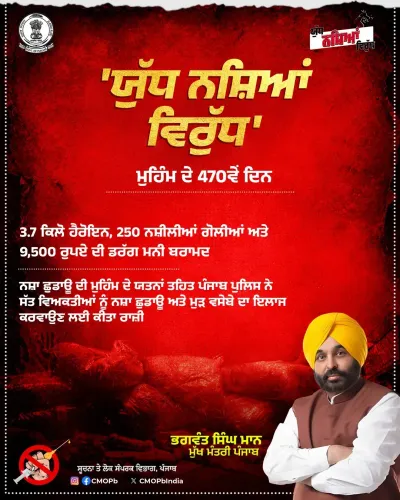
The anti-drug drive has crossed 500 days , making it one of the longest sustained enforcement campaigns in Punjab's recent history.
Mann claims Punjab now ranks first in education nationally, with 882 students clearing the NEET medical entrance exam.
Over 68,500 government jobs have been created under the AAP administration, presented as a companion metric to enforcement gains.
The VDC (Village Defence Committee) volunteer network in Ludhiana is central to the community-policing model underpinning the campaign.
Mann invoked the 'Rangla Punjab' vision, framing the drug war as a broader social transformation away from the 'Udta Punjab' stigma.
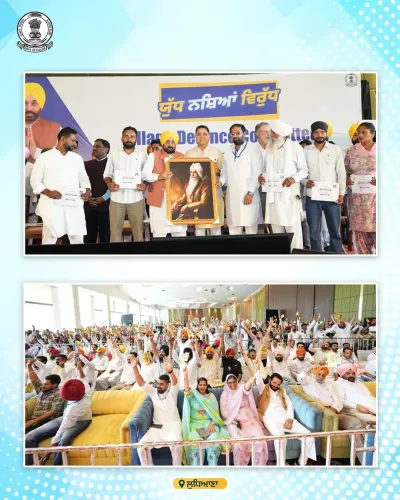
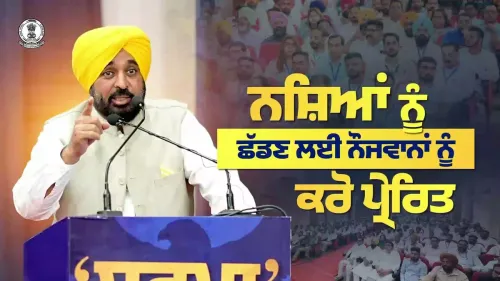
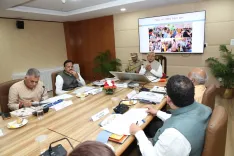
Once branded 'Udta Punjab' — the state that flew on narcotics — Punjab is now being recast, at least in official telling, as 'Padhda te Tandrust Punjab': a Punjab that studies and stays healthy. Punjab Chief Minister Bhagwant Mann made that case directly on Sunday, 2 August 2026, meeting Village Defence Committee (VDC) volunteers in Ludhiana and declaring that more than 500 days of sustained anti-drug campaigning had broken the back of drug trafficking in the state.
Mann announced that joint action by police and community volunteers had led to the arrest of over 70,000 drug traffickers — a figure the administration is presenting as the centrepiece of its war on narcotics. The VDC network, grassroots volunteer units embedded alongside local police, has been a cornerstone of the AAP government's community-policing model since it took office in March 2022.
From 'Udta Punjab' to the Classroom: The Numbers Mann Is Betting On
The Chief Minister did not limit his case to law enforcement. He wove in a broader social scorecard: Punjab, he said, now ranks first in education nationally, with 882 students clearing the NEET medical entrance examination and more than 68,500 government jobs created under his administration. The argument is deliberate — enforcement alone does not rebuild a state; visible gains in education and employment are the proof of concept.
The 'Udta Punjab' tag had haunted the state since the mid-2010s, when drug abuse among Punjab's youth became a national flashpoint. The Aam Aadmi Party made eradicating that stigma a central election promise in 2022, and Mann has consistently returned to the drug campaign as a measure of his government's legitimacy.
Volunteers on the Front Line in Ludhiana
Ludhiana, Punjab's largest city and an industrial hub, has historically been one of the state's more exposed nodes for drug transit. Mann's choice to hold the review there — face-to-face with VDC volunteers rather than in a government hall — signals the administration's intent to keep the campaign visibly rooted in communities rather than confined to police stations.
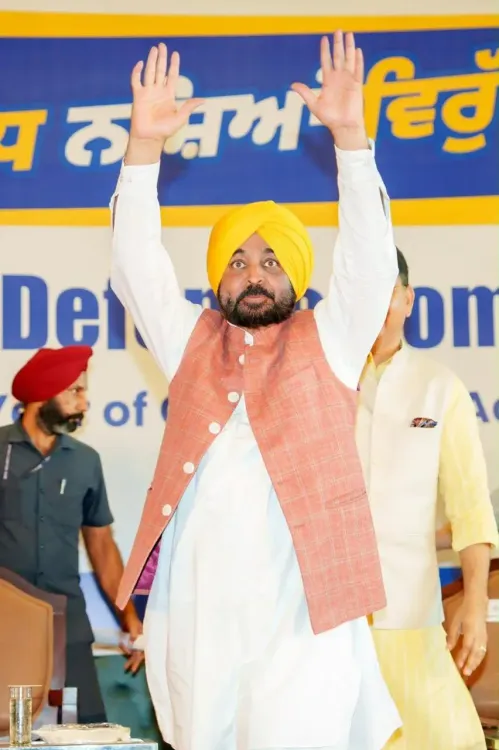
Closing his address with the rallying cry 'Inquilab Zindabad' — 'Long live the revolution' — and a call to build a 'Rangla Punjab' (a vibrant, colourful Punjab), Mann framed the anti-drug drive not as a policing operation but as a social transformation. 'This war will continue until drugs are completely eliminated,' he said.
The battle for Punjab's reputation — and its young population — is far from over. But after 500 days of declared offensive, Bhagwant Mann is telling his volunteers: the tide has turned.
Point of View
And with an eye on future electoral cycles, the administration needs visible, quantifiable proof of delivery. By bundling enforcement numbers with education and employment metrics, Mann is constructing a composite 'state recovery' narrative that is harder to contest on any single front. The VDC model also serves a dual purpose: it deepens community ownership of the campaign while extending the party's grassroots reach into villages. Whether the headline arrest figures translate into durable reduction in drug availability remains the critical unanswered question — and the one opposition parties are most likely to press.
NationPress
16 Sept 2026
Frequently Asked Questions
What did Bhagwant Mann announce about Punjab's anti-drug campaign?
CM Bhagwant Mann announced that over 70,000 drug traffickers have been arrested in more than 500 days of the anti-drug campaign, carried out jointly by police and VDC volunteers.
What are VDC volunteers in Punjab?
VDC stands for Village Defence Committee — local community volunteer groups that work alongside Punjab Police in anti-narcotics and law-enforcement operations at the grassroots level.
What education achievements did Bhagwant Mann highlight?
Mann claimed Punjab ranks first nationally in education, with 882 students clearing the NEET medical entrance exam and more than 68,500 government jobs created under the AAP government.
What does 'Udta Punjab' mean and why is it significant?
'Udta Punjab' means 'Flying Punjab' and became a national byword for the state's severe drug-abuse crisis in the mid-2010s. Mann used the contrast between that label and his 'Padhda te Tandrust Punjab' ('Studying and Healthy Punjab') to illustrate the claimed transformation.
Why did Bhagwant Mann meet VDC volunteers in Ludhiana specifically?
Ludhiana is Punjab's largest city and has historically been a significant node for drug transit. Mann held the review there to signal community-rooted accountability and to highlight the role of local volunteers in the enforcement drive.