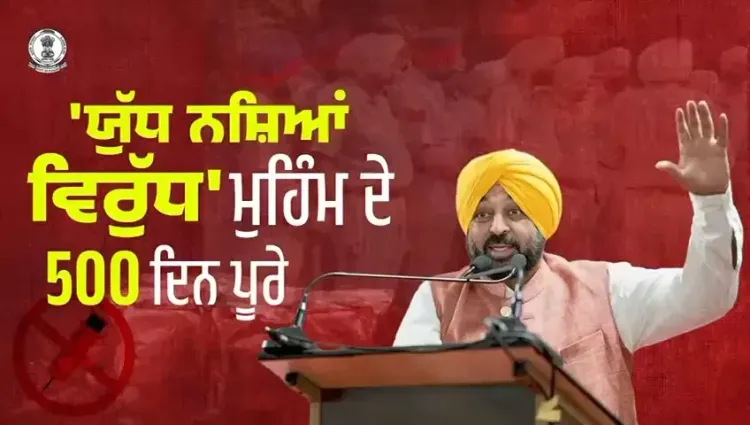
CM Bhagwant Mann marks 500 days of Punjab's anti-drug war
Synopsis
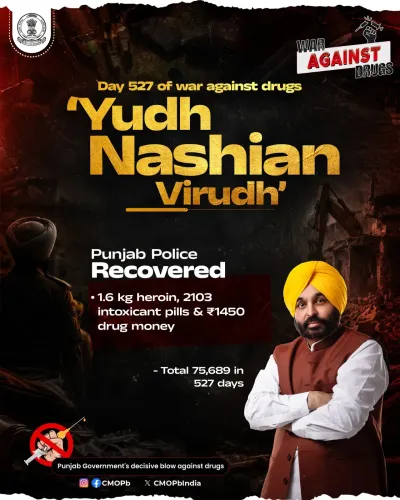
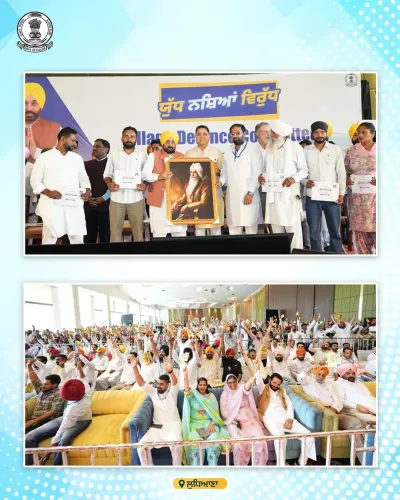
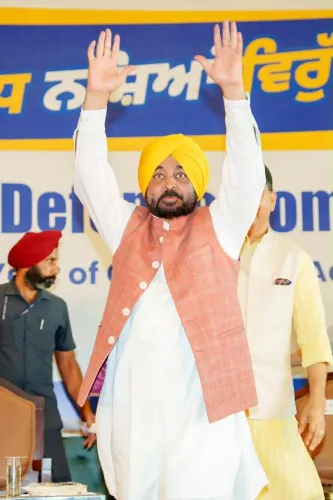
Punjab CM Bhagwant Mann addressed Village Defence Committee members in Ludhiana on 3 August 2026, marking 500 days of the state's Yudh Nashian Virudh anti-drug campaign and citing nearly 70,000 drug trafficker arrests as a landmark collective achievement.
Key Takeaways
Punjab's Yudh Nashian Virudh (War Against Drugs) campaign completed 500 days as of 3 August 2026 .
CM Bhagwant Mann cited approximately 70,000 drug trafficker arrests over the campaign period.
The meeting was held in Ludhiana with members of Village Defence Committees — grassroots community groups central to the campaign's decentralised model.
Mann attributed the results to 'shared efforts' between communities and the state, not to police action alone.
The AAP government has structured its anti-narcotics drive around village-level vigilance committees alongside conventional enforcement since taking office in March 2022 .
Consolidated seizure data and possible expansion of Village Defence Committees are expected at the next milestone review.
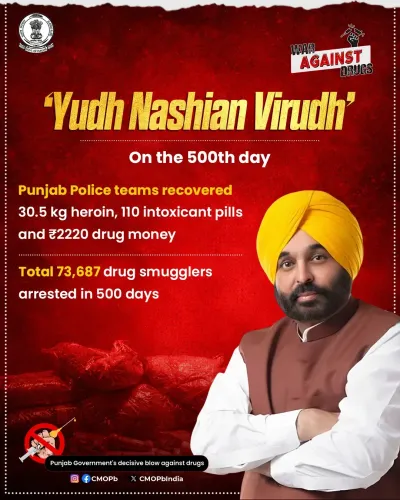
Nearly 70,000 drug traffickers arrested in 500 days — that is the headline number Punjab Chief Minister Bhagwant Mann put on the table at a high-stakes meeting with Village Defence Committee members in Ludhiana on Monday, 3 August 2026, as the state's Yudh Nashian Virudh (War Against Drugs) campaign crossed a landmark milestone.
What the 500-day mark means for Punjab
Speaking to committee members, CM Mann called the completion of 500 days of the campaign 'a significant milestone for Punjab,' attributing the scale of arrests to collective effort rather than police action alone. The figure of roughly 70,000 arrests — if it holds to scrutiny — would represent one of the most concentrated anti-narcotics enforcement drives in the state's recent history. Mann framed it not as a government achievement but as the outcome of sांझੇ ਯਤਨਾਂ ('shared efforts') between communities and the state machinery.
Village Defence Committees at the front line
The Village Defence Committees are the structural backbone of this decentralised approach. Formed at the village level across Punjab, these community groups act as the eyes and ears of local anti-narcotics vigilance, feeding intelligence to police and mobilising families affected by addiction. The Aam Aadmi Party government, which took office in March 2022, bet early on this grassroots architecture as a force-multiplier alongside conventional law enforcement. Monday's Ludhiana meeting was a signal that the government views these committees not as peripheral actors but as co-owners of the campaign's results.
Punjab's drug crisis: the long shadow behind the numbers
Punjab's battle with narcotics is not new. The state's geography — sharing an international border through which synthetic drugs and opioids have historically flowed — has made it a chronic pressure point. Successive governments cycled through mass arrests, border fencing and rehabilitation programmes, with limited durable impact. What the current administration has attempted is a structural shift: pairing police operations with decentralised community structures that keep pressure sustained between enforcement surges. Whether 500 days of that model has bent the curve on addiction, not just on arrest tallies, will be the harder question to answer.
The next test will come at the next 100-day milestone, when consolidated seizure data and any formal expansion of Village Defence Committees to additional districts is expected to be announced. Numbers on the street — not just in lock-ups — will tell the real story.
Point of View
With the 70,000-arrest figure serving as a headline metric that is difficult for opponents to immediately rebut. The emphasis on Village Defence Committees signals a deliberate effort to share credit — and responsibility — with rural communities, insulating the campaign from being dismissed as a top-down police exercise. However, arrest tallies alone do not measure whether addiction rates or drug availability have actually declined, and the government will face sharper scrutiny when rehabilitation and seizure data are placed alongside enforcement numbers. The Ludhiana platform choice is also telling: an industrial city with a large working-class population, where the social cost of the drug crisis has been most visible.
NationPress
17 Sept 2026
Frequently Asked Questions
What is the Yudh Nashian Virudh campaign in Punjab?
'Yudh Nashian Virudh' means 'War Against Drugs' in Punjabi. It is a statewide anti-narcotics campaign launched by the AAP government in Punjab after taking office in March 2022, combining police enforcement with community-level Village Defence Committees to tackle drug trafficking and addiction.
How many drug traffickers have been arrested under Punjab's anti-drug campaign?
Punjab CM Bhagwant Mann stated that approximately 70,000 drug traffickers have been arrested over the 500 days of the Yudh Nashian Virudh campaign, as announced at a meeting in Ludhiana on 3 August 2026.
What are Village Defence Committees in Punjab?
Village Defence Committees are community-based groups formed at the village level across Punjab. Under the current government's anti-drug strategy, they support local narcotics vigilance, coordinate with police, and mobilise communities affected by addiction.
Why is Punjab particularly vulnerable to drug trafficking?
Punjab shares an international border through which synthetic drugs and opioids have historically entered India. This geography, combined with existing social networks exploited by traffickers, has made the state a long-standing pressure point for narcotics flow and addiction.
What comes next in Punjab's anti-drug campaign after 500 days?
The government is expected to release consolidated arrest and seizure data at the next 100-day milestone, along with potential announcements on expanding Village Defence Committees to additional districts across Punjab.