CM Yogi Backs CAA, Credits Modi and Shah for Dignity of Persecuted Minorities
Synopsis
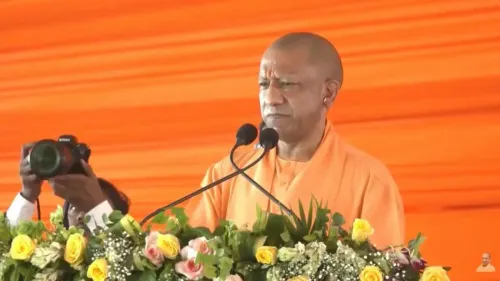
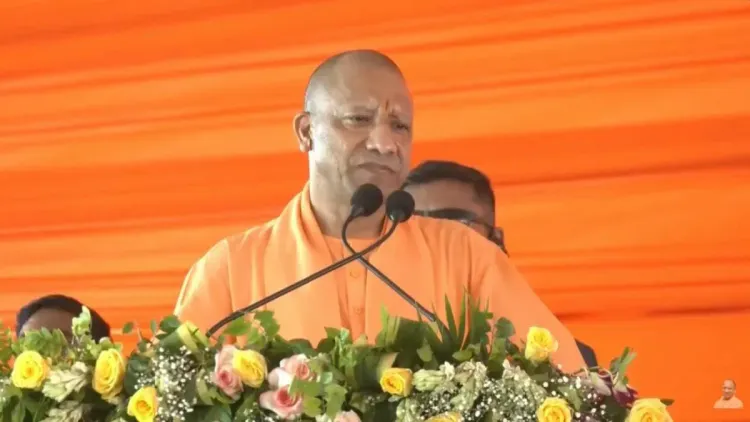
Uttar Pradesh CM Yogi Adityanath on 29 June 2026 backed the Citizenship Amendment Act, saying persecuted Hindu, Buddhist, Sikh, and Jain refugees are now receiving the right to live in India with honour and dignity, crediting PM Narendra Modi and Home Minister Amit Shah for the law.
Key Takeaways
CM Yogi Adityanath publicly endorsed the Citizenship Amendment Act (CAA) on 29 June 2026 .
He stated that persecuted Hindu, Buddhist, Sikh, and Jain refugees are now receiving the right to live in India with 'honour and dignity.' He credited Prime Minister Narendra Modi and Home Minister Amit Shah as the architects of the law.
The CAA provides an expedited citizenship path for non-Muslim minorities from Pakistan, Bangladesh, and Afghanistan who entered India on or before 31 December 2014 .
CAA implementation rules were notified in March 2024 , and the government has since begun processing applications.
Uttar Pradesh has a significant population of Hindu refugees who stand to benefit from the law.
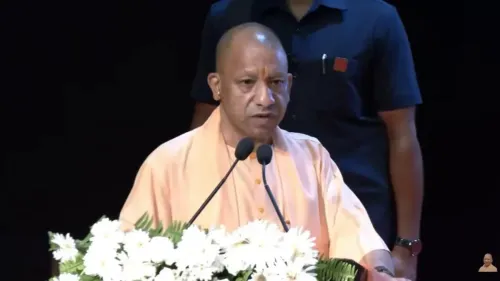
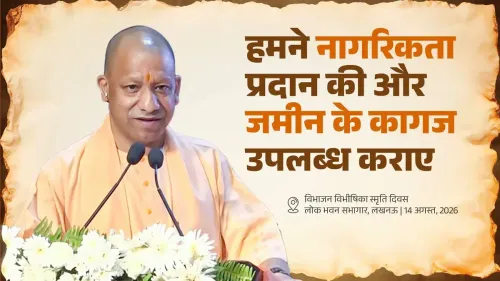
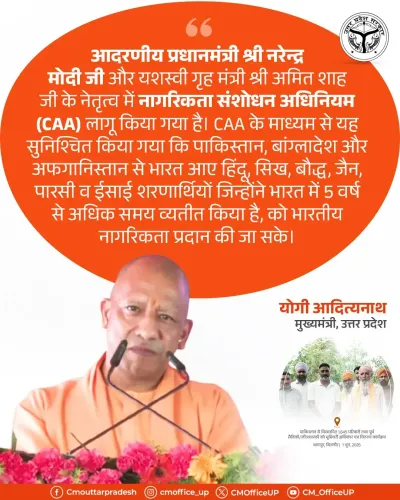
Uttar Pradesh Chief Minister Yogi Adityanath on Monday, 29 June 2026, publicly endorsed the Citizenship Amendment Act, stating that persecuted Hindu, Buddhist, Sikh, and Jain refugees from neighbouring countries are now receiving the right to live in India with honour and dignity. He credited Prime Minister Narendra Modi and Union Home and Cooperation Minister Amit Shah for making this possible.
Context
In his post, CM Yogi wrote: '...pratadit hokar aaye Hindu, Bauddh, Sikh evam Jain bhai-bahnon ko samman aur gaurav ke saath Bharat mein jeene ka adhikar prapt ho raha hai...' — meaning, 'persecuted Hindu, Buddhist, Sikh, and Jain brothers and sisters who have come [to India] are now receiving the right to live in India with respect and pride.' He directly named Prime Minister Narendra Modi and Home Minister Amit Shah as the architects of this change.
The statement is a clear reference to the Citizenship Amendment Act (CAA), which was passed by Parliament in December 2019 and whose implementing rules were notified in March 2024. The law provides an expedited path to Indian citizenship for non-Muslim minorities — Hindus, Sikhs, Buddhists, Jains, Parsis, and Christians — who fled religious persecution in Pakistan, Bangladesh, and Afghanistan, and entered India on or before 31 December 2014.
Policy Backdrop
The CAA was among the most debated legislative actions of the BJP-led NDA government in its second term. Supporters argued it fulfilled a long-standing humanitarian obligation toward minorities persecuted in Islamic-majority nations in India's neighbourhood. Critics contended the law discriminated by excluding Muslims from its ambit, a charge the government consistently rejected by citing the law's specific, bounded purpose.
The notification of CAA rules in March 2024 — just weeks before the general election — triggered a fresh round of political debate. Since the rules came into force, the central government has begun processing applications from eligible refugees. CM Yogi has been a consistent and vocal advocate of the law, frequently framing it as a matter of civilisational justice for communities that faced documented persecution across India's borders.
Stakeholders and Impact
The primary beneficiaries of the CAA are refugees from Pakistan, Bangladesh, and Afghanistan who belong to the six specified minority communities. Many such communities have lived in Uttar Pradesh, Rajasthan, Gujarat, and parts of West Bengal for decades without formal citizenship, limiting their access to education, employment, property rights, and government welfare schemes.
By invoking the law in this post, CM Yogi signals continued political mobilisation around the CAA at the state level, particularly in Uttar Pradesh, which has a significant population of Hindu refugees from Pakistan and Bangladesh. The framing of the issue as one of 'honour and dignity' aligns with the BJP's broader cultural nationalism narrative heading into state and local electoral cycles.
What's Next
With the CAA rules now operational, the pace of citizenship grant to eligible applicants will be a key metric watched by both supporters and opponents of the law. CM Yogi's public endorsement suggests the issue will remain a live political talking point in Uttar Pradesh, where the BJP holds a commanding majority in the state assembly. Further outreach to refugee communities and implementation-level updates from the Union Home Ministry are expected to follow in the coming months.
Point of View
Suggesting the BJP sees continued electoral value in the law's narrative of civilisational protection for persecuted minorities. By naming both PM Modi and Amit Shah explicitly, Yogi reinforces the party's unified leadership image on a policy that remains divisive nationally. The framing around 'honour and dignity' rather than legal technicalities is characteristic of the BJP's cultural-nationalist communication strategy. This positions Uttar Pradesh as a state-level amplifier of a central government policy ahead of future electoral contests.
NationPress
27 Sept 2026
Frequently Asked Questions
What did CM Yogi Adityanath say about the CAA on 29 June 2026?
CM Yogi Adityanath said that persecuted Hindu, Buddhist, Sikh, and Jain refugees who have come to India are now receiving the right to live here with honour and dignity, and he credited Prime Minister Narendra Modi and Home Minister Amit Shah for enacting the Citizenship Amendment Act.
What is the Citizenship Amendment Act (CAA) and who does it benefit?
The CAA is a 2019 Indian law that provides an expedited path to citizenship for non-Muslim minorities — Hindus, Sikhs, Buddhists, Jains, Parsis, and Christians — who fled religious persecution in Pakistan, Bangladesh, and Afghanistan and entered India on or before 31 December 2014.
When were the CAA rules notified?
The implementing rules for the Citizenship Amendment Act were notified in March 2024, enabling the government to begin processing citizenship applications from eligible refugees.
Why is CM Yogi Adityanath talking about the CAA now?
CM Yogi's post on 29 June 2026 appears to be part of continued political messaging around the CAA, keeping the issue prominent in Uttar Pradesh where a significant population of Hindu and Sikh refugees from Pakistan and Bangladesh are eligible beneficiaries.
Which communities are covered under the CAA according to CM Yogi's post?
CM Yogi specifically mentioned Hindu, Buddhist, Sikh, and Jain communities who faced persecution in neighbouring countries and have come to India, which aligns with the CAA's specified beneficiary groups.