CM Yogi Targets Congress, SP Over Faith and Ancestors
Synopsis
Uttar Pradesh Chief Minister Yogi Adityanath attacked Congress and the Samajwadi Party on June 13, 2026, accusing them of disrespecting the faith, ancestors, and deities of the people, and calling both parties a burden voters must shed ahead of the 2027 state elections.
Key Takeaways
CM Yogi Adityanath posted on X on June 13, 2026 , targeting Congress and the Samajwadi Party over their stance on Hindu faith and traditions.
He accused both parties of being unable to respect voters' faith, ancestors, and gods and goddesses.
He described the two parties as a 'burden on the system' and urged voters to stop carrying that burden.
Uttar Pradesh has been under BJP rule since 2017 ; the next assembly election is due in 2027 .
The BJP's cultural-nationalist framing against Congress and SP has been a recurring theme in Uttar Pradesh elections since 2014 .
Adityanath's remarks are likely to draw responses from both opposition parties as early campaigning intensifies.
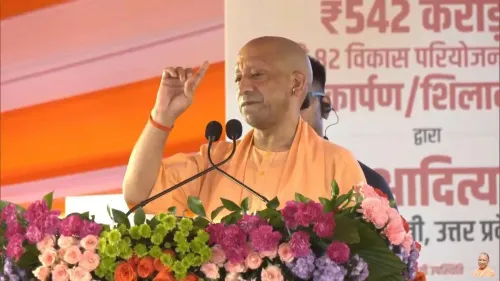
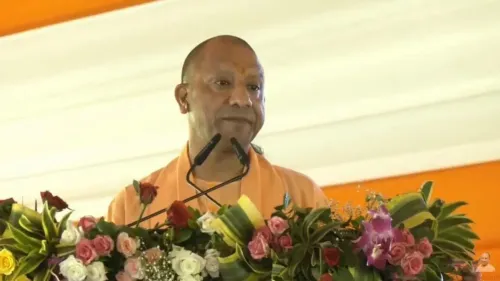
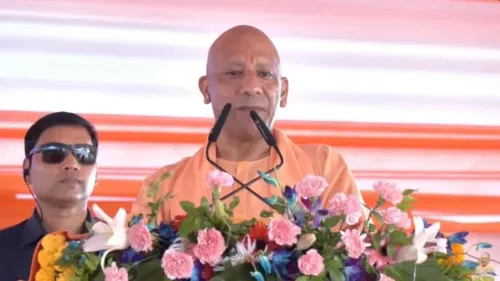
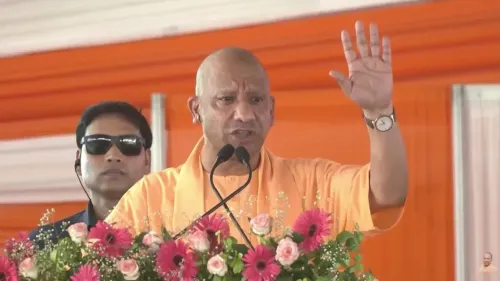
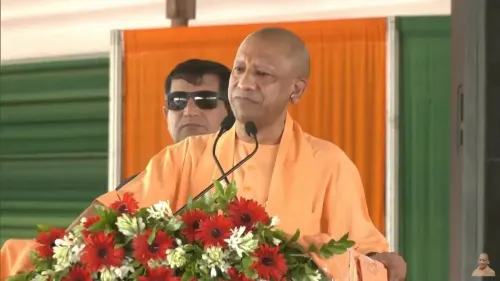
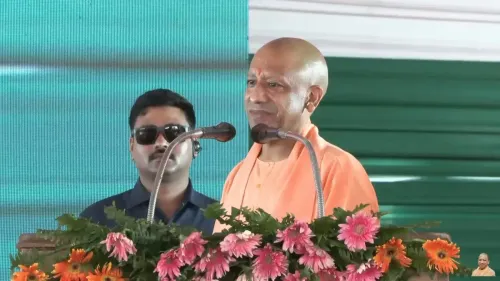
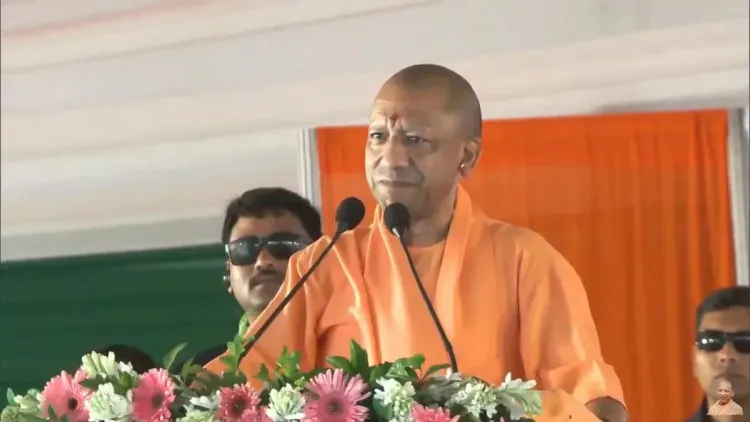
Uttar Pradesh Chief Minister Yogi Adityanath on Saturday, June 13, 2026, sharply attacked the Indian National Congress and the Samajwadi Party, accusing both parties of failing to respect the faith, ancestors, and deities of the people of Uttar Pradesh. Posting on X, he urged voters to shed what he called a burden imposed by the two opposition parties.
In his post, Adityanath wrote in Hindi: 'कांग्रेस, समाजवादी पार्टी आपकी आस्था, आपके पूर्वजों और देवी-देवताओं का सम्मान नहीं कर सकती' — 'Congress and the Samajwadi Party cannot respect your faith, your ancestors, and your gods and goddesses.' He added: 'They are a burden on the system — do not carry this burden.'
Context
The remarks represent a direct electoral broadside, framing the opposition as culturally hostile to the Hindu majority in India's most populous state. Uttar Pradesh has been under BJP governance since the 2017 assembly elections, when Adityanath was appointed Chief Minister following a landslide victory. The BJP retained power in 2022, again running on a platform that positioned the party as the defender of Hindu traditions and cultural identity.
The post arrives with the 2027 Uttar Pradesh assembly elections on the horizon, a contest that will be closely watched as a bellwether for national politics. Adityanath, who also heads the Gorakhnath Math, one of the most prominent Hindu monastic institutions in northern India, has consistently blended his religious authority with his political messaging.
Policy Backdrop
The BJP's electoral strategy in Uttar Pradesh has repeatedly centred on cultural nationalism, contrasting its emphasis on Hindu faith and traditions with what it characterises as the appeasement politics of the Congress and the Samajwadi Party. This framing has featured prominently in every major election cycle in the state since 2014.
The Samajwadi Party, led by the Yadav family, draws its core support from the OBC Yadav and Muslim communities, while the Congress seeks to rebuild its once-dominant base across caste lines. The BJP's counter-narrative consistently targets the perceived secular positioning of both parties as a point of cultural divergence.
Stakeholders and Impact
Hindu voters across Uttar Pradesh — particularly those with strong ties to temple traditions, pilgrimage culture, and ancestral religious practices — are the primary audience for this messaging. Adityanath's dual identity as a sitting Chief Minister and a Hindu monk gives his statements on faith an authority that differs from those of conventional politicians.
For the Congress and the Samajwadi Party, the attack revives a line of criticism they have faced repeatedly and will likely compel both parties to respond, either by defending their record on minority and majority religious affairs or by pivoting to governance and economic issues ahead of the election cycle.
What's Next
Opposition responses to Adityanath's remarks will signal how both parties intend to manage the cultural-identity dimension of the campaign ahead of 2027. The Samajwadi Party in particular has in previous cycles attempted to counter BJP's Hindu-identity pitch by fielding candidates from upper-caste Hindu communities and emphasising its own connections to local religious traditions.
With the election still roughly a year away, the intensity of this early cultural framing suggests that faith, ancestry, and temple politics will remain central battlegrounds in Uttar Pradesh — a state whose 80 Lok Sabha seats make it decisive for any party seeking national power.
Point of View
Deployed early in the pre-election cycle to define the terms of debate before the opposition can set an economic or governance agenda. By invoking ancestors and deities alongside a dismissal of both Congress and SP as systemic burdens, he collapses the distinction between civic choice and religious loyalty — a framing that has proved durable in Uttar Pradesh across multiple election cycles. The timing, roughly a year before the 2027 assembly vote, suggests the BJP intends to keep cultural nationalism at the centre of the campaign from the outset rather than allowing it to emerge only in the final weeks. How Congress and SP respond — whether they engage on cultural terrain or redirect to jobs, inflation, and law-and-order — will shape the early narrative architecture of the 2027 contest.
NationPress
19 Sept 2026
Frequently Asked Questions
What did Yogi Adityanath say about Congress and SP on June 13 2026?
Yogi Adityanath posted on X accusing Congress and the Samajwadi Party of being unable to respect the faith, ancestors, and deities of the people of Uttar Pradesh, and called both parties a burden on the system that voters should shed.
Why is Yogi Adityanath attacking Congress and SP on religion?
The BJP has consistently used cultural nationalism and Hindu identity as a campaign differentiator against Congress and SP in Uttar Pradesh elections since 2014, and Adityanath's post continues that established strategy ahead of the 2027 assembly elections.
When are the next Uttar Pradesh assembly elections?
The next Uttar Pradesh assembly elections are expected in 2027 . The state has been governed by the BJP since 2017, with Yogi Adityanath as Chief Minister.
What is the Gorakhnath Math and why is it relevant?
The Gorakhnath Math is one of the most prominent Hindu monastic institutions in northern India, headquartered in Gorakhpur, Uttar Pradesh. Yogi Adityanath is its head, which gives his statements on faith and Hindu tradition a religious authority beyond ordinary political rhetoric.
How has the Samajwadi Party responded to BJP's Hindu identity campaign in the past?
In previous election cycles, the Samajwadi Party has attempted to counter the BJP's Hindu-identity pitch by fielding upper-caste Hindu candidates and emphasising its own connections to local religious traditions, though the strategy has had mixed results against the BJP's consolidation of Hindu votes.