CM Yogi Raises Sugarcane Price, Takes Jibe at Jinnah
Synopsis
UP Chief Minister Yogi Adityanath announced a sugarcane price hike on 17 July 2026, using a Hindi wordplay — 'We prefer ganna, not Jinnah' — to frame the move as a farmer-first, identity-rooted governance statement from the BJP-led state government.
Key Takeaways
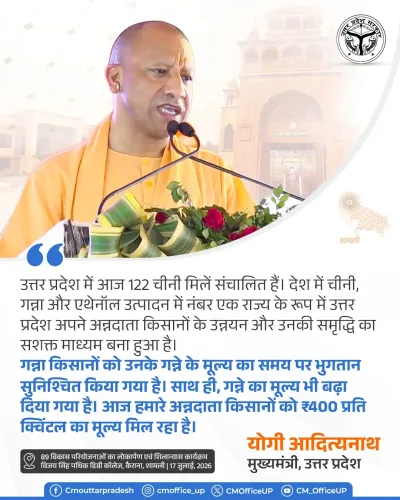
CM Yogi Adityanath announced on 17 July 2026 that the Uttar Pradesh government has raised the state advised price for sugarcane.
The announcement was made via a Hindi post on X that used a wordplay: 'Humein Jinnah nahin, ganna pasand hai' — 'We prefer sugarcane, not Jinnah.' Uttar Pradesh is one of India's largest sugarcane-producing states, making this price revision significant for millions of farmers.
The Yogi Adityanath government has revised the sugarcane state advised price upward multiple times since coming to power in 2017 .
Key stakeholders include sugarcane farmers and sugar mills across districts such as Muzaffarnagar , Meerut , and Lakhimpur Kheri .
The next watch point is the official gazette notification of the revised price and the mill payment schedule.
Uttar Pradesh Chief Minister Yogi Adityanath on Friday, 17 July 2026, declared that his government has raised the state advised price for sugarcane, framing the announcement with a sharp rhetorical contrast between agricultural welfare and a historical political figure associated with the partition of India.
Context
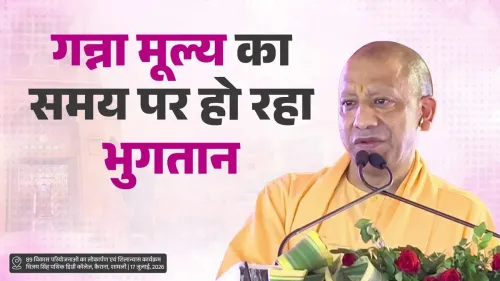
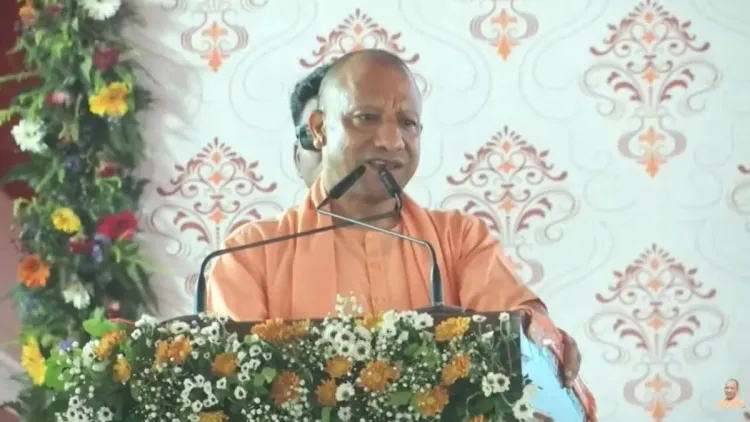
Posting on X, CM Yogi stated in Hindi: 'Humein Jinnah nahin, ganna pasand hai... humne ganne ka daam badhaya hai' — translated as, 'We prefer sugarcane, not Jinnah... we have raised the price of sugarcane.' The wordplay contrasts Jinnah — a reference to Muhammad Ali Jinnah, the founder of Pakistan and a figure long invoked in Indian political discourse around partition — with ganna, the Hindi word for sugarcane. The post was accompanied by a video.
The remark is a pointed signal to Uttar Pradesh's rural electorate, particularly the large community of sugarcane farmers, that the BJP-led state government's priorities lie with agricultural livelihoods rather than divisive historical politics.
Policy Backdrop
Uttar Pradesh is one of India's largest sugarcane-producing states, and the state advised price — the rate at which sugar mills are mandated to procure cane from farmers — is among the most politically sensitive agricultural policy levers available to any state government. The Yogi Adityanath administration has revised this price upward multiple times since taking office in 2017, positioning each revision as a direct benefit to the rural economy.
Successive Uttar Pradesh governments, regardless of political affiliation, have used annual sugarcane price revisions as a core instrument of rural economic policy. Under CM Yogi, these revisions have been consistently paired with public messaging emphasising farmer welfare and agricultural support as a governance priority.
Stakeholders and Impact
Sugarcane farmers across districts such as Muzaffarnagar, Meerut, Lakhimpur Kheri, and Gorakhpur stand to benefit directly from any upward revision in the state advised price, as it raises the floor on what sugar mills must pay them for their produce. Delayed payments by mills have historically been a source of agrarian distress in the state.
Sugar mills, both cooperative and private, will need to align their procurement costs with the revised rate. The announcement is also likely to resonate with Other Backward Classes and farming communities who form a significant part of the BJP's voter base in Uttar Pradesh.
What's Next
The immediate watch point is the official gazette notification of the revised state advised price and the accompanying payment schedule that mills will be required to follow. Any gap between the announced price and actual, timely payments to farmers has historically drawn political scrutiny and farmer protests in the state.
The rhetorical framing of this announcement — linking an economic measure to a contrast with a partition-era historical figure — suggests the BJP in Uttar Pradesh intends to keep both agricultural welfare and questions of national identity as intertwined themes ahead of future electoral cycles.
Point of View
CM Yogi ensures the announcement travels beyond agricultural news cycles into broader political discourse. This pattern of anchoring welfare measures to cultural or historical contrasts has been a consistent feature of the Yogi administration's public messaging since 2017, and signals that the government views agrarian policy and identity politics as mutually reinforcing rather than competing electoral strategies.
NationPress
17 Jul 2026
Frequently Asked Questions
What did CM Yogi Adityanath say about sugarcane price on 17 July 2026?
CM Yogi Adityanath announced that his government has raised the state advised price for sugarcane in Uttar Pradesh, saying: 'We prefer sugarcane, not Jinnah — we have raised the price of sugarcane.'
What is the state advised price for sugarcane in Uttar Pradesh?
The state advised price is the minimum rate at which sugar mills in Uttar Pradesh are required to procure sugarcane from farmers; the Yogi government has revised it upward multiple times since 2017.
Why did Yogi Adityanath mention Jinnah in a sugarcane post?
CM Yogi used a Hindi wordplay — 'Jinnah' versus 'ganna' (sugarcane) — to draw a rhetorical contrast between partition-era politics and his government's focus on farmer welfare and agricultural pricing.
How does a sugarcane price hike benefit UP farmers?
A higher state advised price means sugar mills must pay farmers more per unit of cane, directly raising farm income and reducing agrarian distress, particularly in western and eastern UP districts.
Which districts in Uttar Pradesh produce the most sugarcane?
Major sugarcane-producing districts in Uttar Pradesh include Muzaffarnagar, Meerut, Lakhimpur Kheri, and Gorakhpur, all of which are directly affected by changes in the state advised price.