CM Yogi: UP leads nation in sugar, ethanol; cane price at ₹400/qtl
Synopsis
The Chief Minister's Office of Uttar Pradesh, citing CM Yogi Adityanath, says 122 sugar mills are operational in the state and cane farmers now receive ₹400 per quintal. UP leads India in sugar, sugarcane, and ethanol production, with timely farmer payments assured.
Key Takeaways
122 sugar mills are currently operational in Uttar Pradesh, according to the Chief Minister's Office.
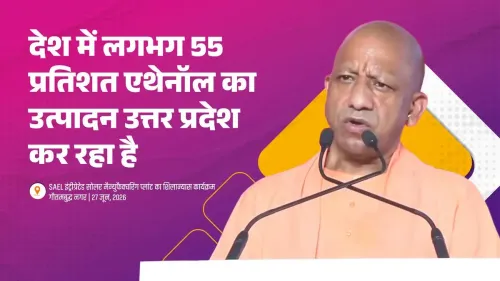
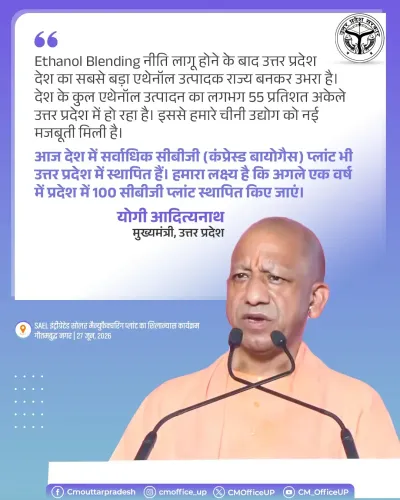
CM Yogi Adityanath declared UP the number-one state in sugar, sugarcane, and ethanol production in India.
Sugarcane farmers are receiving ₹400 per quintal as the state-advised price for their cane.
The state government says it has ensured timely payment of cane dues to farmers, addressing a long-standing sector grievance.
The ethanol push aligns with India's National Policy on Biofuels (2018) , supporting both farmer incomes and national fuel-blending targets.
The announcement signals a vertically integrated agri-industrial strategy linking food, fuel, and farmer welfare in UP's cane belt.
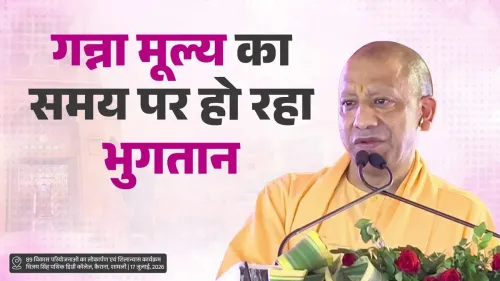
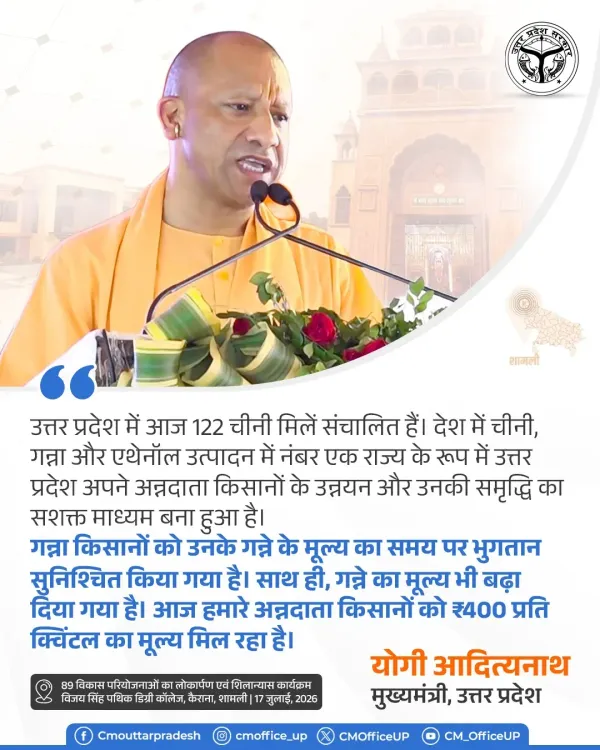
The Chief Minister's Office of Uttar Pradesh, quoting Chief Minister Yogi Adityanath, announced on Friday, 17 July 2026 that the state now operates 122 sugar mills and has cemented its position as the country's top producer of sugar, sugarcane, and ethanol, with cane farmers receiving ₹400 per quintal for their produce.
In the post, CM Yogi Adityanath stated: 'उत्तर प्रदेश में आज 122 चीनी मिलें संचालित हैं' ('Today, 122 sugar mills are operational in Uttar Pradesh'). He added that the state has become a 'powerful vehicle for the upliftment and prosperity of our annadata farmers' — a term of reverence meaning 'food providers' — and that timely payment of sugarcane dues has been ensured alongside a hike in the cane price.
Context
Uttar Pradesh has historically dominated India's sugarcane belt, accounting for a significant share of national sugar output. The state's cane-growing regions — stretching across western and central UP — support millions of farm households whose livelihoods depend on the annual cane price and the speed of mill payments. Delayed payments to farmers have been a chronic grievance in the sector, making the assurance of timely disbursement a politically and economically significant commitment. The announcement that the price now stands at ₹400 per quintal represents the state-advised rate at which mills must procure cane from farmers. Successive state administrations have used this mechanism — the State Advised Price (SAP) — to shield growers from market volatility and ensure a floor income.Policy Backdrop
The push on ethanol production sits within India's National Policy on Biofuels, notified in 2018, which expanded the use of sugarcane-derived ethanol to reduce crude oil imports and create an additional revenue stream for mills and farmers alike. Uttar Pradesh has aligned its mill expansion and distillery approvals with national targets for ethanol blending in petrol, making the state a key contributor to the country's energy transition goals. By positioning UP as the number-one state in sugar, cane, and ethanol production simultaneously, the government signals a vertically integrated agri-industrial strategy — one where the same crop feeds the food supply chain, the fuel supply chain, and farmer incomes.Stakeholders and Impact
The primary beneficiaries are sugarcane farmers across Uttar Pradesh, who gain from both the higher SAP of ₹400 per quintal and the state's stated commitment to on-time payment. Delayed mill payments have historically forced farmers into debt cycles, so the payment assurance carries direct welfare implications. Sugar mills — all 122 currently operational — stand at the centre of this ecosystem. Their financial health determines whether they can sustain prompt farmer payments, and the ethanol blending programme provides mills an alternative revenue channel beyond sugar sales, easing their liquidity constraints. Industrial workers employed at these mills and the broader rural economy of cane-growing districts also benefit from a stable mill-operating environment.What's Next
Attention will now turn to whether the state follows up with formal cabinet notifications on the cane price for the upcoming crushing season and any new approvals for ethanol distillery capacity. Analysts and farmer unions will watch for the actual payment disbursal data to verify whether the on-time payment commitment translates into practice on the ground. Any upward revision to the SAP ahead of the next season, or fresh targets for ethanol output, would extend the policy momentum signalled in today's announcement.Point of View
Cane, and ethanol — is a deliberate framing of agrarian governance as an economic achievement ahead of the next political cycle. The ₹400-per-quintal price point and the timely-payment assurance directly address two of the most persistent farmer complaints in the cane belt, constituencies that carry outsized electoral weight in western and central UP. The ethanol angle also lets the state government align itself with a nationally popular energy-security narrative, adding a second policy layer to what is otherwise a farm-income announcement. Together, these signals suggest the administration is seeking to consolidate its standing among cane growers while demonstrating industrial and environmental credentials simultaneously.
NationPress
15 Oct 2026
Frequently Asked Questions
What is the sugarcane price in Uttar Pradesh in 2026?
According to the Chief Minister's Office of Uttar Pradesh, cane farmers in the state are currently receiving ₹400 per quintal as the state-advised price for sugarcane.
How many sugar mills are operating in Uttar Pradesh?
The Chief Minister's Office stated on 17 July 2026 that 122 sugar mills are currently operational in Uttar Pradesh.
Is Uttar Pradesh the largest sugar producer in India?
Yes, as per the announcement by CM Yogi Adityanath, Uttar Pradesh is the number-one state in India in sugar, sugarcane, and ethanol production.
What is the ethanol blending programme and how does UP benefit?
India's National Policy on Biofuels (2018) promotes the use of sugarcane-derived ethanol blended into petrol to cut oil imports. UP's large mill base and distillery capacity make it a key contributor to national blending targets, providing mills an extra revenue stream that supports farmer payments.
Are sugarcane farmers in UP getting paid on time?
The Chief Minister's Office of Uttar Pradesh has stated that timely payment of cane dues to farmers has been 'ensured,' though independent verification of actual disbursal timelines remains subject to official data releases.