CM Yogi: UP Leads India in Foodgrain, Vegetable, Horticulture Output
Synopsis
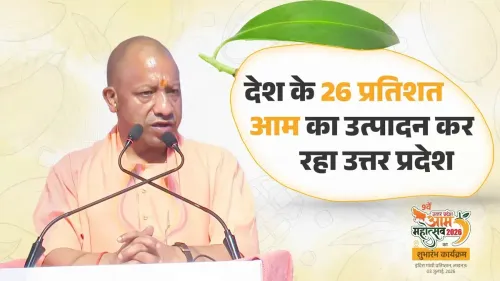
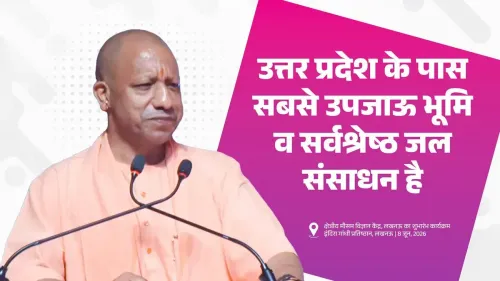
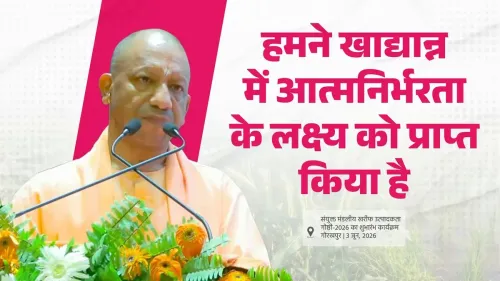
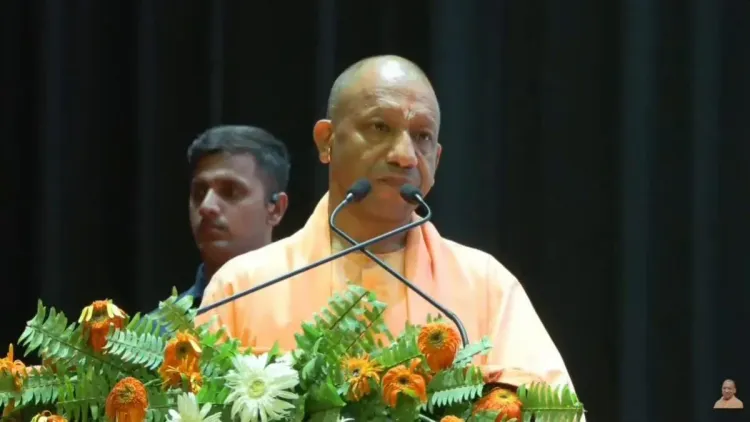
Uttar Pradesh Chief Minister Yogi Adityanath has said the state is leading the country in production of foodgrains, vegetables and horticultural crops. The claim, posted on X with a video, widens the state's traditional foodgrain narrative to higher-value baskets and sets up verification against the next central and state agricultural estimates.
Key Takeaways
CM Yogi Adityanath claims Uttar Pradesh leads India in foodgrains, vegetables and horticulture output.
The post was made on 3 June 2026 on X, accompanied by a video.
UP has historically led in wheat, sugarcane and potato production since the Green Revolution era.
The National Food Security Mission, launched in 2007, supported grain output expansion in the state.
Verification will depend on the next Ministry of Agriculture estimates and UP economic survey.
Key competing states in horticulture and foodgrains include Madhya Pradesh, Punjab, West Bengal and Maharashtra.
Uttar Pradesh Chief Minister Yogi Adityanath on 3 June 2026 declared that Uttar Pradesh is leading the country in the production of foodgrains, vegetables and horticultural crops, framing the claim as evidence of the state's agricultural turnaround under his administration. The assertion was made in a post on X accompanied by a video, projecting agriculture as a pillar of the state's economic narrative.
In the post, the Chief Minister stated in Hindi: 'खाद्यान्न, वेजिटेबल्स और औद्यानिक फसलों के उत्पादन में उत्तर प्रदेश आज देश को लीड कर रहा है' ('Uttar Pradesh today is leading the country in the production of foodgrains, vegetables and horticultural crops'). The message positions the state as a national leader across three distinct agricultural baskets — staple grains, vegetables, and horticulture, which includes fruits, spices and floriculture.
Context
Uttar Pradesh is India's most populous state and has historically been among the country's largest contributors to wheat, sugarcane and potato output. The state's agro-climatic diversity, fed by the Ganga-Yamuna doab and an extensive canal network, has long made it a foundational region for the country's food security architecture.
The Chief Minister's claim widens the traditional foodgrain framing to include vegetables and horticulture, two segments that successive state governments have pushed as higher-value alternatives to cereals. Diversification into these baskets has been a stated objective of both central and state agricultural policy for over a decade.
Policy backdrop
The lineage of Uttar Pradesh's agricultural prominence stretches back to the Green Revolution of the 1960s and 1970s, when high-yielding seed varieties, fertiliser subsidies and irrigation expansion entrenched the state as a core food-grain producing region. The National Food Security Mission, launched in 2007, further channelled central support to raise rice, wheat and pulse production in states including Uttar Pradesh.
More recently, horticulture has emerged as a focus area, with central schemes such as the Mission for Integrated Development of Horticulture funding nurseries, cold-chain infrastructure and area expansion under fruits and vegetables. State governments routinely use Ministry of Agriculture estimates and state economic surveys to claim leadership across crop categories.
Stakeholders and impact
Farmers, particularly small and marginal cultivators who form the bulk of Uttar Pradesh's rural workforce, are the primary stakeholders in any productivity claim. Horticulture growers — concentrated in pockets producing potato, mango, aonla and vegetables around urban demand centres — stand to benefit from continued policy attention to cold storage, mandis and procurement.
For the state administration, projecting leadership across multiple crop categories serves a dual purpose: it underlines contributions to national food security, and it positions agriculture as a growth lever alongside industrial corridors and infrastructure. Agri-input suppliers, food processors and logistics operators are downstream beneficiaries of any sustained output expansion.
What's next
Verification of the leadership claim will depend on forthcoming releases from the Ministry of Agriculture and Farmers Welfare, including annual production estimates, and the next Uttar Pradesh economic survey. These datasets typically separate foodgrains from horticultural output, allowing category-wise comparison across states such as Madhya Pradesh, Punjab, West Bengal and Maharashtra.
The political signalling is likely to continue through the kharif sowing season, with the state government expected to highlight procurement, MSP operations and horticulture mission outlays. For farmers, the substantive test will be whether productivity claims translate into improved farm-gate prices, market access and resilience against weather shocks in the months ahead.
Point of View
The messaging moves beyond the traditional wheat-sugarcane story toward higher-value agriculture, where Uttar Pradesh has been pushing diversification. The framing also aligns with the central government's stated pivot from cereal-centric support to a broader farm-income agenda. The real test, however, lies in whether productivity leadership translates into farm-gate price gains and reduced distress migration from the state's eastern districts.
NationPress
22 Sept 2026
Frequently Asked Questions
What did Yogi Adityanath say about Uttar Pradesh agriculture?
Chief Minister Yogi Adityanath said Uttar Pradesh is leading the country in the production of foodgrains, vegetables and horticultural crops. He made the claim in a post on X on 3 June 2026, accompanied by a video.
Is Uttar Pradesh the largest agricultural producer in India?
Uttar Pradesh has historically been among India's largest agricultural producers, particularly in wheat, sugarcane and potato. Rankings vary by crop category and are confirmed through Ministry of Agriculture estimates and state economic surveys.
Which crops does Uttar Pradesh lead in?
Uttar Pradesh has traditionally led in wheat, sugarcane and potato production. The Chief Minister's latest claim extends leadership to the broader categories of foodgrains, vegetables and horticultural crops.
What is the National Food Security Mission?
The National Food Security Mission is a central scheme launched in 2007 to raise the production of rice, wheat and pulses. It has channelled support to major producing states including Uttar Pradesh.
How is horticulture different from foodgrain production?
Horticulture covers fruits, vegetables, spices, flowers and plantation crops, while foodgrain production refers to cereals and pulses such as wheat, rice and gram. Horticulture is typically higher-value per hectare and is a focus of recent farm diversification policy.