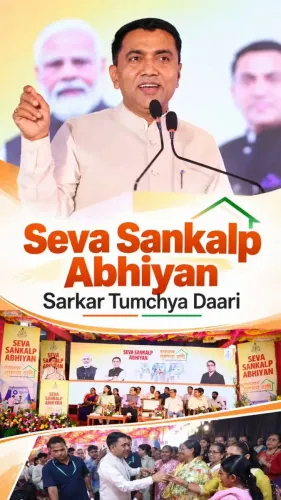
CM Sawant Goes Live on Mhaje Ghar Yojana and Revenue Reforms
Synopsis
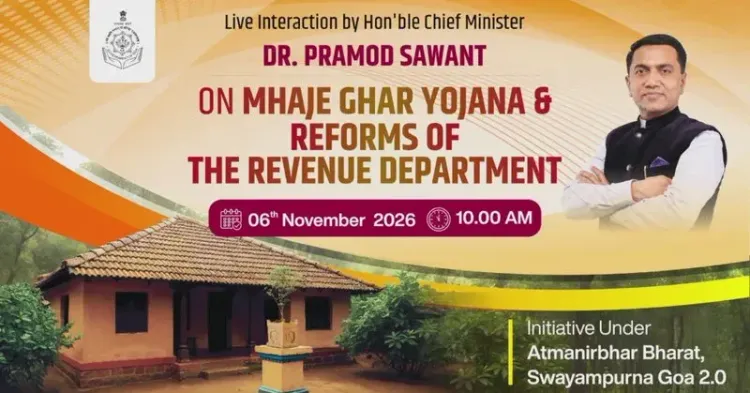
Goa Chief Minister Pramod Sawant conducted a live public interaction on 6 November 2026, addressing details of the Mhaje Ghar Yojana housing scheme and ongoing Revenue Department reforms — two initiatives with direct impact on residents and landowners across the state.
Key Takeaways
Goa CM Pramod Sawant held a live interaction on 6 November 2026 via X .
The session focused on the Mhaje Ghar Yojana housing scheme and Revenue Department reforms. 'Mhaje Ghar' translates to 'My Home' in Konkani, underlining a resident-centric framing.
Goa's Revenue Department handles land records and mutations — areas of longstanding complexity due to Portuguese-era land history.
Revenue reforms in Indian states typically target digitisation, faster mutations, and procedural transparency.
Follow-up announcements on scheme guidelines and reform timelines are expected post-interaction.
Goa Chief Minister Pramod Sawant took to a live public interaction on Friday, 6 November 2026, opening a direct channel between his government and residents on two fronts that touch everyday Goan life: the housing scheme Mhaje Ghar Yojana and a push to reform the state's Revenue Department.
What the Live Session Covered
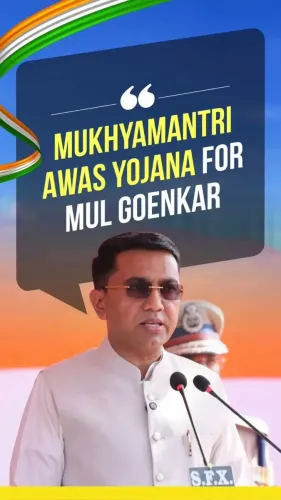
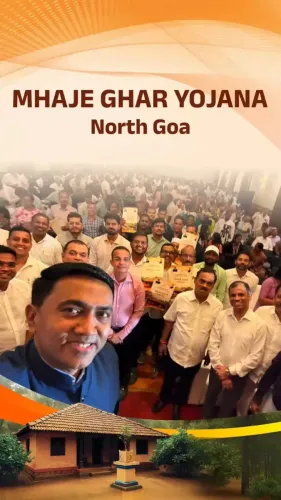
The Chief Minister broadcast the interaction on X, signalling an intent to use real-time digital platforms for citizen outreach rather than traditional press briefings. The session was anchored around two distinct but connected pillars — the Mhaje Ghar Yojana, a state-level housing welfare initiative aimed at Goa residents, and reforms to the Revenue Department, the administrative backbone responsible for land records, mutations, and revenue administration across the state.
The Konkani phrase 'Mhaje Ghar' translates to 'My Home' — framing the scheme explicitly as a personal, resident-centric promise rather than a bureaucratic programme.
Revenue Reforms and What They Mean for Landowners
Revenue department overhauls in Indian states have consistently converged on a few pressure points: digitisation of land records, faster mutation approvals, and cutting procedural delays that have historically forced landowners through opaque, time-consuming processes. Goa, with its complex land-ownership history rooted in Portuguese-era records, faces a particularly acute version of these challenges.
Simplifying this layer of governance has direct consequences for ordinary residents — anyone buying, inheriting, or seeking to build on land depends on the Revenue Department's speed and transparency. A live interaction on this subject sends a signal that the Sawant government is treating it as a frontline public-service issue, not a backroom administrative matter.
Sawant's Governance-by-Broadcast Approach
Chief Minister Sawant, who has led Goa since 2019, has periodically used direct-to-public formats to explain scheme delivery. Live digital sessions of this kind allow officials to field questions in real time, address confusion around eligibility, and project accountability — a format that state governments across India have increasingly adopted in the post-pandemic era. Whether this session produces concrete follow-up announcements on scheme guidelines or specific reform timelines will be the clearest measure of its impact.
Residents and landowners watching the broadcast will now be waiting for those specifics to translate from live discussion into notified policy.
Point of View
Revenue administration carries outsized political weight given the state's contested land-ownership history. By placing both the Mhaje Ghar Yojana and Revenue Department reforms in a single live session, Sawant is tying welfare delivery to administrative reform — a pairing that, if followed through, could reduce the friction between scheme announcement and actual beneficiary access. The real test will be in the specifics: notified timelines, digitisation milestones, and scheme eligibility criteria made public after the broadcast.
NationPress
6 Nov 2026
Frequently Asked Questions
What is the Mhaje Ghar Yojana in Goa?
Mhaje Ghar Yojana is a Goa state government housing welfare scheme. 'Mhaje Ghar' means 'My Home' in Konkani. The scheme is aimed at benefiting Goa residents, though specific eligibility criteria and provisions are subject to official government notifications.
Why did CM Pramod Sawant hold a live interaction on 6 November 2026?
Chief Minister Pramod Sawant held the live session to directly explain the Mhaje Ghar Yojana housing scheme and Revenue Department reforms to the public, allowing residents and landowners to engage with the government's plans in real time.
What reforms are being made to Goa's Revenue Department?
Specific reform measures are yet to be formally notified post the live interaction. Revenue department reforms in Indian states generally target digitisation of land records, faster mutation processes, and procedural simplification — areas of particular relevance to Goa given its complex land history.
How does the Revenue Department affect Goa residents?
Goa's Revenue Department manages land records, mutations, and revenue administration. Any resident buying, selling, inheriting, or developing land depends on this department's processes, making its efficiency a direct quality-of-life issue.
Who is Pramod Sawant and how long has he been Goa's Chief Minister?
Pramod Sawant is the Chief Minister of Goa and a BJP leader. He has been serving as Chief Minister since 2019.