CM Sawant Pushes Housing Rights for Mul Goenkars via Mhaje Ghar Yojana
Synopsis
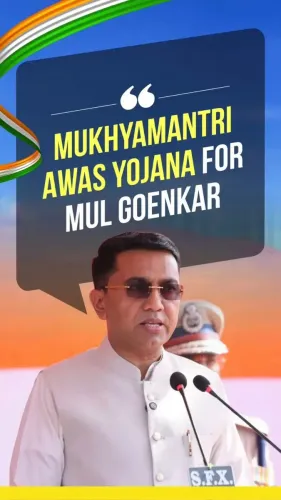
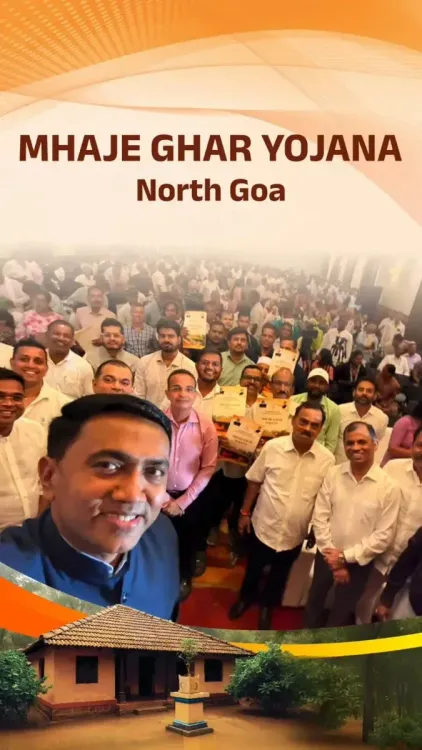
Goa Chief Minister Pramod Sawant on June 9, 2026 promoted Mhaje Ghar Yojana, a state scheme converting long-standing land and tenancy uncertainties into formal ownership titles for Mul Goenkars, Goa's original inhabitants — addressing a housing insecurity rooted in Portuguese-era colonial land records.
Key Takeaways
Goa CM Pramod Sawant publicly backed Mhaje Ghar Yojana on June 9, 2026 , using the Konkani slogan 'Mhaje Ghar, Mhajo Hakk' ('My Home, My Right').
The scheme targets Mul Goenkars — Goa's original inhabitants — converting decades of tenancy and land uncertainty into formal ownership titles.
Goa's complex Portuguese-era land records have left many families without clear title deeds since liberation in 1961 .
The state scheme complements the central Pradhan Mantri Awas Yojana (PMAY) but is specifically designed for Goa's unique colonial tenure legacy.
Formal titles under the scheme can unlock bank credit, welfare entitlements, and legal protections for beneficiary families.
Implementation progress is expected to be reviewed in the next Goa Legislative Assembly session and state budget.
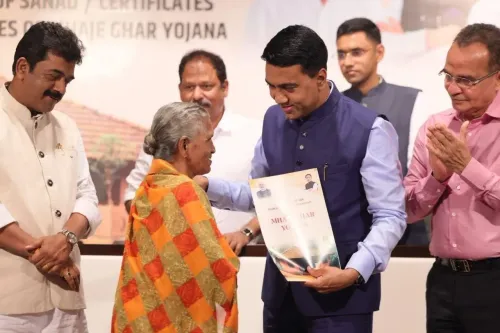
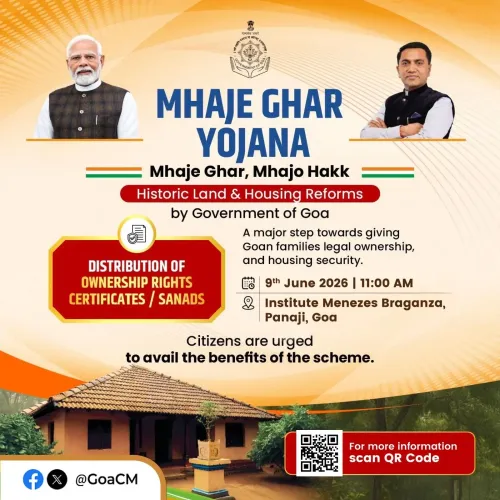
Goa Chief Minister Pramod Sawant on Tuesday, June 9, 2026, invoked the Konkani phrase 'Mhaje Ghar, Mhajo Hakk' ('My Home, My Right') to champion Mhaje Ghar Yojana, a state housing scheme aimed at converting long-standing land and tenancy uncertainties into secure ownership titles for Mul Goenkars — Goa's original inhabitants.
Context
Goa's land records carry the complex imprint of Portuguese colonial administration, which governed the territory until 1961. Decades after liberation, many families — particularly those classified as Mul Goenkars — have continued to occupy homes and plots without clear title deeds, leaving them vulnerable to legal disputes and displacement. The Chief Minister framed the scheme as a direct answer to this multi-generational insecurity, stating the government is 'transforming decades of uncertainty into ownership, and housing security.'
The slogan 'Mhaje Ghar, Mhajo Hakk' is deliberately rooted in Konkani, Goa's official language, signalling that the programme is designed with the cultural and demographic identity of original Goan residents at its centre.
Policy Backdrop
Mhaje Ghar Yojana operates as a state-level complement to the central government's Pradhan Mantri Awas Yojana (PMAY), launched in 2015, which targets pucca housing for urban and rural households across India. While PMAY addresses broad shelter deficits, the Goa scheme is specifically calibrated to resolve tenure insecurities rooted in colonial-era land records — a problem that national programmes are not structured to address.
Across India, several state governments have introduced supplementary land-titling and housing schemes to tackle local tenure gaps that fall outside the scope of central initiatives. Goa's version is notable for its explicit focus on original inhabitants, reflecting ongoing public and political debate over land use, demographic change, and the rights of long-settled communities in a state that has seen significant migration and real-estate pressure.
Stakeholders and Impact
Mul Goenkars — broadly understood as families with generational roots in Goa — stand as the primary beneficiaries of the scheme. For these households, formalised ownership titles can unlock access to bank credit, government welfare entitlements, and legal protection against eviction, materially improving their economic security.
The BJP-led state government positions the scheme as a fulfilment of its commitment to local welfare, distinct from migration-linked housing debates. Civil society groups and opposition parties in the Goa Legislative Assembly are likely to scrutinise the eligibility criteria and implementation pace, particularly given the sensitivity of land politics in the state.
What's Next
Progress on title distribution under Mhaje Ghar Yojana is expected to feature in the next session of the Goa Legislative Assembly and in the state's upcoming budget deliberations. The government will need to demonstrate measurable beneficiary outreach to sustain the political momentum behind the scheme.
As Goa navigates pressures from tourism-driven real-estate growth and demographic shifts, the pace at which CM Sawant's administration converts the scheme's promise into documented ownership titles will be a key indicator of whether the 'Mhaje Ghar, Mhajo Hakk' pledge translates into lasting housing security for the state's original inhabitants.
Point of View
My Right' — the government is simultaneously addressing a genuine post-colonial governance gap and shoring up its base among original Goan residents who feel squeezed by the state's real-estate and demographic pressures. The scheme fits a broader national pattern of state governments layering identity-linked welfare onto central housing programmes to claim distinct political credit. How quickly titles actually reach beneficiaries will determine whether this becomes a durable policy legacy or a campaign slogan.
NationPress
19 Sept 2026
Frequently Asked Questions
What is Mhaje Ghar Yojana in Goa?
Mhaje Ghar Yojana is a Goa state government housing scheme that converts long-standing land and tenancy uncertainties into formal ownership titles for Mul Goenkars, Goa's original inhabitants, addressing insecurities rooted in Portuguese-era colonial land records.
Who are Mul Goenkars?
Mul Goenkars are families with generational roots in Goa, broadly understood as the state's original inhabitants. They are the primary beneficiaries of the Mhaje Ghar Yojana housing scheme.
What does 'Mhaje Ghar, Mhajo Hakk' mean?
'Mhaje Ghar, Mhajo Hakk' is a Konkani phrase meaning 'My Home, My Right.' Goa CM Pramod Sawant used it as the rallying slogan for the Mhaje Ghar Yojana scheme.
How is Mhaje Ghar Yojana different from PM Awas Yojana?
While Pradhan Mantri Awas Yojana (PMAY) addresses broad housing deficits across India, Mhaje Ghar Yojana is specifically designed to resolve tenure insecurities in Goa arising from Portuguese colonial land records, with eligibility focused on original Goan inhabitants.
Why do Goa land records cause housing problems?
Goa was under Portuguese administration until 1961, and its colonial-era land records left many long-settled families without clear title deeds, making them vulnerable to legal disputes and displacement — the core problem Mhaje Ghar Yojana aims to resolve.