CM Sawant Takes Welfare Schemes to Goa's Doorsteps
Synopsis
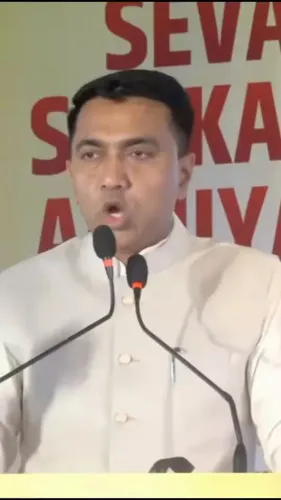
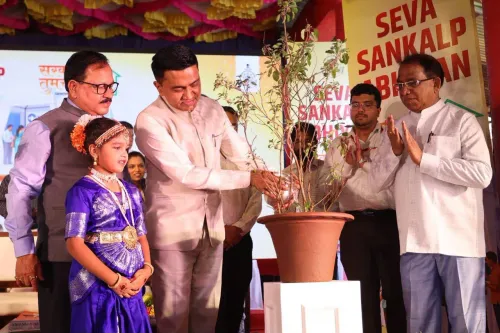
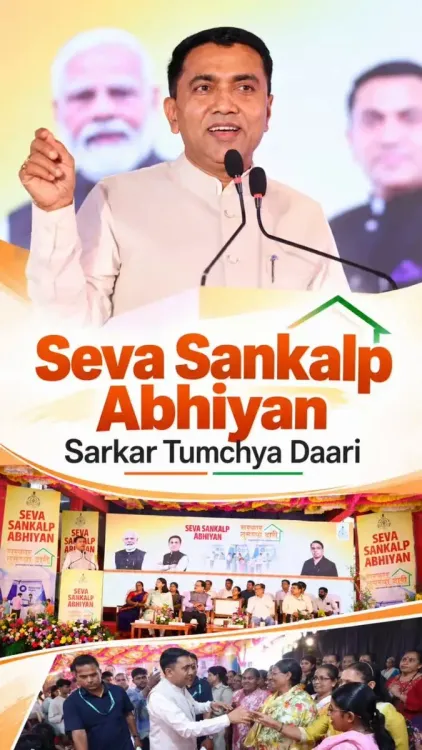
Goa Chief Minister Pramod Sawant joined ground-level delivery of welfare benefits under the Seva Sankalp Abhiyan on 25 September 2026, distributing Mhaje Ghar Sanads and Goa Ujjwala Yojana connections directly to beneficiaries under the 'Sarkar Tumchya Daari' initiative.
Key Takeaways
Goa CM Pramod Sawant personally witnessed welfare delivery under the Seva Sankalp Abhiyan on 25 September 2026 .
The abhiyan distributed Mhaje Ghar Sanads — formal land title documents — to eligible Goa residents.
Goa Ujjwala Yojana connections providing cooking gas subsidies were delivered at the doorstep event.
The campaign operates under the slogan Sarkar Tumchya Daari ('the government at your doorstep'), targeting direct benefit delivery without bureaucratic friction.
Sawant has led Goa as Chief Minister since 2019 ; the abhiyan aligns with the BJP's broader electoral promise-fulfilment framework.
Further district-level events under the same abhiyan are anticipated across Goa.
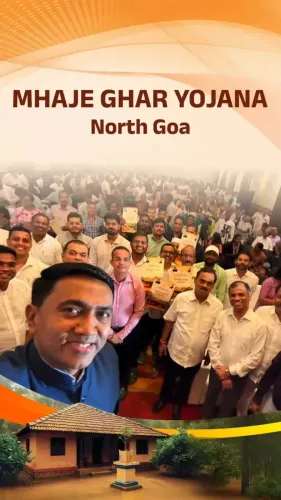
Welfare benefits are no longer waiting at a government counter — Goa Chief Minister Pramod Sawant has taken them directly to the people. On Friday, 25 September 2026, Sawant witnessed the on-the-ground delivery of state benefits under the Seva Sankalp Abhiyan, distributing everything from Mhaje Ghar Sanads — land title documents — to connections under the Goa Ujjwala Yojana, in a push to close the gap between scheme announcement and actual delivery.
What the Seva Sankalp Abhiyan actually delivers
The Seva Sankalp Abhiyan is the Goa government's structured campaign to fulfil electoral promises and push welfare entitlements directly into beneficiaries' hands — removing the bureaucratic friction that historically left many residents either unaware of their entitlements or unable to navigate the paperwork to claim them. Sawant framed the drive around three pillars: seva, sankalp, aur vachanpurti — service, resolve, and promise-fulfilment. The phrase 'Sarkar Tumchya Daari' (loosely, 'the government at your doorstep') captures the campaign's core promise.
Mhaje Ghar Sanads and the land-title gap in Goa
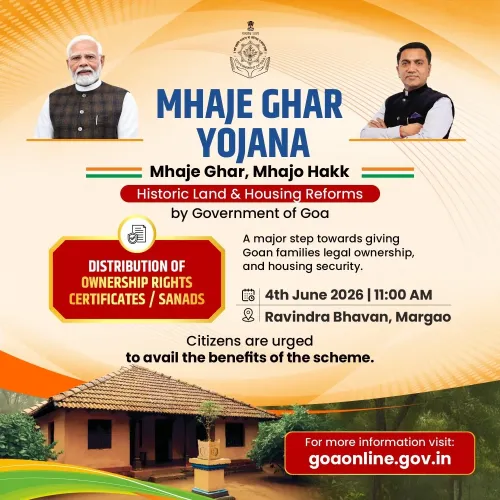
Among the benefits distributed, Mhaje Ghar Sanads carry particular weight. Land title and property documentation has historically been a pressure point in Goa, where Portuguese-era property records, tenancy disputes, and urbanisation pressures have left many households in legal grey zones. Handing a beneficiary a formal snad (deed or certificate) is not a ceremonial gesture — it translates into access to credit, legal security, and the ability to pass property to the next generation.
Goa Ujjwala Yojana and the clean-fuel push
The Goa Ujjwala Yojana extends the logic of the central government's flagship clean-cooking-fuel programme to the state level, channelling cooking gas connections and subsidies to households that had not yet been covered. Clean-fuel access is a measurable quality-of-life indicator — fewer households reliant on wood or kerosene means lower indoor air-pollution exposure, particularly for women and children. Delivering those connections at a community event, rather than expecting families to navigate a gas-agency queue, is the operational point of the abhiyan.
The 'doorstep government' model and what comes next
Doorstep-delivery drives have become a signature format for BJP-led state governments across India over the past several years — a way to demonstrate governance responsiveness while building direct visibility for the party's welfare record. For Sawant, who has led the state since 2019, the Seva Sankalp Abhiyan is a vehicle for translating the welfare architecture built during his tenure into a visible, lived experience for Goa's households. District-level events under the same campaign are expected to follow.
The test, as always, is in the numbers — how many Sanads handed over, how many Ujjwala connections activated, how many families actually reached. Those figures will determine whether Sarkar Tumchya Daari is a slogan or a statistic.
Point of View
Whose political footprint has been built on steady administrative consolidation rather than dramatic announcements, these doorstep drives serve a dual purpose: plugging genuine delivery gaps in land-titling and clean fuel access, while keeping the party's welfare narrative visible at the community level. The 'Sarkar Tumchya Daari' framing is particularly shrewd in Goa's multilingual, coastal-urban-rural mix, where Portuguese-era administrative complexity has historically kept government services distant from ordinary residents. Whether the abhiyan produces measurable coverage numbers — rather than remaining a series of photogenic handovers — will be the real indicator of its governance value.
NationPress
26 Sept 2026
Frequently Asked Questions
What is the Seva Sankalp Abhiyan in Goa?
The Seva Sankalp Abhiyan is a Goa government campaign launched to deliver welfare scheme benefits directly to residents' doorsteps, aimed at fulfilling electoral promises around service delivery and reducing bureaucratic hurdles for beneficiaries.
What is Mhaje Ghar Sanad?
Mhaje Ghar Sanad is a Goa state scheme that distributes land title documents and property certificates to eligible residents, helping families secure formal legal ownership of their homes and land.
What is the Goa Ujjwala Yojana?
The Goa Ujjwala Yojana is a state-level welfare programme that extends clean cooking fuel connections and subsidies to households in Goa, building on the framework of the central government's Ujjwala scheme.
What does 'Sarkar Tumchya Daari' mean?
'Sarkar Tumchya Daari' is a Konkani or Marathi phrase meaning 'the government at your doorstep', which is the tagline of Goa's doorstep welfare delivery initiative under the Seva Sankalp Abhiyan.
When did Pramod Sawant become Goa Chief Minister?
Pramod Sawant became Chief Minister of Goa in 2019 and has continued in the role as a BJP leader, focusing on welfare delivery and administrative reforms during his tenure.