CM Yogi Highlights UP's 26% Share in India's Mango Output
Synopsis
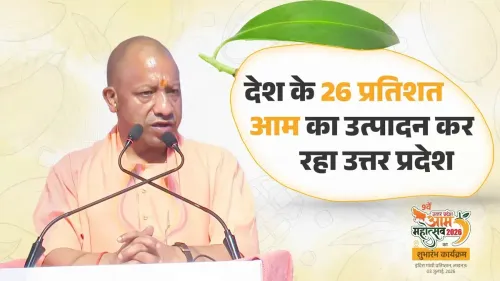
Uttar Pradesh Chief Minister Yogi Adityanath has stated that UP produces 26 per cent of India's total mango output, underscoring the state's dominant position in the country's horticulture sector and signalling a push for greater agri-processing and export investment.
Key Takeaways
CM Yogi Adityanath stated on 3 July 2026 that Uttar Pradesh accounts for 26 per cent of India's total mango production.
India is the world's largest mango producer, making UP's share a significant economic and agricultural marker.
UP is home to GI-tagged varieties including Dasheri and Langra , which command premium prices domestically and in export markets.
The Mission for Integrated Development of Horticulture (MIDH) , active since 2014 , supports mango cultivation and post-harvest infrastructure in UP.
Key mango-growing districts include Malihabad , Saharanpur , Lucknow , and Hardoi , with growers and horticulture exporters as the primary stakeholders.
The statement is expected to draw focus to seasonal horticulture reports, export figures, and potential new processing cluster announcements in the state.
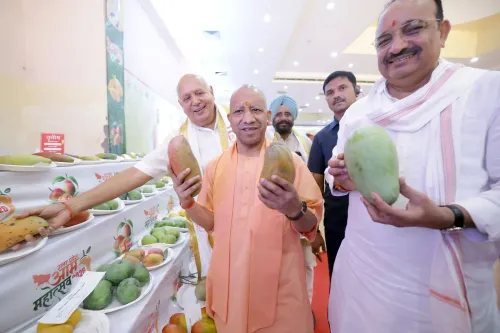
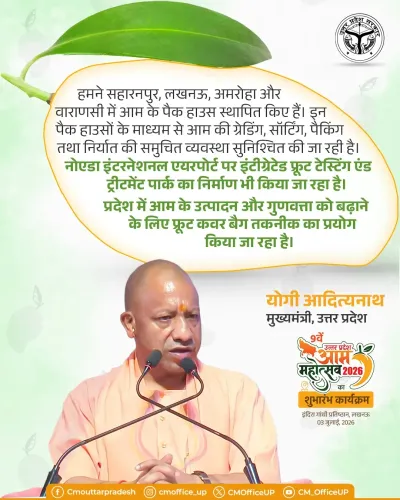
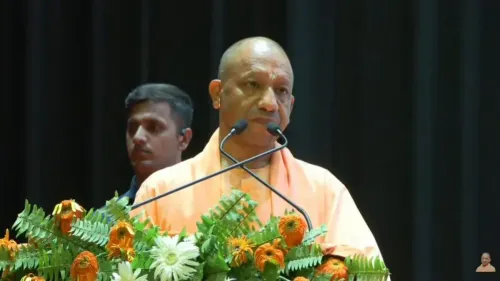
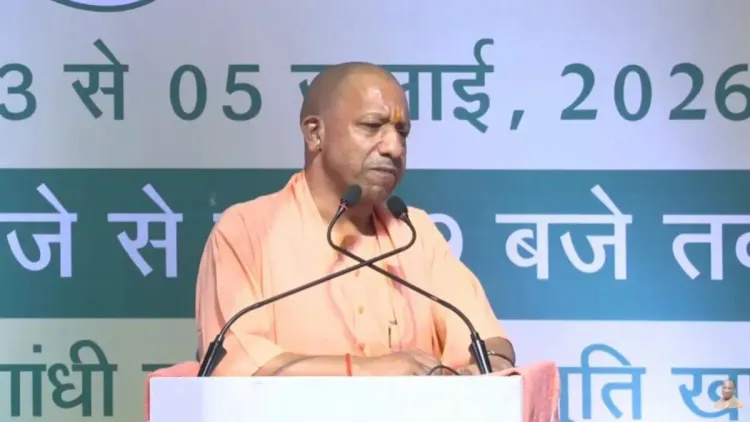
Uttar Pradesh Chief Minister Yogi Adityanath on Friday, 3 July 2026, highlighted the state's significant contribution to the country's mango production, stating that 26 per cent of India's total mango output originates from Uttar Pradesh.
Context
In his post on X, CM Yogi stated: 'Desh ke 26% aam ka utpadan UP ke andar hota hai' ('26 per cent of the country's mango production happens inside UP'). The remark draws attention to Uttar Pradesh's stature as one of India's foremost mango-producing states, home to celebrated varieties such as Dasheri and Langra, both of which carry Geographical Indication tags and command premium prices in domestic and international markets.
India is the world's largest producer of mangoes, and sub-national shares of that output carry considerable economic and political weight. State governments regularly cite such figures to underscore agricultural performance and to position themselves as destinations for agri-processing and export investment.
Policy Backdrop
The Mission for Integrated Development of Horticulture (MIDH), launched in 2014, has channelled central and state funds into mango cultivation, post-harvest cold-chain infrastructure, and export facilitation across major producing states, including Uttar Pradesh. The scheme supports activities ranging from nursery development and drip irrigation to pack-houses and market linkages for growers.
Under the Yogi Adityanath government, Uttar Pradesh has sought to expand horticulture's share of the state's agricultural GDP, with mangoes occupying a central role in that strategy. Government messaging has consistently linked output growth to farmer income and rural development, framing the crop as both a heritage product and an economic lever.
Stakeholders and Impact
The primary beneficiaries of a strong mango season are the state's mango growers, concentrated in districts such as Saharanpur, Lucknow, Hardoi, and Malihabad — the last of which is often called the mango capital of the world. A favourable production share translates into higher arrivals at mandis, stronger bargaining power for farmers, and greater throughput for horticulture exporters.
For the broader economy, a large mango output can stimulate ancillary industries including packaging, cold storage, juice processing, and logistics. Horticulture exporters stand to gain if the state leverages its production base to scale up value-added exports of pulp, slices, and fresh fruit to markets in the Middle East, Europe, and Southeast Asia.
What's Next
Attention will now turn to the Uttar Pradesh horticulture department's seasonal reports on mango arrivals, realised prices, and export volumes. Any new GI registrations, processing cluster announcements, or state-level buyer-seller meets in the coming weeks will signal whether the government intends to convert this production narrative into concrete policy action.
The Chief Minister's emphasis on the 26 per cent figure also sets a benchmark that industry bodies and farmer groups will watch closely — both as a measure of the state's agricultural health and as a potential trigger for fresh investment in post-harvest infrastructure across the mango belt.
Point of View
With agriculture and horticulture as key planks. By foregrounding mango output, the Chief Minister also implicitly makes a case for greater central allocation under schemes like MIDH and for private investment in cold-chain and processing infrastructure. Whether the rhetoric translates into measurable export growth or farmer income gains will be the harder test that stakeholders and opposition alike will apply.
NationPress
2 Oct 2026
Frequently Asked Questions
How much of India's mango is produced in Uttar Pradesh?
According to a post by CM Yogi Adityanath on 3 July 2026 , Uttar Pradesh produces 26 per cent of India's total mango output, making it one of the country's leading mango-producing states.
Which mango varieties are famous in Uttar Pradesh?
Uttar Pradesh is renowned for Dasheri and Langra mangoes, both of which hold Geographical Indication (GI) tags and are exported to markets in the Middle East, Europe, and Southeast Asia.
What government scheme supports mango farming in UP?
The Mission for Integrated Development of Horticulture (MIDH) , launched in 2014 , provides support for mango cultivation, post-harvest cold-chain infrastructure, and export facilitation in Uttar Pradesh and other producing states.
Which districts in UP grow the most mangoes?
Major mango-growing districts in Uttar Pradesh include Malihabad (often called the mango capital of the world), Saharanpur , Lucknow , and Hardoi .
Why is CM Yogi highlighting UP's mango production?
State leaders commonly cite crop-specific production data to demonstrate agricultural performance and to attract agri-processing and export investment. CM Yogi Adityanath 's post aligns with the UP government's broader push to position the state as a horticulture powerhouse and to make a case for infrastructure and policy support.