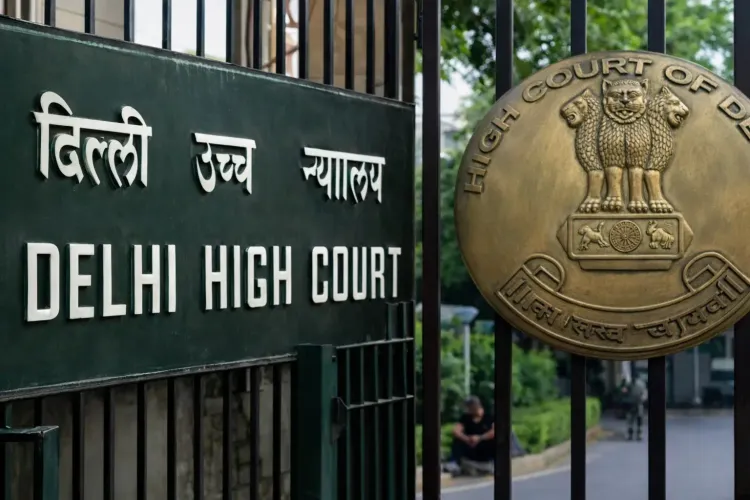
Delhi HC gives Kejriwal, Sisodia 4 weeks to reply on CBI excise plea
Synopsis
The Delhi High Court has drawn a hard line in the excise policy case — four weeks for Kejriwal and Sisodia to respond to the CBI's discharge challenge, with a fixed October hearing and zero adjournments. Running parallel are criminal contempt proceedings against the same AAP leaders for allegedly targeting the judiciary. The legal pressure on AAP's top brass is now intensifying on two simultaneous fronts.
Key Takeaways
The Delhi High Court on 17 August gave four weeks to Arvind Kejriwal , Manish Sisodia , and others to reply to the CBI 's application challenging their discharge in the excise policy case.
Justice Manoj Jain fixed the next hearing for 5 and 6 October , ruling out any further adjournments.
The trial court had discharged all accused on 27 February in a 1,100-paragraph judgment, finding no overarching conspiracy.
The case was reassigned after criminal contempt proceedings were initiated against Kejriwal , Sisodia , and Sanjay Singh over alleged attempts to scandalise the judiciary.
Parallel contempt proceedings before a Division Bench are listed for 21 September , with the same leaders given four weeks to file replies there too.
The Delhi High Court on Monday, 17 August gave four weeks to former Delhi Chief Minister and Aam Aadmi Party (AAP) National Convenor Arvind Kejriwal, former Deputy Chief Minister Manish Sisodia, and others to file their replies to the Central Bureau of Investigation's (CBI) application challenging their discharge in the alleged Delhi excise policy corruption case. The court made clear this was a last chance, scheduling the next hearing for 5 and 6 October with no further adjournments.
Key Developments in Court
Justice Manoj Jain, who is presiding over the matter after it was reassigned, directed that arguments will be heard in one go on the October dates. Solicitor General Tushar Mehta, appearing for the CBI, opposed the AAP leaders' request for additional time, reportedly calling the tactic 'childish.'
Sisodia, in his petition, contended that the CBI filed its revision plea 'without a second thought' within four hours of the trial court's verdict and that the petition failed to specify which evidence was ignored against which accused.
What the Trial Court Had Ruled
In a judgment spanning more than 1,100 paragraphs, delivered on 27 February, the trial court discharged all accused in the CBI's corruption case. The court held that the now-scrapped excise policy was the outcome of a consultative and deliberative process and that the prosecution had failed to establish any overarching conspiracy.
The CBI, in its revision plea before the High Court, alleged that the excise policy introduced by the then AAP-led Delhi government was manipulated to favour select liquor traders in exchange for kickbacks — an allegation the discharged accused have contested.
Why the Case Was Reassigned
The matter was transferred from the bench of Justice Swarana Kanta Sharma after criminal contempt proceedings were initiated against several AAP leaders — including Kejriwal, Sisodia, and Rajya Sabha MP Sanjay Singh — over the alleged circulation of 'vilifying and defamatory' material targeting the judiciary in connection with the excise policy case.
Parallel Contempt Proceedings
On 4 August, a Division Bench of Justice Navin Chawla and Justice Ravinder Dudeja adjourned the suo motu criminal contempt proceedings against Kejriwal, Sisodia, Singh, and other party leaders until 21 September. The bench directed the registry to supply, in digital form, the material forming the basis of the contempt reference to the respondents, after senior counsel for the AAP leaders submitted they had not received the relevant documents. The Division Bench also granted the proposed contemnors four weeks to file their replies in the contempt proceedings.
What Happens Next
With both the CBI's discharge challenge and the contempt proceedings now on a fixed timeline, the coming weeks will test whether the AAP leadership can mount a consolidated legal defence on two simultaneous fronts. The October 5-6 hearing on the CBI plea is expected to be decisive, as Justice Jain has ruled out any further delays.
Point of View
100-paragraph discharge order is a formidable record to overturn. Meanwhile, the contempt proceedings, initiated suo motu, add a separate layer of institutional pressure on AAP's leadership that is independent of the corruption case's merits. The two tracks — discharge challenge and contempt — are now converging in a way that limits the political room AAP has to frame this purely as persecution.
NationPress
2 Oct 2026
Frequently Asked Questions
What is the Delhi excise policy case about?
The Delhi excise policy case involves CBI allegations that the excise policy introduced by the then AAP-led Delhi government was manipulated to favour select liquor traders in exchange for kickbacks. The trial court discharged all accused in February, finding no overarching conspiracy, and the CBI has challenged that discharge in the Delhi High Court.
Why did the Delhi High Court give four weeks to Kejriwal and Sisodia?
The court gave Kejriwal, Sisodia, and others four weeks to file their replies to the CBI's revision plea challenging their discharge. Justice Manoj Jain called it a last chance and fixed the next hearing for October 5-6, with no further adjournments permitted.
What did the trial court rule in the excise policy case?
In a judgment of more than 1,100 paragraphs delivered on 27 February, the trial court discharged all accused, holding that the excise policy was the product of a consultative process and that the CBI failed to establish any overarching conspiracy.
What are the contempt proceedings against AAP leaders about?
Separate criminal contempt proceedings have been initiated against Kejriwal, Sisodia, Rajya Sabha MP Sanjay Singh, and other AAP leaders over the alleged circulation of material described as vilifying and defamatory toward the judiciary in connection with the excise policy case. Those proceedings are listed before a Division Bench on 21 September.
When is the next hearing in the CBI's discharge challenge?
The next hearing is scheduled for 5 and 6 October before Justice Manoj Jain, who has directed that arguments will be heard in one go with no further adjournments.