Ahmedabad Launches Innovative Startup Policy with Rs 250 Crore Fund to Tackle Urban Challenges
Synopsis
Ahmedabad's new startup policy empowers innovators to tackle urban challenges using city infrastructure. With a Rs 250 crore fund, the initiative aims to transform the city into a living laboratory for practical solutions.
Key Takeaways
Rs 250 crore allocated for innovation fund over five years.
Startups can access municipal infrastructure.
Support for civic solutions like waste management and flood forecasting .
Fiscal incentives include 50% property tax exemption .
Annual innovation festival to promote collaboration.
Ahmedabad, March 20 (NationPress) The city of Ahmedabad in Gujarat is set to launch a groundbreaking municipal startup policy that will grant innovators access to the city's fundamental infrastructure, transforming it into a real-world laboratory for addressing urban challenges.
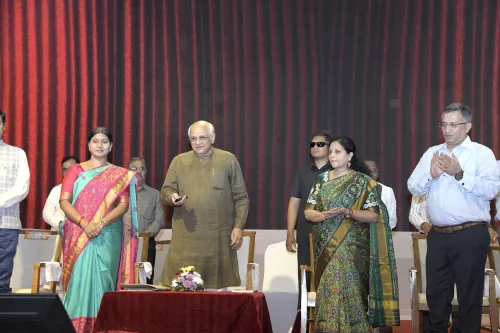
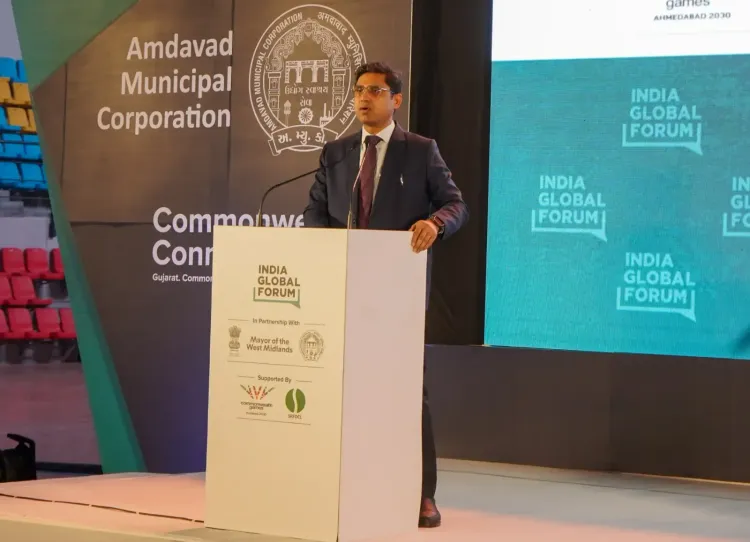
On Friday, the Ahmedabad Municipal Corporation (AMC), in collaboration with Smart City Ahmedabad Development Limited (SCADL), unveiled the 'Ahmedabad Innovation and Startup Policy 2026'.
Officials have characterized this initiative as a pioneering step at the municipal level in India, aimed at empowering startups and innovators to test and expand their solutions in the urban landscape.
"Ahmedabad will serve as a dynamic testing ground where startups, emerging innovators, researchers, and students can experiment with their ideas in actual conditions," stated an official from the AMC. The initiative will prioritize practical solutions to civic issues, including pothole repairs, flood prediction, waste management, and air quality control.
The policy allocates an innovation fund of Rs 250 crore over a span of five years, with an annual distribution of Rs 50 crore.
This funding will support pilot projects, proof-of-concept developments, and the scaling of successful solutions.
Chosen startups will be eligible for financial aid of up to Rs 35 lakh.
"The support will be provided without the necessity for bills or invoices, significantly streamlining the process for startups," the official noted.
Clear procurement criteria have been established under this policy.
Projects valued at up to Rs 7.5 lakh will qualify for pilot funding and proof-of-concept grants, subject to approval from a screening committee, which will also have the authority to issue direct work orders for validated solutions within this threshold.
For projects ranging from Rs 7.5 lakh to Rs 15 lakh, direct procurement approval will be granted by the Board of Management (BoM).
Projects between Rs 15 lakh and Rs 35 lakh will undergo a limited bidding challenge among startups, requiring BoM approval.
Projects exceeding Rs 35 lakh will involve an open bidding process for all firms, featuring provisions like the Right of First Refusal (ROFR), with final approval resting with the BoM.
Startups accepted under this policy will gain direct access to municipal infrastructure, including water supply systems, waste collection services, street lighting, Bus Rapid Transit System (BRTS) corridors, drainage networks, and urban health facilities.
"The focus is on tangible solutions that have a measurable impact on the ground," the official added.
The policy also introduces various fiscal incentives.
Startups collaborating with the AMC will be eligible for a property tax exemption of up to 50 percent for three years on office spaces up to 250 square meters.
Co-working spaces will be facilitated through a public-private partnership model, with community halls and auditoriums made available at subsidized rates to support events, workshops, and investor interactions.
Officials indicated that intellectual property rights for technologies developed through this initiative will remain with the startups.
The AMC will secure usage rights through licensing, while SCADL may consider taking an equity stake of about 2 percent only after successful implementation and on a case-by-case basis.
"No equity will be taken during the pilot phase," the official emphasized.
In large-scale projects, AMC has set aside 15 percent of work for startups in contracts valued above Rs 50 crore, in line with Central government's MSME guidelines.
The inclusion of the ROFR is anticipated to help startups maintain a competitive edge in the tendering process.
A unified digital portal will be introduced to streamline applications, provide insights on urban challenges, facilitate solution submissions, connect innovators with mentors, and offer access to tender-related information.
Additionally, AMC plans to host an annual innovation and startup festival lasting three to five days, featuring startup expos, hackathons, pitching sessions, and demonstration events.
Eligibility for this policy extends to DPIIT-recognized startups, as well as students, researchers, and individual innovators nationwide.
Applicants who are not formally registered at the time of selection will be granted six months to complete this process.
According to officials, the policy has been crafted over the past year with input from startups, industry specialists, academic institutions, and various stakeholders.
"This framework addresses the operational hurdles faced by startups when engaging with government systems and offers a practical, implementation-focused model," the official added.
With the launch of this policy, AMC has created a structured approach for collaboration between city administration and the innovation ecosystem, enabling the testing and scaling of urban solutions.
Point of View
Addressing urban challenges through collaboration with startups. It reflects a commitment to modernizing city infrastructure while empowering local innovators to bring their ideas to fruition.
NationPress
22 Sept 2026
Frequently Asked Questions
What is the Ahmedabad Innovation and Startup Policy 2026?
It is a municipal-level startup policy aimed at empowering innovators to test and scale solutions for urban challenges in Ahmedabad.
How much funding is allocated for the policy?
The policy provides an innovation fund of Rs 250 crore over five years, with Rs 50 crore allocated each year.
What types of projects are eligible for funding?
Projects addressing civic issues such as pothole repairs, flood forecasting, waste management, and air pollution control are eligible.
How can startups access municipal infrastructure?
Selected startups will have direct access to municipal infrastructure, including water supply, waste collection, and urban health centres.
What are the fiscal incentives for startups?
Startups will be eligible for up to 50% property tax exemption for three years on office spaces up to 250 square meters.