Nadda: 1.85 lakh Ayushman Arogya Mandirs now serving as first-contact centres
Synopsis
Union Health Minister J. P. Nadda announced on 17 July 2026 that 1.85 lakh Ayushman Arogya Mandirs are now operational nationwide as first-contact primary care centres for 140 crore citizens, citing 12 years of health infrastructure expansion under PM Modi.
Key Takeaways
1.85 lakh Ayushman Arogya Mandirs are now functioning as first-contact primary healthcare centres across India.
The network serves 140 crore citizens and forms the primary care pillar of the Ayushman Bharat programme.
Union Health Minister J.
Nadda attributed the expansion to 12 years of health infrastructure investment under PM Narendra Modi .
The centres were originally introduced as Health and Wellness Centres in the 2018 Union Budget and have since been rebranded as Ayushman Arogya Mandirs.
The three-tier approach — primary, secondary, and tertiary — follows the framework set by the National Health Policy 2017 .
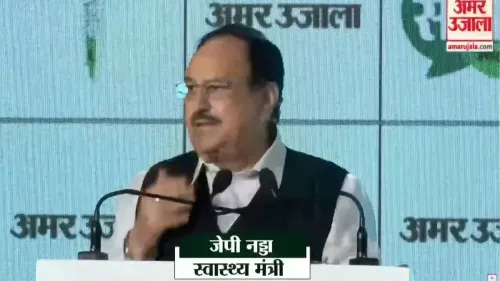
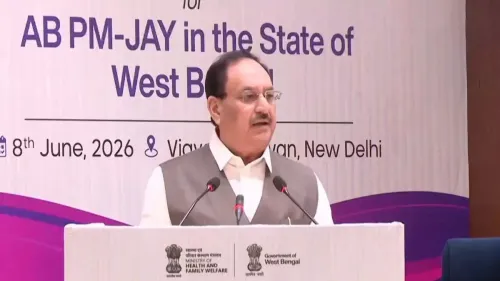
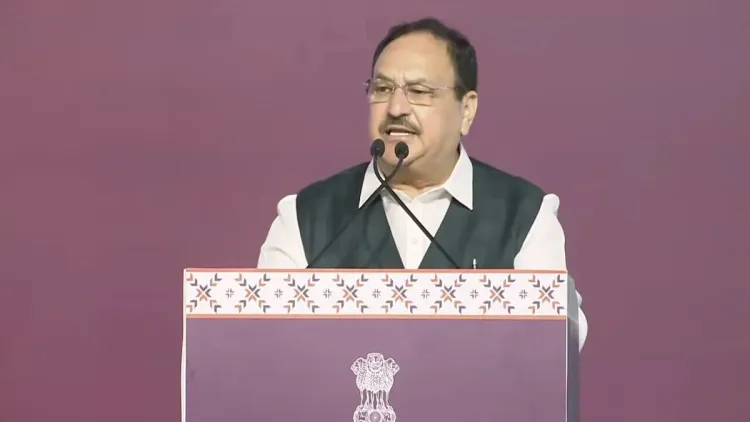
Union Health Minister J. P. Nadda on Friday, 17 July 2026, highlighted that 1.85 lakh Ayushman Arogya Mandirs are now operational across India, functioning as first-contact primary healthcare centres for the country's 140 crore citizens. The minister credited the milestone to 12 years of sustained health infrastructure expansion under Prime Minister Narendra Modi.
Context
Posting on X, Nadda wrote: 'आज देशभर में 1.85 लाख आयुष्मान आरोग्य मंदिर 140 करोड़ देशवासियों के लिए प्रथम संपर्क केंद्र के रूप में सेवाएं दे रहे हैं' — 'Today, 1.85 lakh Ayushman Arogya Mandirs across the country are serving as first-contact centres for 140 crore citizens.' He added that under PM Modi's leadership, India has taken 'a long leap' in strengthening primary, secondary, and tertiary healthcare over the past 12 years.
The Ayushman Arogya Mandir network is the rebranded and expanded version of the Health and Wellness Centres introduced under the Ayushman Bharat programme, which was announced in the 2018 Union Budget. These facilities were designed to convert existing sub-centres and primary health centres into comprehensive primary care hubs offering a broader basket of services closer to citizens' homes.
Policy Backdrop
The Ayushman Bharat programme has two pillars: the Ayushman Arogya Mandir network for primary care, and the Pradhan Mantri Jan Arogya Yojana (PM-JAY) insurance scheme for secondary and tertiary hospitalisation. Together, they represent the government's attempt to build a three-tier public health architecture that reduces out-of-pocket spending for low-income households.
The National Health Policy 2017 laid the conceptual groundwork for this approach, calling for increased public health expenditure and a shift toward preventive and promotive care at the community level. The current network builds on investments made under the earlier National Rural Health Mission, now integrated into a unified national framework.
Stakeholders and Impact
The primary beneficiaries of the Ayushman Arogya Mandir expansion are rural and semi-urban households that previously had limited access to organised primary care. By positioning these centres as 'first-contact' points, the government aims to reduce the burden on district hospitals and tertiary facilities, which have historically been overwhelmed by patients who could have been treated at the community level.
Health advocates have long argued that strengthening primary care is the most cost-effective strategy for improving population health outcomes. The scale cited by Nadda — 1.85 lakh centres — would, if fully operational and adequately staffed, represent one of the largest primary care networks in the world.
What's Next
Parliamentary scrutiny of the programme is expected to focus on actual operationalisation rates, staffing levels, and the quality of services delivered at these centres, alongside any new budgetary allocations for strengthening secondary and tertiary linkages in the next Union Budget. The government's ability to demonstrate measurable health outcome improvements — not just infrastructure numbers — will be the benchmark against which this milestone is ultimately assessed.
Point of View
Framing a cumulative 12-year infrastructure build as a single, unified achievement. The invocation of PM Modi's leadership alongside a large headline number follows a well-established pattern of attributing institutional milestones to executive vision rather than administrative continuity. The real policy test, however, lies not in the count of centres but in staffing ratios, service quality, and whether the network is genuinely reducing the load on tertiary hospitals — metrics that ministerial social media posts rarely surface. Analysts watching India's public health trajectory will look to parliamentary committee reports and the next National Health Accounts data for a fuller picture.
NationPress
17 Jul 2026
Frequently Asked Questions
What is an Ayushman Arogya Mandir?
An Ayushman Arogya Mandir is a government primary healthcare facility that offers a comprehensive basket of services including maternal and child health, non-communicable disease screening, and essential medicines, functioning as the first point of contact between citizens and the public health system. These centres were originally called Health and Wellness Centres under the Ayushman Bharat programme launched in 2018.
How many Ayushman Arogya Mandirs are there in India in 2026?
According to Union Health Minister J. P. Nadda's post on 17 July 2026, there are 1.85 lakh Ayushman Arogya Mandirs operational across India.
What is the difference between Ayushman Bharat and Ayushman Arogya Mandir?
Ayushman Bharat is the overarching national health programme with two components: the Ayushman Arogya Mandir network for primary care, and the Pradhan Mantri Jan Arogya Yojana (PM-JAY) for health insurance covering secondary and tertiary hospitalisation costs.
Who launched the Ayushman Bharat programme?
The Ayushman Bharat programme was announced by the government of Prime Minister Narendra Modi in the 2018 Union Budget , with the aim of transforming India's primary healthcare delivery and extending insurance coverage to economically vulnerable households.
What does 'first-contact centre' mean in the context of Indian healthcare?
A first-contact centre is a facility where citizens seek medical attention before being referred to higher-level hospitals. In India's three-tier health system, Ayushman Arogya Mandirs serve this role at the community level, handling routine and preventive care to reduce the burden on district and tertiary hospitals.