Nadda Highlights 1.81 Lakh Ayushman Arogya Mandirs as Health System Backbone
Synopsis
Union Health Minister J. P. Nadda on June 24, 2026 said 1.81 lakh Ayushman Arogya Mandirs have strengthened primary healthcare as the first contact point in a newly integrated primary-secondary-tertiary care system, ensuring timely treatment and referrals for rural and urban populations across India.
Key Takeaways
Nadda announced on June 24, 2026 that India has, for the first time, established an integrated linkage across primary, secondary, and tertiary healthcare levels.
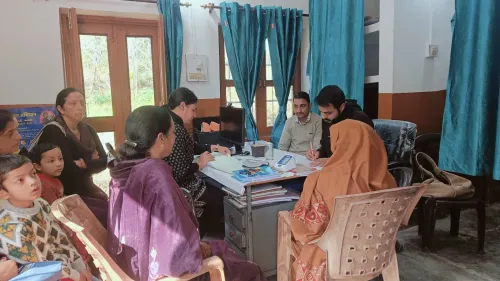
1.81 lakh Ayushman Arogya Mandirs have been set up as the first point of contact for health services in rural and urban areas nationwide.
The goal is to ensure citizens receive 'the right treatment and referral at the right time,' reducing dependence on overburdened district and tertiary hospitals.
The initiative builds on the Ayushman Bharat programme launched in 2018 , which originally targeted 1.5 lakh Health and Wellness Centres.
The model represents a shift from disease-specific vertical programmes to integrated, comprehensive primary healthcare aligned with the National Health Policy 2017 .
Functional integration with PM-JAY -empanelled facilities and referral completion rates will be the key metrics to watch going forward.
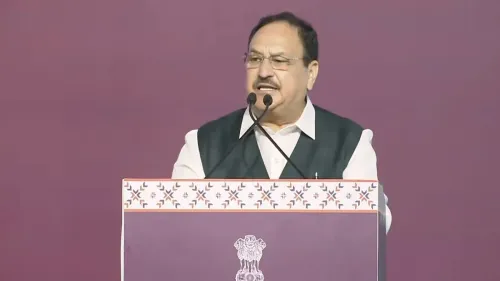
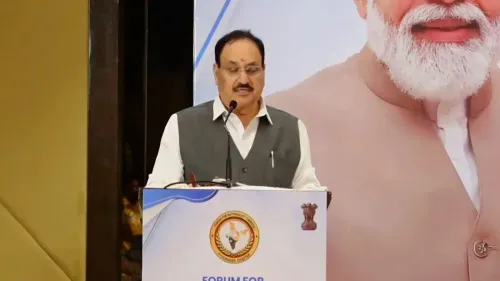
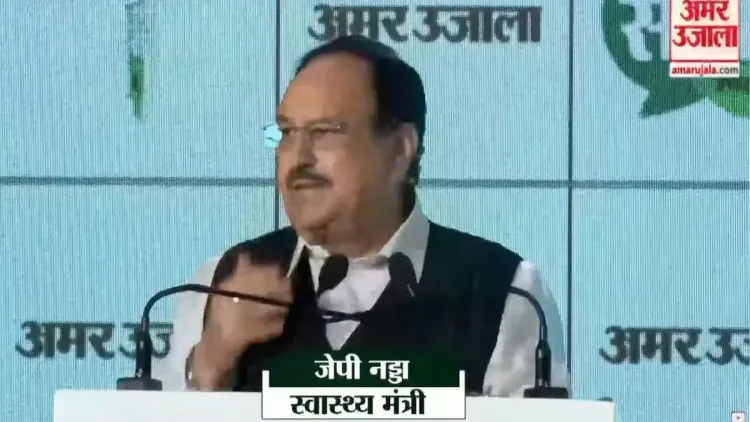
Union Health Minister J. P. Nadda on Wednesday, June 24, 2026, highlighted a landmark shift in India's healthcare architecture, asserting that for the first time a balanced and integrated linkage has been established across primary, secondary, and tertiary levels of care. He credited 1.81 lakh Ayushman Arogya Mandirs with strengthening the first point of contact for health services across rural and urban India.
Context
Nadda posted in Hindi, stating: 'स्वास्थ्य व्यवस्था को मजबूत बनाने के लिए पहली बार प्राइमरी, सेकेंडरी और टर्शियरी हेल्थ केयर के बीच बेहतर लिंकेज और संतुलित दृष्टिकोण अपनाया गया' ['For the first time, a better linkage and balanced approach has been adopted between primary, secondary, and tertiary healthcare to strengthen the health system']. The minister underlined that these facilities ensure citizens receive 'the right treatment and referral at the right time.'
The statement marks a deliberate effort by the Union Health Ministry to frame the Ayushman Bharat programme not merely as a hospitalisation insurance scheme, but as a structurally integrated, three-tier health delivery system.
Policy Backdrop
The Ayushman Bharat programme was launched in 2018 with two distinct pillars: Health and Wellness Centres targeting primary care, and the Pradhan Mantri Jan Arogya Yojana (PM-JAY) providing financial coverage for secondary and tertiary hospitalisation. The original target was to establish 1.5 lakh such primary care centres across the country.
The National Health Policy 2017 had explicitly recommended a tiered referral architecture to reduce fragmentation between care levels. The rebranding and expansion of these centres as Ayushman Arogya Mandirs represents the government's effort to operationalise that policy vision at scale. India has pursued a hub-and-spoke model under this framework to lower out-of-pocket expenditure and manage the rising burden of non-communicable diseases.
The emphasis on integrated, comprehensive primary healthcare marks a structural departure from earlier disease-specific vertical programmes, moving toward a model where the first point of contact manages, monitors, and refers patients across the care continuum.
Stakeholders and Impact
The primary beneficiaries of this network are rural and urban populations who previously faced barriers of distance, cost, and fragmented care pathways. By positioning Ayushman Arogya Mandirs as the first contact point, the government aims to reduce the burden on district hospitals and tertiary facilities caused by patients bypassing primary care.
Timely referrals from primary centres to PM-JAY-empanelled hospitals are central to the model's effectiveness. For patients in underserved areas, a functional referral chain can be the difference between early intervention and late-stage, costlier treatment.
What's Next
Attention will now turn to functional integration — whether these 1.81 lakh centres are operationally linked with district hospitals and empanelled tertiary facilities in practice, not just on paper. Health Ministry data on referral completion rates and state-level implementation reviews will be closely watched as indicators of whether the three-tier linkage Nadda described is translating into measurable outcomes on the ground.
As the government continues to scale the Ayushman Bharat ecosystem, the success of this integrated model could define the template for public health delivery in India for the next decade.
Point of View
The Health Ministry is signalling that previous governments failed to achieve this integration, a pointed political contrast ahead of ongoing state elections. The expansion from 1.5 lakh to 1.81 lakh centres is also a quiet claim of outperformance against original targets. Whether the referral chain functions in practice, particularly in low-income states, will determine whether this narrative holds up to scrutiny.
NationPress
23 Sept 2026
Frequently Asked Questions
What are Ayushman Arogya Mandirs?
Ayushman Arogya Mandirs are upgraded primary healthcare facilities under the Ayushman Bharat programme that provide preventive, promotive, and curative services in both rural and urban areas, serving as the first point of contact for patients in India's public health system.
How many Ayushman Arogya Mandirs are there in India?
According to Union Health Minister J. P. Nadda's post on June 24, 2026, there are 1.81 lakh Ayushman Arogya Mandirs operating across India.
What is the difference between Ayushman Bharat and Ayushman Arogya Mandir?
Ayushman Bharat is the overarching national health programme launched in 2018 with two pillars: primary care centres (now called Ayushman Arogya Mandirs) and PM-JAY, which provides hospitalisation coverage for secondary and tertiary care.
What does three-tier healthcare linkage mean in India?
Three-tier healthcare linkage refers to the integrated connection between primary care (Ayushman Arogya Mandirs), secondary care (district hospitals), and tertiary care (specialised hospitals), ensuring patients are referred upward through the system at the right time rather than bypassing lower levels.
What is PM-JAY and how does it connect to primary care?
PM-JAY, or Pradhan Mantri Jan Arogya Yojana, is the hospitalisation insurance component of Ayushman Bharat that covers secondary and tertiary treatment costs. Ayushman Arogya Mandirs are intended to feed into PM-JAY-empanelled facilities through a structured referral system.