Nadda highlights how 2017 health policy shift built 1.82 lakh Ayushman Arogya Mandirs
Synopsis
Union Health Minister J. P. Nadda highlighted on 2 June 2026 how the National Health Policy 2017's shift from curative-only to a five-pillar care model directly enabled the creation of approximately 1,82,000 Ayushman Arogya Mandirs, now the primary healthcare contact point for India's 140 crore citizens.
Key Takeaways
Union Health Minister J.
Nadda credited the National Health Policy 2017 as the policy foundation behind India's primary healthcare expansion.
Before 2017 , India's health policy was primarily Curative; the revised policy added Preventive, Promotive, Geriatric, and Rehabilitative care.
Approximately 1,82,000 Ayushman Arogya Mandirs have been established, exceeding the original Ayushman Bharat target of 1,50,000 centres.
These centres serve as the first point of health contact for 140 crore citizens, especially in rural and underserved areas.
The Ayushman Bharat programme, announced in the 2018-19 Union Budget , operationalised the 2017 policy vision by upgrading sub-centres and primary health centres.
Future scrutiny will focus on utilisation data and service quality at these centres as the government builds its health governance record.
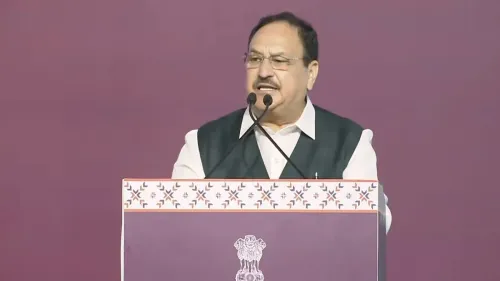
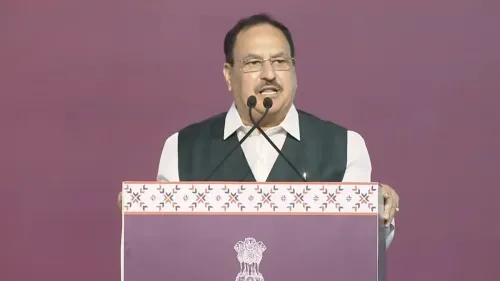
Union Health Minister J. P. Nadda on Tuesday, 2 June 2026, pointed to the National Health Policy 2017 as the foundational shift that enabled the creation of approximately 1,82,000 Ayushman Arogya Mandirs across India, describing them as the first point of health contact for the country's 140 crore citizens.
Context
In his post, Nadda drew a direct line between policy design and on-ground outcomes. 'कैसे नीतियां चीजों को परिवर्तित करती हैं' ('How policies transform things'), he wrote, before contrasting the pre-2017 health architecture with what followed. He noted that before 2017, India's health policy was primarily 'Curative' — focused on treatment after illness — whereas the revised National Health Policy 2017 broadened the framework to include Preventive, Promotive, Curative, Geriatric, and Rehabilitative care.
The minister credited this comprehensive policy pivot as the direct reason why the country now has a network of Ayushman Arogya Mandirs serving as primary healthcare touchpoints for the general population.
Policy Backdrop
India's earlier National Health Policy 2002 had concentrated largely on secondary and tertiary curative services. The National Rural Health Mission, launched in 2005 and later expanded into the National Health Mission in 2013, began strengthening primary care infrastructure, laying groundwork for the more ambitious 2017 shift.
The National Health Policy 2017 formally aligned India's health strategy with universal health coverage commitments and the Sustainable Development Goals, adopting a continuum-of-care model rather than episodic treatment. This policy foundation was then operationalised through the Ayushman Bharat programme, announced in the 2018-19 Union Budget, which set out to upgrade existing sub-centres and primary health centres into wellness-oriented Health and Wellness Centres — later rebranded as Ayushman Arogya Mandirs.
The original programme target was 1,50,000 such centres. The figure of approximately 1,82,000 cited by Nadda reflects the scale at which implementation has progressed beyond the initial target.
Stakeholders and Impact
Ayushman Arogya Mandirs are designed to serve rural and semi-urban populations who would otherwise rely on distant district hospitals for basic care. By functioning as first-contact facilities, they are intended to reduce out-of-pocket expenditure, ease congestion at tertiary centres, and enable early detection of non-communicable diseases — a core objective of the promotive and preventive care mandate introduced in 2017.
The integration of expanded diagnostics, wellness services, and AYUSH components into these centres represents a structural departure from the older sub-centre model. For 140 crore citizens, particularly those in underserved districts, these facilities represent the formal healthcare system's most accessible entry point.
What's Next
Utilisation rates, staffing levels, and service quality at Ayushman Arogya Mandirs are expected to feature in forthcoming Ministry of Health and Family Welfare annual reports and parliamentary reviews. Any mid-term revision to the National Health Policy would likely take stock of how effectively the five-pillar care model — Preventive, Promotive, Curative, Geriatric, and Rehabilitative — has been embedded at the primary level. Nadda's framing of this as a story of policy-driven transformation suggests the government intends to continue positioning the 2017 policy and Ayushman Bharat as centrepieces of its health governance record ahead of future legislative and budgetary cycles.
Point of View
He frames the Ayushman Arogya Mandir network not as a standalone scheme but as the logical result of a systemic philosophical shift in how the state conceptualises healthcare. This narrative serves a dual purpose: it reinforces the government's universal health coverage credentials ahead of budget and legislative cycles, and it positions the BJP's health record as architecturally coherent rather than episodic. The emphasis on 140 crore citizens as beneficiaries is a calibrated signal that primary care — not just the insurance component of Ayushman Bharat — is being foregrounded as a mass-reach achievement.
NationPress
19 Sept 2026
Frequently Asked Questions
What is Ayushman Arogya Mandir?
Ayushman Arogya Mandir is the rebranded name for Health and Wellness Centres established under the Ayushman Bharat programme, designed to serve as first-contact comprehensive primary healthcare facilities for citizens across India.
How many Ayushman Arogya Mandirs are there in India?
Union Health Minister J. P. Nadda stated on 2 June 2026 that approximately 1,82,000 Ayushman Arogya Mandirs have been established, exceeding the original Ayushman Bharat target of 1,50,000 centres.
What did India's National Health Policy 2017 change?
The National Health Policy 2017 broadened India's health framework from a primarily curative approach to one encompassing Preventive, Promotive, Curative, Geriatric, and Rehabilitative care, aligning the country with universal health coverage goals.
What is the difference between Ayushman Bharat and Ayushman Arogya Mandir?
Ayushman Bharat is the flagship health programme comprising two components: Health and Wellness Centres (now called Ayushman Arogya Mandirs) for primary care, and the Pradhan Mantri Jan Arogya Yojana for health insurance coverage.
What was India's health policy before 2017?
Before the National Health Policy 2017, India's health policy was primarily curative in orientation, focusing on treatment after illness rather than prevention or wellness promotion, with earlier policy documents dating to 2002 emphasising secondary and tertiary services.