JP Nadda inaugurates 10th Health Summit in Chandigarh, cites 79% drop in child mortality
Synopsis
At the 10th National Health Summit in Chandigarh, Health Minister JP Nadda unveiled a striking data point: India has achieved a 79% decline in under-five mortality and a 73% drop in infant mortality. With 1.85 lakh Ayushman Arogya Mandirs now serving as the primary healthcare touchpoint for 1.5 billion people, the government is making a pointed case that its shift from curative to preventive care is delivering measurable results.
Key Takeaways
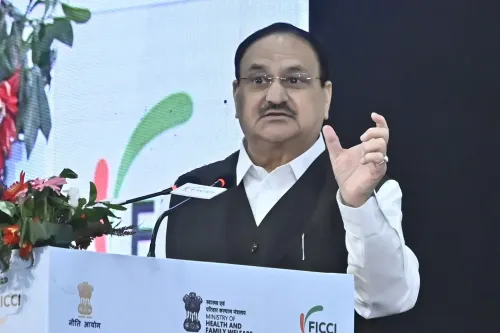
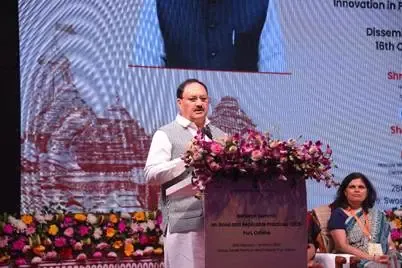
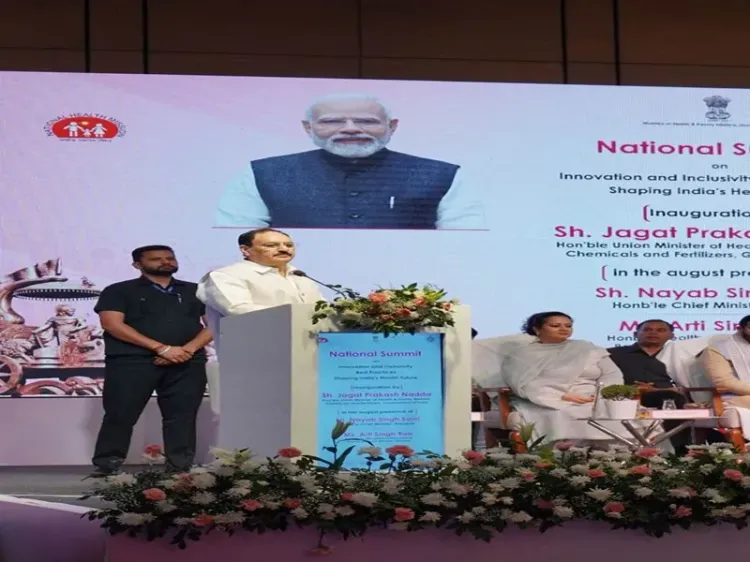
JP Nadda inaugurated the 10th National Health Summit in Chandigarh on 30 April 2025 .
India has recorded a 79% decline in under-five mortality and a 73% decline in infant mortality , per recent global estimates.
Over 1.85 lakh Ayushman Arogya Mandirs now serve as the first point of contact for nearly 1.5 billion people , with NCD screening for those above 30 years .
Institutional deliveries have risen from 79% to 89% , reflecting improved maternal healthcare access.
Tuberculosis treatment coverage has reached 92% , with incidence declining faster than the global average.
Haryana CM Nayab Singh Saini and Health Minister Arti Singh Rao were also present at the summit.
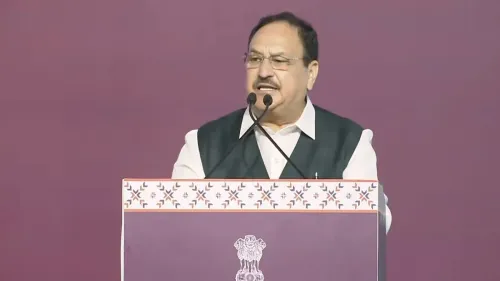
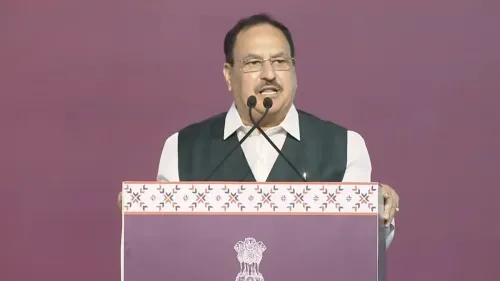
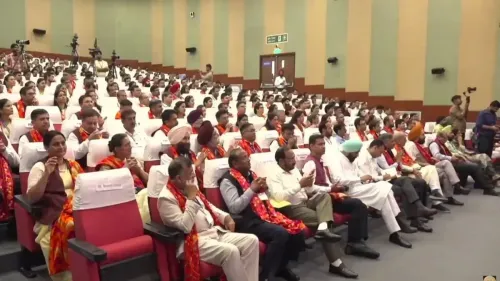
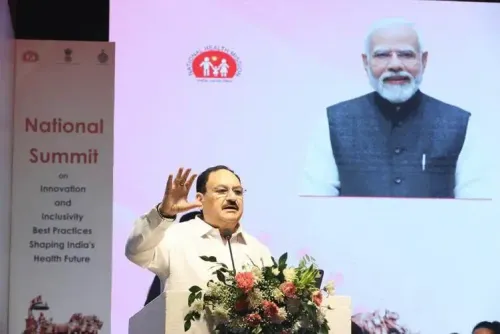
Union Minister of Health and Family Welfare J.P. Nadda on Thursday, 30 April inaugurated the 10th National Summit on Innovation and Inclusivity: Best Practices Shaping India's Health Future in Chandigarh, spotlighting India's decade-long shift from curative to holistic healthcare under Prime Minister Narendra Modi. The summit serves as a premier platform for states and Union Territories to showcase innovations and best practices aimed at making healthcare inclusive, accessible, and affordable.
A Decade of Healthcare Transformation
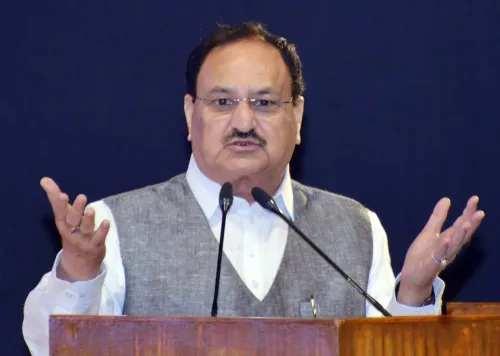
Addressing delegates, Nadda reflected on the structural overhaul of India's public health architecture over the past ten years. He drew a sharp contrast between the National Health Policy 2002 — which focused largely on curative care — and the National Health Policy 2017, which introduced a comprehensive framework encompassing preventive, promotive, curative, and palliative dimensions of healthcare. This paradigm shift, he argued, has made the system more people-centric and inclusive.
The Minister framed these changes as integral to the broader national vision of Viksit Bharat, underscoring that universal health coverage is central to India's development ambitions.
Key Health Indicators and Milestones
Nadda cited a series of measurable gains to illustrate the scale of progress. Institutional deliveries have risen from 79% to 89%, reflecting significantly improved access to maternal healthcare. India has also recorded a 79% decline in under-five mortality and a 73% decline in infant mortality, according to recent global estimates cited by the Minister.
On disease control, he noted that despite India accounting for nearly one-sixth of the world's population, the country now contributes only a small fraction of the global malaria burden. Tuberculosis incidence has declined faster than the global average, with treatment coverage reaching 92%. The Maternal Mortality Ratio has also seen sustained improvement over the years.
Role of Ayushman Arogya Mandirs
A centrepiece of the government's primary healthcare strategy, the network of over 1.85 lakh Ayushman Arogya Mandirs now functions as the first point of contact for nearly 1.5 billion people. Nadda highlighted their critical role in large-scale screening for non-communicable diseases — including hypertension, diabetes, and cancers of the oral cavity, breast, and cervix — targeting individuals above 30 years of age. These centres have significantly strengthened preventive care at the grassroots level.
Summit Focus and State Participation
Haryana Chief Minister Nayab Singh Saini and state Health Minister Arti Singh Rao were also present at the event. Nadda commended Haryana's leadership in advancing healthcare innovations, noting that field-driven strategies from states can collectively shape a more effective public health ecosystem.
The Minister emphasised that initiatives launched at the summit are designed to ease the working conditions of frontline healthcare workers while enhancing service delivery and improving health outcomes. The focus, he said, is on building systems that are efficient, integrated, and responsive to the needs of both providers and beneficiaries.
With sectoral innovations on display from across states and Union Territories, the summit is expected to generate a repository of replicable best practices that could inform national health policy going forward.
Point of View
But they deserve scrutiny on sourcing and baseline years — 'recent global estimates' is a phrase that can obscure as much as it reveals. India's progress on maternal and child health is real, but the pace of improvement on non-communicable diseases — hypertension, diabetes, cancers — remains an open question, given that the Ayushman Arogya Mandirs pivot to NCD screening is still relatively recent. The more telling metric will be how many of those 1.85 lakh centres are actually delivering the full spectrum of preventive services, rather than existing on paper. Summits like these tend to aggregate successes; the harder accountability question is what happens in the districts that are still lagging.
NationPress
27 Sept 2026
Frequently Asked Questions
What is the 10th National Health Summit about?
The 10th National Summit on Innovation and Inclusivity: Best Practices Shaping India's Health Future, held in Chandigarh on 30 April 2025, is a platform for states and Union Territories to showcase healthcare innovations and best practices. It focuses on advancing inclusive, accessible, and affordable healthcare across India.
What is an Ayushman Arogya Mandir?
Ayushman Arogya Mandirs are government-run primary healthcare centres that serve as the first point of contact for citizens. With over 1.85 lakh such centres operational, they provide preventive care including screening for non-communicable diseases like hypertension, diabetes, and cancers for individuals above 30 years of age.
How has India's child mortality changed under recent health policies?
According to recent global estimates cited by Health Minister JP Nadda, India has achieved a 79% decline in under-five mortality and a 73% decline in infant mortality. These improvements are attributed to the shift toward a holistic healthcare framework introduced under the National Health Policy 2017.
What changed between the National Health Policy 2002 and 2017?
The National Health Policy 2002 focused primarily on curative care, while the 2017 policy introduced a comprehensive framework covering preventive, promotive, curative, and palliative healthcare. This shift is credited with making India's public health system more inclusive and people-centric.
What is India's tuberculosis treatment coverage?
India's tuberculosis treatment coverage has reached 92%, and TB incidence in the country is declining at a faster rate than the global average, according to figures shared by Health Minister JP Nadda at the Chandigarh summit.