Nadda Credits Modi Govt for Landmark Health Policy Gains
Synopsis
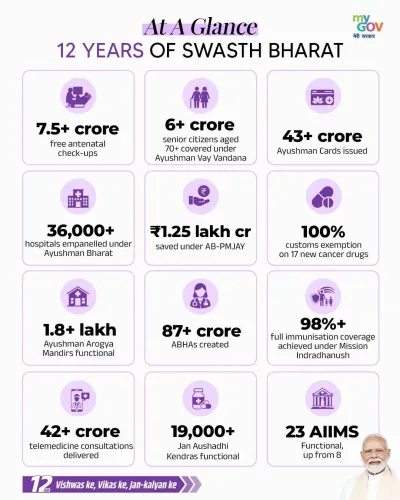
Union Health Minister J. P. Nadda praised PM Modi's government for twelve years of development, spotlighting health policy as a domain that has benefited a large share of India's population, pointing to landmarks such as the National Health Policy 2017 and Ayushman Bharat.
Key Takeaways
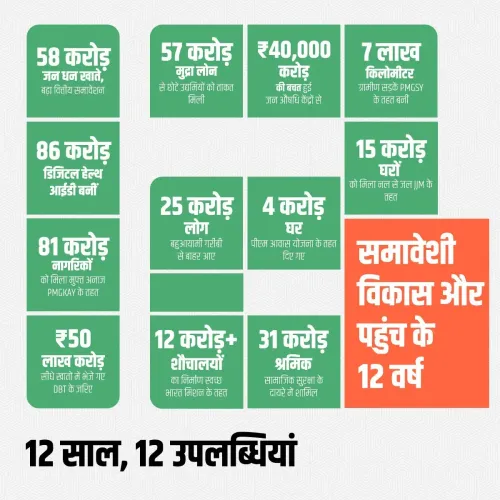
Nadda posted on 17 July 2026 crediting the Modi government with development across all sectors over the past 12 years .
He specifically highlighted 'unprecedented work' in the health sector and the role of health policy formulation in reaching a large share of the population.
The National Health Policy 2017 set targets for universal health coverage and raising public health spending to 2.5 percent of GDP .
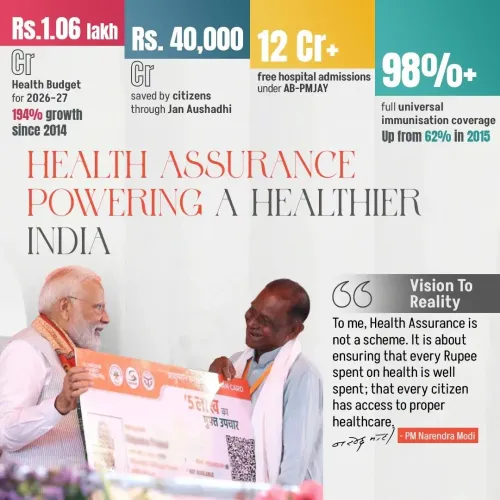
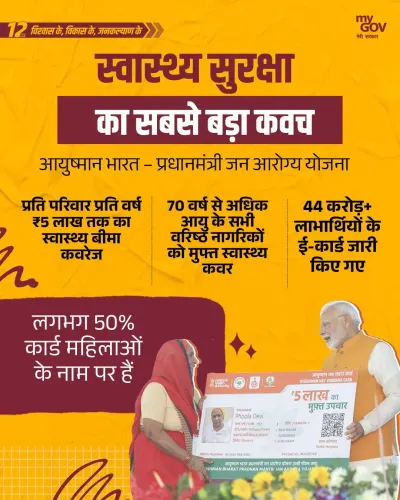
Ayushman Bharat , launched in 2018 , combines Health and Wellness Centres with PM-JAY insurance cover and is described as the world's largest government-funded health assurance scheme.
Primary beneficiaries include low-income households and rural populations who historically lacked access to affordable secondary and tertiary care.
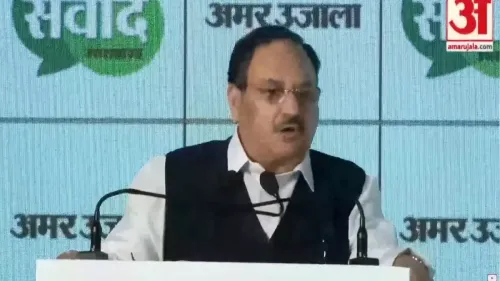
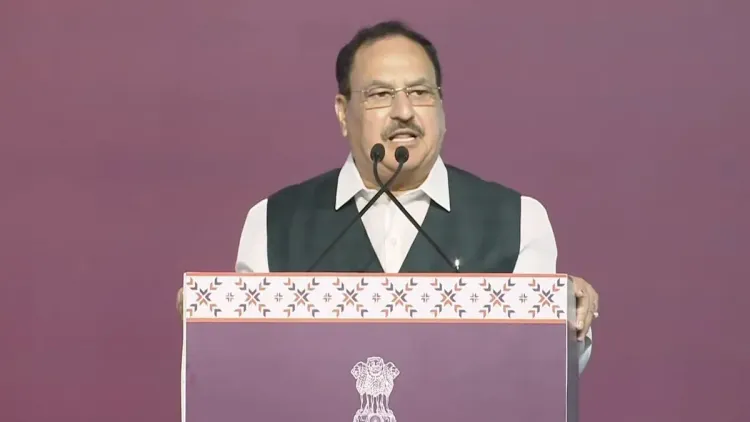
Union Health Minister and BJP national president J. P. Nadda on Friday, 17 July 2026, credited the government led by Prime Minister Narendra Modi with delivering unprecedented progress across all sectors over the past twelve years, singling out health policy as a domain where a large share of India's population has directly benefited.
Posting on X, Nadda wrote: 'आदरणीय प्रधानमंत्री श्री @narendramodi जी के नेतृत्व में पिछले 12 वर्षों में सभी आयामों में देश ने विकास देखा है' ('Under the respected leadership of Prime Minister Shri Narendra Modi, the country has seen development across all dimensions in the last 12 years'). He added that the health sector in particular had witnessed 'unprecedented work', and that the framing of health policy had benefited a large section of the population.
Context
The post arrives as the Modi government completes more than a decade in office, a period during which health spending and infrastructure have been a recurring point of emphasis in successive Union Budgets. Nadda, who oversees both the Ministry of Health and Family Welfare and the Ministry of Chemicals and Fertilizers, has been a central figure in rolling out and defending the government's health agenda at the national level.
The reference to health policy formulation points most directly to the National Health Policy 2017, which replaced the earlier 2002 version and set targets for universal health coverage, preventive care, and raising public health expenditure to 2.5 percent of GDP.
Policy Backdrop
The signature health initiative of the Modi era is Ayushman Bharat, launched in 2018, which combines a network of Health and Wellness Centres focused on primary care with the Pradhan Mantri Jan Arogya Yojana (PM-JAY) — billed as the world's largest government-funded health assurance scheme, providing cover for secondary and tertiary hospitalisation to economically vulnerable households.
Since 2014, the central government has also pursued the expansion of digital health records and integration of health data infrastructure, forming part of a broader push to extend access to underserved sections of the population, particularly in rural areas.
Stakeholders and Impact
The primary beneficiaries cited in government communications have consistently been low-income households and rural populations, groups that historically faced barriers to affordable secondary and tertiary care. The Health and Wellness Centres under Ayushman Bharat were designed specifically to shift the primary care burden away from overburdened district hospitals.
Health sector stakeholders — including state governments responsible for implementation, private hospital networks empanelled under PM-JAY, and civil society organisations tracking healthcare access — have a direct interest in the programme's continued funding and expansion.
What's Next
Attention will now turn to the pace of state-level rollout of Ayushman Bharat components and to health outlay announcements expected in the next Union Budget or parliamentary session. Any upward revision in public health spending as a share of GDP — a target set but not yet fully met under the National Health Policy 2017 — would be a concrete metric against which the government's claims of sectoral progress will be measured.
Point of View
Framing health policy as a flagship achievement ahead of what is likely to be an intensified electoral and budgetary cycle. By anchoring the claim in 'policy formulation' rather than specific statistics, the minister leaves room for the government to highlight any forthcoming data on Ayushman Bharat enrolment or health budget increases. The move also reinforces Nadda's dual role as a cabinet minister defending programme outcomes and as BJP president building a positive governance narrative. Whether the government can translate this political messaging into verifiable gains on the GDP health-spending target will be the real test of the claim's durability.
NationPress
17 Jul 2026
Frequently Asked Questions
What did JP Nadda say about health in the Modi government?
J. P. Nadda said the Modi government has achieved unprecedented progress in the health sector over the past 12 years, particularly through health policy formulation that has benefited a large section of India's population.
What is Ayushman Bharat and who does it benefit?
Ayushman Bharat is a scheme launched in 2018 that combines Health and Wellness Centres for primary care with PM-JAY, a government-funded health insurance programme targeting low-income and rural households for secondary and tertiary hospitalisation.
What is the National Health Policy 2017?
The National Health Policy 2017 replaced the earlier 2002 policy and set goals including universal health coverage, stronger preventive care, and raising public health expenditure to 2.5 percent of GDP.
What is JP Nadda's role in the Indian government?
J. P. Nadda is the Union Minister of Health and Family Welfare and Minister of Chemicals and Fertilizers, and also serves as the national president of the BJP.
What are the next milestones to watch in India's health sector?
Key things to watch include the state-level rollout progress of Ayushman Bharat and any new health outlay announcements in the next Union Budget or parliamentary session, especially movement toward the 2.5 percent of GDP spending target.