Shekhawat Shares PM Modi's Claim on India's Hydrogen Train
Synopsis
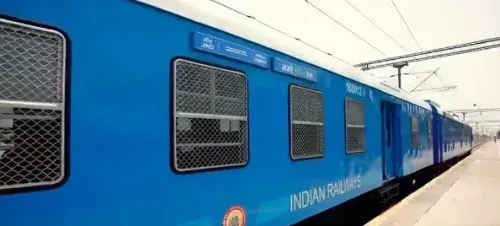
Union Minister Gajendra Singh Shekhawat shared a quote from PM Modi on 17 July 2026, asserting that India's hydrogen train between Jind and Sonipat in Haryana is the world's most powerful at 3,200 horsepower and also the longest, marking a claimed milestone in India's green mobility push.
Key Takeaways
Union Minister Gajendra Singh Shekhawat shared a statement attributed to PM Narendra Modi on 17 July 2026 celebrating India's hydrogen train.
The train is claimed to run between Jind and Sonipat in Haryana .
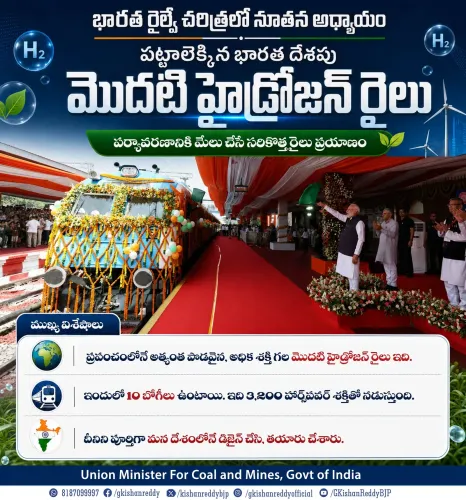
The post asserts the train produces 3,200 horsepower , making it the world's most powerful hydrogen train.
It is also claimed to be the world's longest hydrogen train .
Indian Railways has been piloting hydrogen fuel-cell trains since at least 2021 , backed by the National Green Hydrogen Mission launched in January 2023 .
Countries including Germany , France , and Japan have operated hydrogen trains since 2018 , against which India's claimed specifications are being benchmarked.
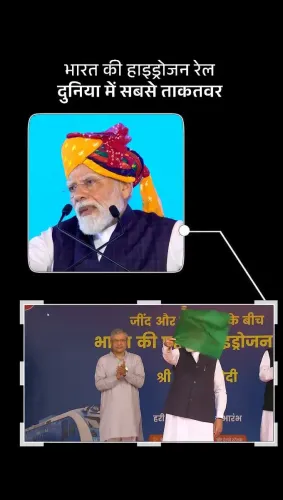
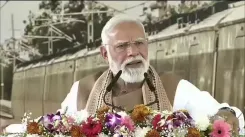
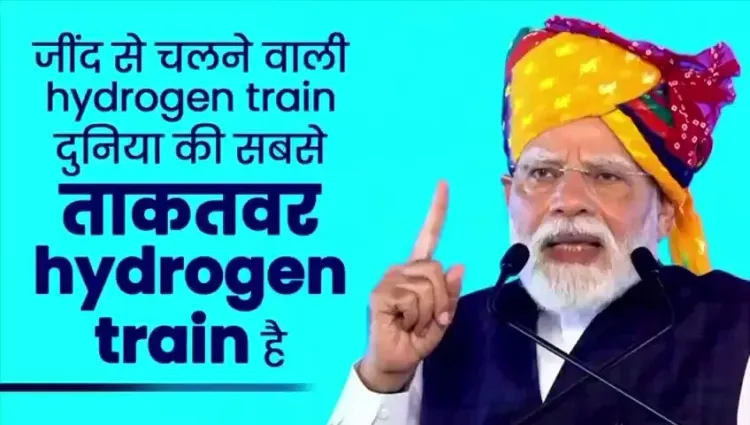
Union Culture and Tourism Minister Gajendra Singh Shekhawat on Friday, 17 July 2026, shared a statement attributed to Prime Minister Narendra Modi on X, asserting that India's hydrogen train running between Jind and Sonipat in Haryana is the world's most powerful and longest hydrogen train.
Context
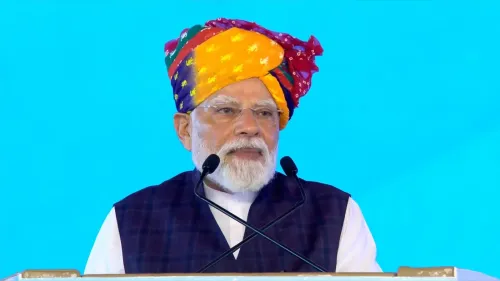
The post quotes PM Modi as saying: 'दुनिया में hydrogen train अभी-अभी अस्तित्व में आई है' ('The hydrogen train has only just come into existence in the world'). The statement goes on to claim that only a handful of countries currently have the capability to run hydrogen trains, and that India's entry into this space should make 'every Indian proud.' The train is described as generating 3,200 horsepower, making it, per the quote, the most powerful and the longest hydrogen train in the world.
Shekhawat, a senior BJP leader and Lok Sabha MP from Jodhpur, Rajasthan, shared the quote as a celebration of India's technological milestone in green mobility, attributing it directly to PM Modi.
Policy Backdrop
Indian Railways has been pursuing hydrogen fuel-cell train pilots since at least 2021, when successive Railway Budget speeches began flagging alternative fuel technologies as a priority. The National Green Hydrogen Mission, approved by the Union Cabinet in January 2023, earmarked funding for transport applications including rail, anchoring hydrogen mobility within India's broader decarbonisation framework.
India has committed to achieving net-zero emissions by 2070, and railway modernisation — including electrification and alternative fuels — has been a central pillar of that ambition. The Jind–Sonipat corridor in Haryana appears to be the chosen pilot route for this hydrogen train deployment, connecting two significant nodes in the state's rail network.
Stakeholders and Impact
Globally, countries including Germany, France, and Japan have operated hydrogen trains since 2018, establishing a technology benchmark. India's stated ambition to field a train of higher horsepower and greater length reflects an effort to adapt the technology to the country's high-density, long-distance rail corridors that demand significantly more traction power than European commuter routes.
For Indian Railways — the world's fourth-largest rail network — a successful hydrogen train programme could offer a path to decarbonise routes where full electrification remains cost-prohibitive. Passengers on the Jind–Sonipat route and the broader public stand to benefit if the pilot scales successfully.
What's Next
Formal commissioning details, technical specifications, and route notifications are expected to follow through the Railway Board or the Ministry of Railways. Progress updates may also feature in forthcoming Green Hydrogen Mission reports or the next Union Budget presentation. The government's ability to substantiate the world-record claims through independent technical certification will be closely watched by the global rail and clean-energy community.
Point of View
With a senior Cabinet minister amplifying a Prime Ministerial quote at a moment when India's green-technology credentials are under international scrutiny. By framing the Jind–Sonipat hydrogen train as a world-record achievement, the government seeks to position India not merely as a follower of European hydrogen rail pioneers but as a leader in high-power, high-capacity deployment. This fits a broader pattern of the BJP government using infrastructure milestones — from Vande Bharat to bullet-train construction — as electoral and diplomatic signalling tools. The durability of this narrative will depend on independent verification of the horsepower and length claims, which have not yet been confirmed by the Railway Board or any international certification body.
NationPress
16 Oct 2026
Frequently Asked Questions
What is India's hydrogen train and where does it run?
India's hydrogen train is a fuel-cell-powered locomotive claimed to operate between Jind and Sonipat in Haryana . According to a statement shared by Union Minister Gajendra Singh Shekhawat and attributed to PM Modi , it is the world's most powerful and longest hydrogen train at 3,200 horsepower .
Is India's hydrogen train really the most powerful in the world?
The claim of 3,200 horsepower and world-leading status was made by PM Modi as quoted by Minister Shekhawat on 17 July 2026 . These technical claims have not yet been independently verified by the Railway Board or an international certification body.
Which countries already have hydrogen trains?
Countries including Germany , France , and Japan have operated hydrogen trains since 2018 . India is among a small group of nations now joining this space, according to the government's own statement.
What is the National Green Hydrogen Mission?
The National Green Hydrogen Mission was approved by the Union Cabinet in January 2023 to scale up hydrogen production and its use in transport and industry, including rail, as part of India's net-zero 2070 commitment.
Why did Culture Minister Shekhawat post about a railway milestone?
Gajendra Singh Shekhawat shared the quote in his capacity as a senior BJP leader amplifying a statement by PM Modi , celebrating a national infrastructure achievement rather than posting in his direct ministerial portfolio.