Bangladesh press freedom under siege: Rights body flags journalist crackdown
Synopsis
On World Press Freedom Day 2025, France-based rights body JMBF issued a stark warning: Bangladesh is systematically imprisoning journalists under legally dubious charges — spanning two governments — with female reporters facing compounded risks. The group is now demanding urgent international diplomatic pressure.
Key Takeaways
Justice Makers Bangladesh in France (JMBF) issued a press freedom warning on World Press Freedom Day, 4 May 2025 .
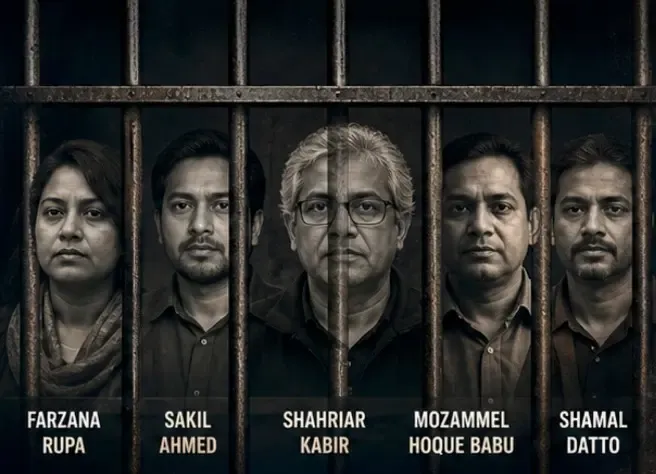
Journalists Farzana Rupa , Sakil Ahmed , Shahriar Kabir , Mozammel Hoque Babu , and Shamal Datto were arrested in 2024 reportedly without arrest warrants.
Detentions began under the Muhammad Yunus -led interim government and have continued under the current BNP -led administration.
JMBF flagged the use of SLAPPs , digital surveillance, and security laws to silence independent reporting.
JMBF Advisor Charlotte Jacquemart called the situation a "deepening political and institutional crisis" requiring urgent international engagement.
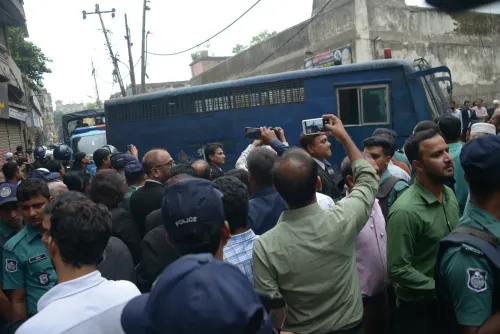
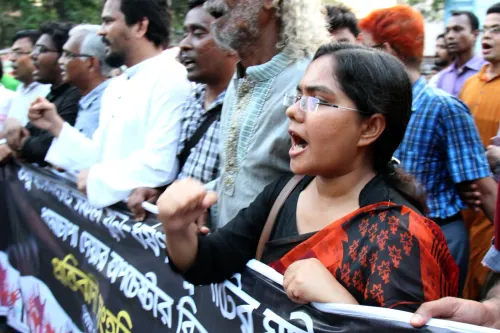
A France-based human rights organisation has raised grave concern over the continuing "intimidation, harassment, arbitrary detention, and unjust imprisonment" of journalists across Bangladesh, warning that the operational space for independent journalism in the country is shrinking at an alarming pace. The statement was issued by Justice Makers Bangladesh in France (JMBF) on the occasion of World Press Freedom Day, observed on 4 May 2025.
What JMBF Said
The rights body stated that legislative instruments — ostensibly enacted to safeguard national security and public order — are being increasingly misused to suppress dissent, criminalise investigative reporting, and cultivate a climate of fear among media practitioners. JMBF asserted that these are not isolated incidents but reflect a "systemic erosion of press freedom and democratic norms" in Bangladesh.
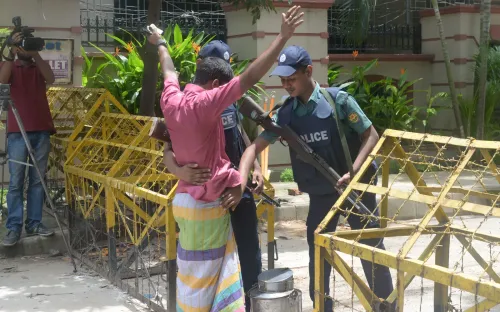
Journalists across the country, according to JMBF, are exposed to arbitrary arrests, intrusive digital surveillance, strategic lawsuits against public participation (SLAPPs), legal harassment, and, in some instances, physical violence. Such an environment, the organisation warned, fosters widespread self-censorship while undermining the public's fundamental right to access accurate and independent information.
Named Journalists and Detained Individuals
JMBF raised specific alarm over the prolonged detention and ongoing persecution of several journalists and human rights defenders, including Farzana Rupa, Sakil Ahmed, Shahriar Kabir, Mozammel Hoque Babu, and Shamal Datto. Citing credible reports, the body stated these individuals were arrested in 2024 without due process — including in the absence of arrest warrants — and were subsequently implicated in multiple serious and, in some cases, "questionable charges" during the tenure of the former Muhammad Yunus-led interim government.
The continued detention of these individuals under the current Bangladesh Nationalist Party (BNP)-led government, JMBF noted, raises serious concerns about the persistence of "politically motivated prosecutions" and a "broader pattern of repression" targeting independent voices.
The targeting of female journalist Farzana Rupa was singled out as particularly concerning. "The targeting of a female journalist such as Farzana Rupa is particularly concerning, as it underscores the heightened and intersectional risks faced by women in the media sector, including gender-based intimidation and discrimination," JMBF stated.
Expert Voices
Charlotte Jacquemart, Advisor to JMBF, said the persecution and systematic intimidation of journalists in Bangladesh reflect a "deepening political and institutional crisis, wherein state power is being deployed to suppress dissent and manipulate the public narrative."
"The criminalisation of journalism represents a direct assault on democratic governance and the rule of law," she added. Jacquemart further called on the international community to recognise these violations "not as isolated occurrences, but as part of a broader trajectory of democratic backsliding that necessitates urgent political accountability and sustained diplomatic engagement."
Calls for International Action
JMBF called on the international community — including governments, intergovernmental bodies, human rights organisations, and global press freedom advocates — to step up monitoring of the situation in Bangladesh and hold the relevant authorities accountable for violations against journalists and media institutions. This comes amid growing global scrutiny of press freedom conditions across South Asia, with Bangladesh drawing particular attention following the political transition of 2024.
As World Press Freedom Day 2025 draws attention to shrinking media spaces worldwide, the situation in Bangladesh is increasingly cited by rights groups as a case study in how legal frameworks can be weaponised against the press.
Point of View
Suggesting institutional capture rather than a single regime's excess. The use of security legislation to criminalise journalism is a well-documented playbook, but the addition of SLAPPs and digital surveillance marks a qualitative escalation. The international community's response so far has been largely rhetorical; JMBF's call for sustained diplomatic engagement reflects a recognition that statements alone are not moving the needle in Dhaka.
NationPress
22 Sept 2026
Frequently Asked Questions
What is Justice Makers Bangladesh in France (JMBF)?
JMBF is a France-based human rights organisation that advocates for democratic rights and press freedom in Bangladesh. It issued a statement on World Press Freedom Day 2025 flagging systematic crackdowns on journalists in the country.
Which journalists have been detained in Bangladesh?
JMBF named Farzana Rupa, Sakil Ahmed, Shahriar Kabir, Mozammel Hoque Babu, and Shamal Datto as among those arrested in 2024, reportedly without arrest warrants and facing multiple charges described in some cases as questionable.
Why is the targeting of Farzana Rupa considered particularly significant?
JMBF highlighted Farzana Rupa's case as emblematic of the heightened risks faced by women in Bangladesh's media sector, including gender-based intimidation and discrimination on top of the general crackdown on journalists.
Has the situation changed under the current BNP-led government in Bangladesh?
According to JMBF, the continued detention of journalists under the BNP-led government — following arrests made during the Muhammad Yunus interim administration — raises concerns about politically motivated prosecutions persisting across administrations.
What is JMBF calling for internationally?
JMBF is urging governments, intergovernmental bodies, and press freedom advocates to intensify monitoring of Bangladesh and hold authorities accountable, describing the situation as part of a broader trajectory of democratic backsliding requiring urgent diplomatic engagement.