Rajnath Singh pushes MAHASAGAR vision at IPRD 2026
Synopsis
Defence Minister Rajnath Singh addressed IPRD 2026 in New Delhi on November 4, 2026, warning of chokepoint risks to global supply chains and promoting India's MAHASAGAR vision — capability-building Indo-Pacific partnerships tied to the Viksit Bharat 2047 development blueprint.
Key Takeaways
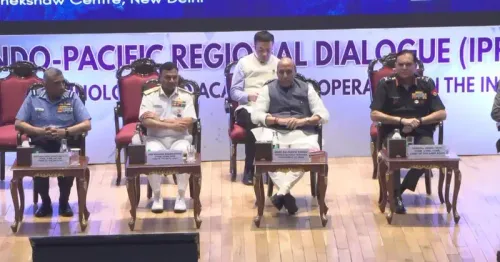
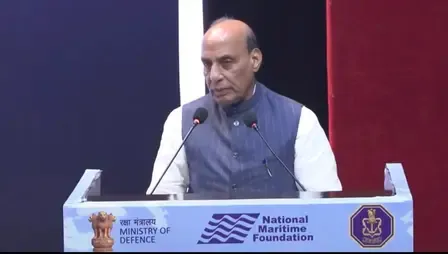
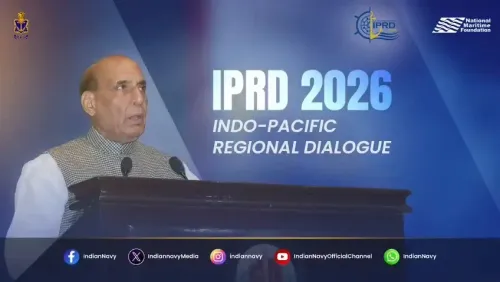
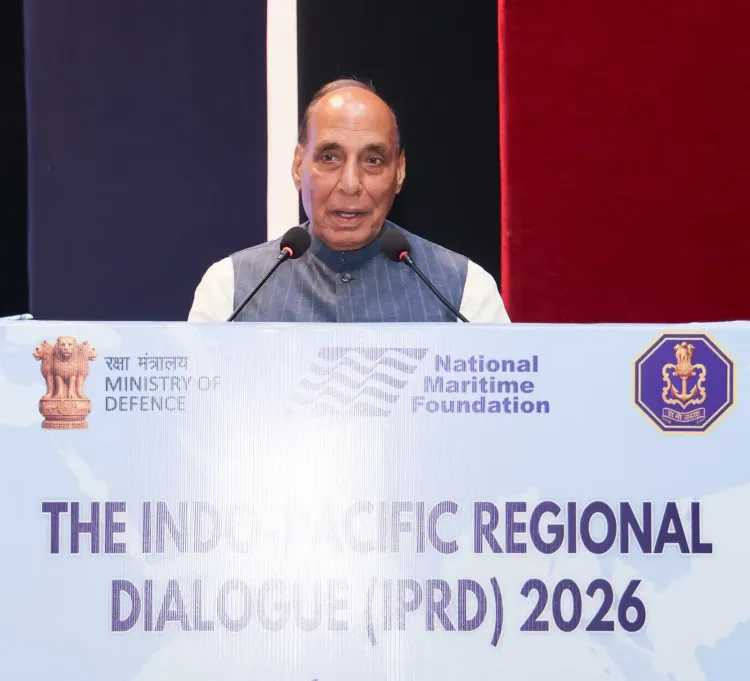
Rajnath Singh addressed the Commemorative Session of IPRD 2026 in New Delhi on November 4, 2026 .
He warned that disruptions at critical maritime chokepoints can directly impact global supply chains.
Singh advocated science, technology and stronger regional partnerships as the path to resilience.
MAHASAGAR — India's Indo-Pacific vision of Mutual and Holistic Advancement for Security and Growth Across the Region — calls for technology partnerships that build capabilities without creating dependence.
The Indo-Pacific agenda was explicitly linked to Viksit Bharat 2047 , India's blueprint to become a developed nation by its centenary of independence.
MAHASAGAR builds on the SAGAR doctrine first outlined by PM Modi in 2015 , extending India's maritime engagement framework across the broader Indo-Pacific.
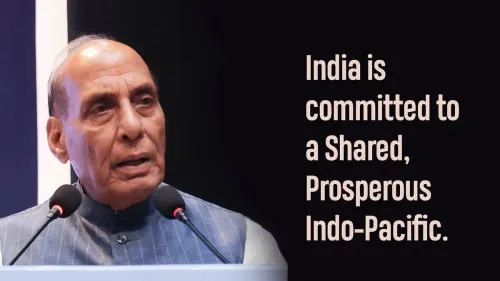
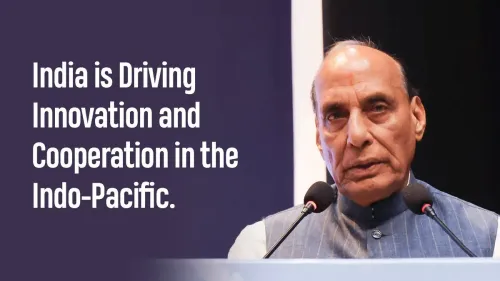
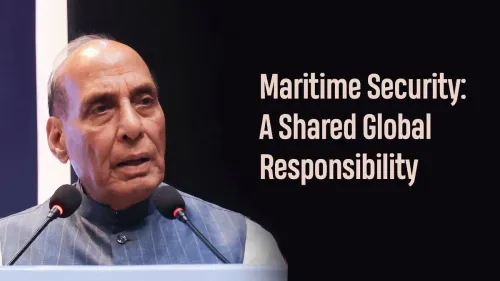
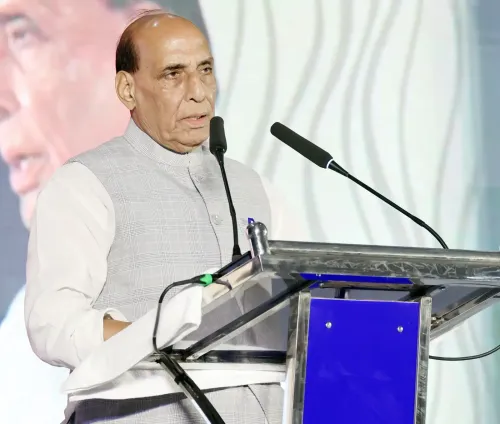
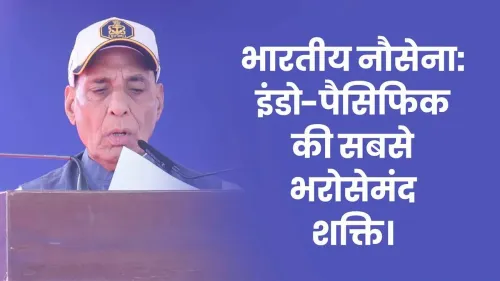
Maritime chokepoints are not just geography — they are pressure points that can freeze global supply chains in an instant. Speaking at the Commemorative Session of the Indo-Pacific Regional Dialogue (IPRD 2026) in New Delhi on Wednesday, November 4, 2026, Union Defence Minister Rajnath Singh put that vulnerability front and centre, arguing that science, technology and tighter partnerships are the only durable answer.
What Rajnath said — and why chokepoints matter right now
Singh told the gathering that disruptions in maritime trade and critical chokepoints carry direct consequences for global supply chains — a warning that resonates sharply given recent pressures on key waterways from the Strait of Hormuz to the Strait of Malacca. His framing was deliberate: resilience, not reaction, must be the guiding principle. 'The answer lies in building greater resilience through science, technology and stronger partnerships,' he said.
The speech signalled that India sees IPRD — an annual New Delhi-hosted platform for maritime security and regional cooperation dialogue — as a vehicle for converting shared deliberation into practical, on-the-ground initiatives rather than a talking shop.
MAHASAGAR: capability-building without dependence
At the heart of Singh's address was MAHASAGAR — India's Indo-Pacific vision of Mutual and Holistic Advancement for Security and Growth Across the Region. The concept, which builds on Prime Minister Narendra Modi's SAGAR (Security and Growth for All in the Region) doctrine first articulated in 2015, draws a sharp distinction between partnerships that build sovereign capability and those that create strategic dependence.
The phrasing matters enormously in an era when Indo-Pacific powers are actively courting partners with hardware deals, port investments and dual-use technology transfers. India's message: we will cooperate, but on terms that strengthen us — not tie us.
Viksit Bharat 2047 meets the Indo-Pacific
Singh explicitly linked the maritime agenda to Viksit Bharat 2047, India's national blueprint to reach developed-nation status by the centenary of independence. Anchoring an international security dialogue to a domestic development vision is a calculated move — it signals to Indo-Pacific partners that India's maritime ambitions are not episodic but structural, woven into a two-decade strategic arc.
India has consistently advocated a free, open and rules-based Indo-Pacific through multilateral forums while prioritising technological self-reliance. That multi-alignment posture — deep engagement without exclusive alliances — was on full display at IPRD 2026. The question now is whether the ministerial rhetoric translates into concrete technology-sharing or capability-building agreements in the months ahead.
Point of View
Upgrading a bilateral Indian Ocean framework into a region-wide architecture. By tying maritime security explicitly to Viksit Bharat 2047, the Defence Ministry signals that capability-building partnerships are a non-negotiable precondition for India's development trajectory, not a foreign-policy add-on. The 'build capability, not dependence' formulation is a pointed message to both Western technology suppliers and assertive regional powers. Watch whether IPRD 2026 produces any concrete follow-on mechanisms — that is the real test of whether the doctrine has operational weight.
NationPress
4 Nov 2026
Frequently Asked Questions
How is MAHASAGAR different from SAGAR?
SAGAR — Security and Growth for All in the Region — was Prime Minister Modi's 2015 framework focused primarily on the Indian Ocean. MAHASAGAR extends that philosophy across the broader Indo-Pacific, with a sharper emphasis on technology partnerships and supply-chain resilience.
What is Viksit Bharat 2047?
Viksit Bharat 2047 is India's national vision to become a fully developed economy by 2047, the centenary of independence. It encompasses self-reliance, technological advancement and economic growth, and Singh explicitly linked India's Indo-Pacific maritime strategy to this long-term blueprint.
Why do maritime chokepoints matter for India?
Critical sea lanes such as the Strait of Malacca and the Strait of Hormuz handle a large share of global trade, including energy imports vital to India. Disruptions at these chokepoints can freeze supply chains and raise energy costs, making maritime resilience a core national security and economic priority for New Delhi.