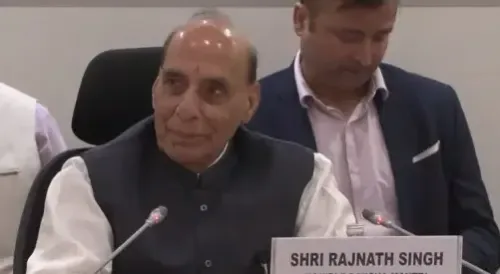
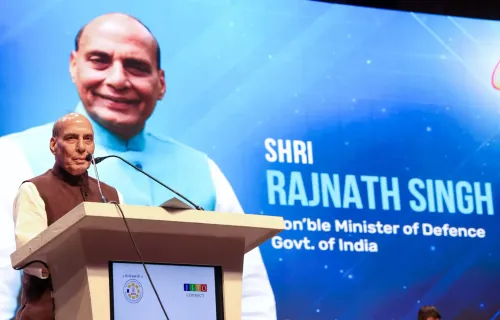
Rajnath Singh at NDTV Defence Summit: 'From chips to ships' for strategic autonomy
Synopsis
Defence Minister Rajnath Singh used the NDTV Defence Summit 2026 to map out India's most expansive vision yet for self-reliance — from microchips to warships — while signalling that AI, quantum tech, and autonomous systems will define the next phase of national security. His call to harness India's youth as the engine of future-war technology marks a deliberate pivot from hardware indigenisation to deep-tech sovereignty.
Key Takeaways
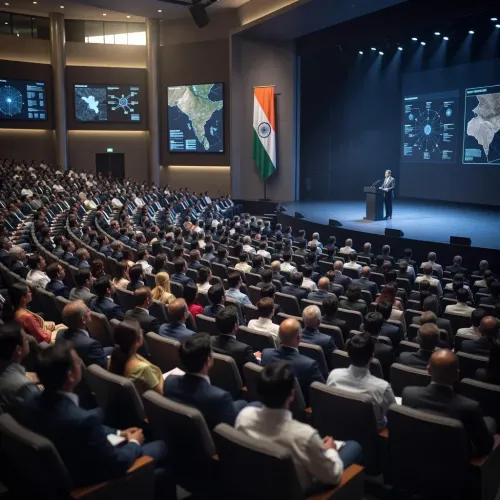
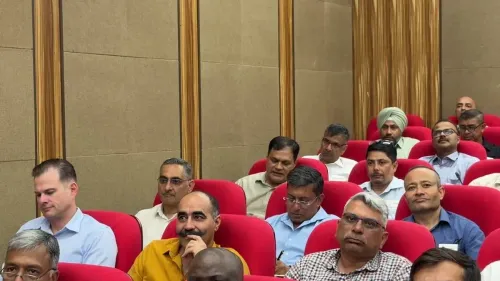
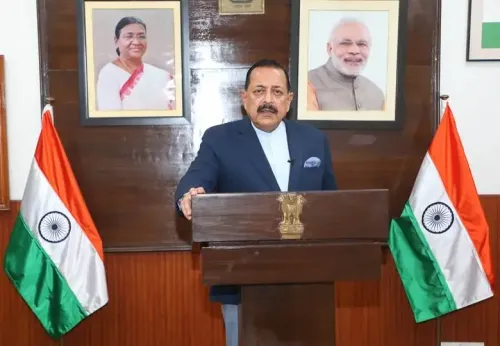
Defence Minister Rajnath Singh addressed the NDTV Defence Summit 2026 in New Delhi on 27 September 2026 .
Singh outlined a vision of self-reliance spanning everything from microchips to complete weapon systems, coining the phrase 'from chips to ships.' He identified artificial intelligence , quantum technologies , robotics , autonomous systems , and cybersecurity as the defining technologies of fifth-generation warfare .
India is actively promoting indigenous quantum technologies and strengthening the policy framework for emerging defence innovations.
Singh credited India's youth with preparing the country's future-war technologies across AI, drones, and quantum computing.
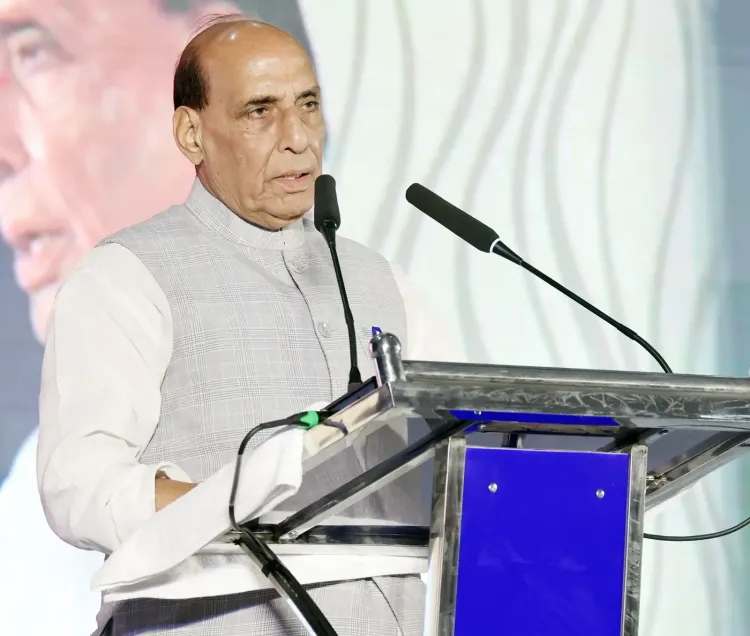
Defence Minister Rajnath Singh on Sunday, 27 September 2026, called on India to deepen its domestic defence manufacturing capabilities and secure mastery over critical technologies, arguing that strategic autonomy in an increasingly complex global security environment depends on reducing dependence on overseas suppliers.
Speaking at the NDTV Defence Summit 2026 in New Delhi, Singh framed the country's philosophy in direct terms: produce domestically whatever can be made within India, rather than relying on imports.
The 'Chips to Ships' Vision
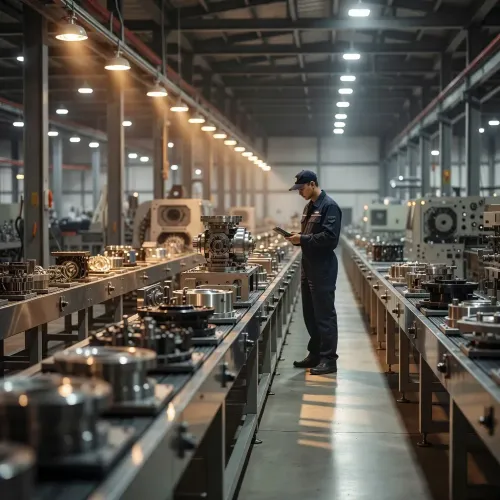
“From chips to ships, from screws to complete weapon systems, this will take India to strategic autonomy,” Singh said, underscoring the importance of indigenous design, innovation, and adaptation across every layer of the defence sector. The minister stressed that India's ability to manufacture and control key components of the defence supply chain would play a critical role in enhancing national security and curbing dependence on foreign vendors.
Fifth-Generation Warfare and Emerging Technologies
Drawing a comparison with the telecom sector's evolution from 2G to 5G, Singh said warfare had similarly entered a fifth-generation phase where advanced technologies would increasingly shape military outcomes. He identified artificial intelligence, quantum technologies, robotics, autonomous systems, and cybersecurity as integral components of modern conflict. Singh added that India was actively promoting indigenous quantum technologies while simultaneously strengthening the policy framework required to support emerging defence innovations.
The minister noted that future battlefields would extend across multiple domains — covering both contact and non-contact warfare, as well as kinetic and non-kinetic military operations. Countries that secure a technological edge, he argued, would be better positioned to navigate evolving security challenges.
Policy Reforms and Industrial Momentum
Highlighting recent structural changes, Singh said the government had undertaken transformative reforms to strengthen the domestic defence industry, helping the sector build significant momentum in recent years. “We are not limited to meeting current needs; we are self-reliant and future oriented,” he said. He also noted that India was diversifying critical energy resources necessary for national security — a recognition that modern defence preparedness extends beyond hardware to logistics and supply-chain resilience.
India's Youth as a Defence Technology Force
Singh reserved particular praise for India's young innovators, whom he credited with driving work in AI, drone technologies, robotics, quantum computing, and cybersecurity solutions. “India's youth are no longer just preparing for future jobs. They are preparing technology for India's future wars,” he said. The remarks signal an intent to align the country's start-up and technology ecosystem more closely with defence requirements — a trend already visible in the government's iDEX (Innovations for Defence Excellence) programme. As India's defence exports continue to rise and the government pursues ambitious indigenisation targets, Singh's address sets the tone for the next phase of self-reliance that goes well beyond platforms to the critical components and software that underpin them.
Point of View
But the gap between vision and verified progress remains wide. India's defence indigenisation ratio has improved, yet critical subsystems — propulsion, sensors, semiconductors — still rely heavily on imports. Invoking fifth-generation warfare and quantum technologies in the same breath as structural reforms risks conflating aspiration with delivery. The real test is whether the policy framework Singh referenced translates into funded programmes with measurable timelines, or whether it remains a summit-podium narrative that outpaces procurement reality.
NationPress
27 Sept 2026
Frequently Asked Questions
What did Rajnath Singh say at the NDTV Defence Summit 2026?
Defence Minister Rajnath Singh called for end-to-end domestic defence manufacturing — from microchips to complete weapon systems — to achieve strategic autonomy. He stressed the importance of mastering AI, quantum technologies, robotics, autonomous systems, and cybersecurity as part of India's fifth-generation warfare preparedness.
What does 'from chips to ships' mean in Singh's defence vision?
The phrase encapsulates Singh's argument that India must control every layer of the defence supply chain — from basic components like microchips and screws to complex platforms like warships and weapon systems — rather than depending on imports. He sees this vertical integration as the foundation of true strategic autonomy.
Why is fifth-generation warfare relevant to India's defence policy?
Singh compared the evolution of warfare to the shift from 2G to 5G in telecommunications, arguing that future conflicts will be shaped by AI, quantum computing, autonomous systems, and cybersecurity rather than conventional firepower alone. Nations that lead in these technologies, he said, will hold a decisive security advantage.
How does India's youth fit into Singh's defence technology agenda?
Singh praised young Indians working on AI, drone technologies, robotics, quantum computing, and cybersecurity, stating they are 'preparing technology for India's future wars.' This signals an intent to more formally link India's start-up and deep-tech ecosystem to defence innovation programmes.
What policy reforms has the government undertaken for defence indigenisation?
Singh said the government has carried out structural and transformative reforms to strengthen the domestic defence industry, helping it gain significant momentum in recent years. He added that India is also diversifying critical energy resources for national security, though specific scheme names or financial allocations were not disclosed at the summit.