White House Honours US Veterans and Military on Veterans Day
Synopsis
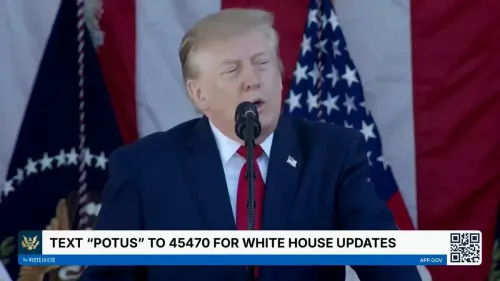
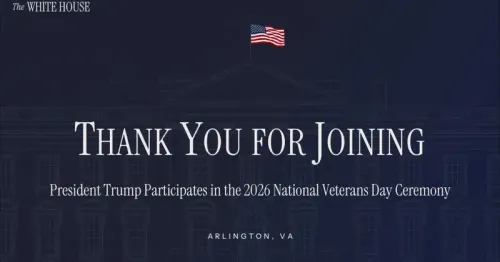
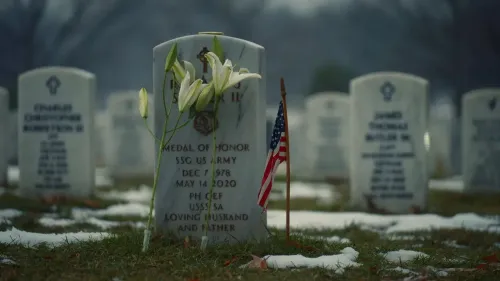
The White House honoured US veterans and military personnel with a solemn Veterans Day message on November 11, 2026, continuing a long-standing tradition of presidential tribute on the anniversary of the World War I armistice.
Key Takeaways
The White House posted a Veterans Day tribute on November 11, 2026 , honouring America's veterans and military.
The message read: 'God Bless America's Veterans.
God Bless Our Military.
GOD BLESS THE UNITED STATES OF AMERICA.' Veterans Day marks the armistice of World War I on November 11, 1918 , and is a federal US holiday.
The United States has approximately 18 million living veterans spanning multiple generations and conflicts.
White House Veterans Day tributes are a consistent tradition across administrations, reflecting bipartisan respect for military service.
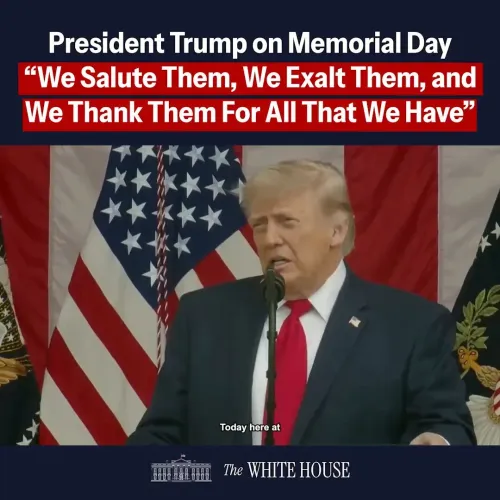
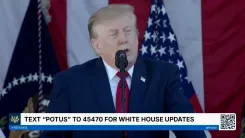
Every year on November 11, the United States pauses to salute the men and women who wore its uniform — and on Wednesday, the White House marked the occasion with a direct, unambiguous tribute to America's defenders.
The official communications account of the Executive Office of the President posted a brief but pointed message: 'God Bless America's Veterans. God Bless Our Military. GOD BLESS THE UNITED STATES OF AMERICA.' Three lines. No policy footnotes. Just the full weight of the occasion.
Veterans Day: Why November 11 carries that date
Veterans Day traces its roots to 11 November 1918 — the moment the armistice ending World War I took effect at the eleventh hour of the eleventh day of the eleventh month. What began as Armistice Day became a federal holiday in the United States dedicated to honouring all living veterans of all wars, distinct from Memorial Day, which remembers those who died in service.
The White House has issued patriotic tributes on this date every November for decades, a tradition that cuts across administrations and party lines. The ritual reflects a rare consensus in American public life: regardless of political season, the service and sacrifice of veterans commands respect.
A message reaching millions in uniform and beyond
The United States is home to roughly 18 million veterans — a figure that spans generations from Vietnam to Afghanistan to the most recent theatres of operation. Active-duty military personnel, reserve forces, and their families receive the message as an institutional affirmation from the highest office in the land.
For India, a country that tracks American military posture closely given the depth of the US-India defence partnership, moments like these are a reminder of the cultural and institutional weight the American military commands in its own national life — and by extension, in the alliance structures that shape the Indo-Pacific.
Tributes ring loud on Veterans Day. The real measure, veterans' advocates have long argued, comes in the policy decisions — on healthcare, benefits, and transition support — that follow the salutes.
Point of View
But it signals continuity in how the executive office frames military service as a unifying national value — especially relevant as the US-India defence relationship deepens and both countries look to reinforce people-to-people and institutional military ties. For observers of American domestic politics, the starkly non-partisan tone of the message is itself a statement — an implicit appeal to national cohesion. The annual repetition of this ritual also sets a baseline against which actual veterans' policy outcomes are inevitably measured.
NationPress
12 Nov 2026
Frequently Asked Questions
What is Veterans Day and why is it on November 11?
Veterans Day is a US federal holiday observed every November 11 to honour all military veterans. The date commemorates the armistice that ended World War I on November 11, 1918 , at the eleventh hour of the eleventh day of the eleventh month.
What did the White House post on Veterans Day 2026?
The White House posted: 'God Bless America's Veterans. God Bless Our Military. GOD BLESS THE UNITED STATES OF AMERICA,' a brief tribute to US veterans and active military personnel.
How many veterans are there in the United States?
The United States has approximately 18 million living veterans , representing generations who served in conflicts from World War II through Vietnam , Iraq , Afghanistan , and beyond.
Is Veterans Day different from Memorial Day in the US?
Yes. Veterans Day honours all living US military veterans, while Memorial Day , observed in May, specifically commemorates military personnel who died in service to the country.
Why does the White House post Veterans Day messages every year?
Issuing a Veterans Day tribute is a long-standing tradition for the White House , reflecting bipartisan recognition of military service as a core American value regardless of which administration is in office.