Assam CM Office: Charaideo farmers get King Chilli, Rabi seed support
Synopsis
The Charaideo District Administration and Numaligarh Refinery Limited have jointly launched a CSR-backed programme distributing 3,000 King Chilli saplings, potato planting materials, and Rabi seeds to flood-hit Assam farmers, aiming to shift vulnerable communities from paddy monoculture toward diversified, resilient livelihoods.
Key Takeaways
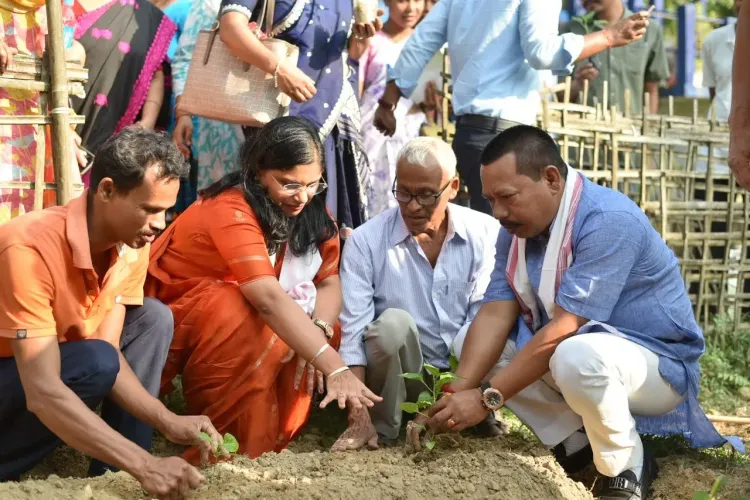
3,000 King Chilli saplings were distributed at the initiative's launch in Charaideo district , eastern Assam.
The programme is a joint effort between the Charaideo District Administration and Numaligarh Refinery Limited (NRL) under its CSR mandate.
Support includes potato planting materials , Rabi crop seeds , and expert agricultural guidance for flood-affected farming families.
NRL operates under the Ministry of Petroleum and Natural Gas and has an established CSR footprint in Northeast India's rural development.
The programme explicitly targets livelihood diversification away from flood-prone paddy cultivation toward higher-value cash crops.
Rabi-season harvest outcomes will determine whether the model is replicated in other flood-hit Assam districts.
Flood-ravaged fields in one of Assam's most vulnerable districts are getting a second chance — not just to recover, but to grow differently. The Chief Minister's Office of Assam announced on Wednesday, 4 November 2026 that a joint initiative between the Charaideo District Administration and Numaligarh Refinery Limited (NRL) under the Ministry of Petroleum and Natural Gas is delivering agricultural support directly to flood-affected farming families in Charaideo.
3,000 King Chilli saplings and a push beyond paddy
The launch distribution put 3,000 King Chilli saplings in farmers' hands — a pointed choice. Bhut jolokia, the famed Naga King Chilli, is a high-value cash crop that commands strong market prices and tolerates conditions where paddy repeatedly fails. Alongside the saplings, the programme is providing potato planting materials, Rabi crop seeds, and expert agricultural guidance to enrolled families.
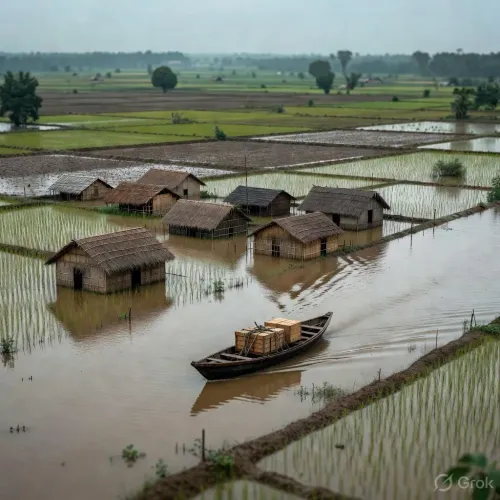
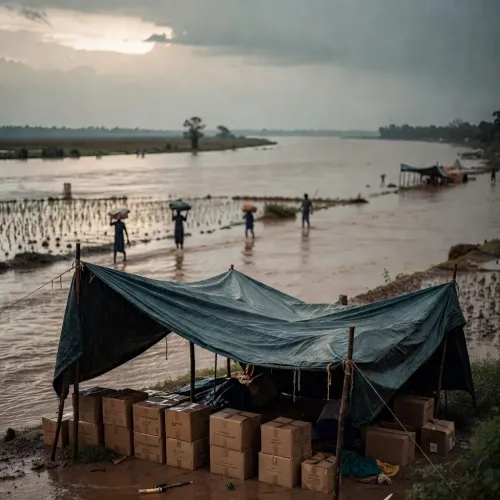
The deliberate pivot away from flood-prone paddy monoculture toward diversified, higher-value cultivation is at the heart of the initiative's design. Charaideo, situated in eastern Assam along the Brahmaputra floodplains, faces near-annual inundation that can wipe out an entire season's standing crop in days. Diversification is not an aspiration here — it is a survival strategy.
NRL's CSR engine and Assam's oil-belt development compact
Numaligarh Refinery Limited, a public-sector refinery under the Ministry of Petroleum and Natural Gas, has long channelled CSR funds into Northeast India's agricultural and rural development fabric. This programme follows an established pattern: public-sector oil companies operating in the region carry a development obligation, and directing those funds toward flood-resilient livelihoods in Brahmaputra-basin communities is a recurring expression of that compact.
The Assam government has run flood-relief agricultural packages — seed and input distribution after major Brahmaputra flood events — across preceding years. What distinguishes this intervention is the structured corporate partnership and the explicit emphasis on cash-crop diversification rather than simply restoring the same paddy-based livelihood that floods will threaten again next monsoon.
What the Rabi season will reveal
The real measure of the initiative will come at harvest. The Rabi season — Assam's post-monsoon winter cropping window running roughly November through February — is when the distributed seeds and saplings translate into income or don't. If yields and market access hold up, Charaideo could become a template for similar CSR-backed diversification drives in other flood-hit Assam districts where the same cycle of inundation and crop loss repeats every year.
For now, the signal is clear: in Charaideo, the response to the flood cycle is shifting from relief to resilience — and a public-sector refinery is helping plant that change, one King Chilli sapling at a time.
Point of View
A high-value cash crop with established northeastern identity and market demand, the administration is betting that income security, not just food security, is the durable answer to the Brahmaputra's annual disruption. The NRL partnership signals that public-sector oil companies in the Northeast are increasingly positioned as development co-investors, not just industrial operators. The critical test, however, is market linkage: without assured offtake or price support, distributing planting material solves only half the equation.
NationPress
4 Nov 2026
Frequently Asked Questions
What is the Charaideo King Chilli farming initiative?
It is a joint programme by the Charaideo District Administration and Numaligarh Refinery Limited (NRL) that distributes King Chilli saplings, potato planting materials, Rabi crop seeds, and agricultural guidance to flood-affected farmers in Charaideo district, Assam, with the aim of diversifying their livelihoods away from flood-prone paddy cultivation.
How many King Chilli saplings were distributed in Charaideo?
At the initiative's launch, 3,000 King Chilli saplings were distributed to flood-affected farming families in Charaideo district.
What is NRL's role in Assam agriculture support?
Numaligarh Refinery Limited (NRL), a public-sector refinery under the Ministry of Petroleum and Natural Gas, is funding this initiative through its Corporate Social Responsibility (CSR) programme, which regularly channels investment into rural development and agricultural support across Northeast India.
Why is Charaideo targeted for flood-resilient farming support?
Charaideo is located along the Brahmaputra floodplains in eastern Assam and faces near-annual monsoon flooding that destroys standing crops, making its farming communities among the most vulnerable in the state.
What is King Chilli and why is it being promoted in Assam?
King Chilli (Bhut jolokia) is a high-value cash crop native to Northeast India, known globally for its extreme heat. It commands strong market prices and is considered a viable alternative to paddy in flood-prone areas, offering flood-affected farmers a more income-secure livelihood option.