CM Sawant Launches Yuva Kaushal Mahotsav, Eyes 9,000 Rural Youth
Synopsis
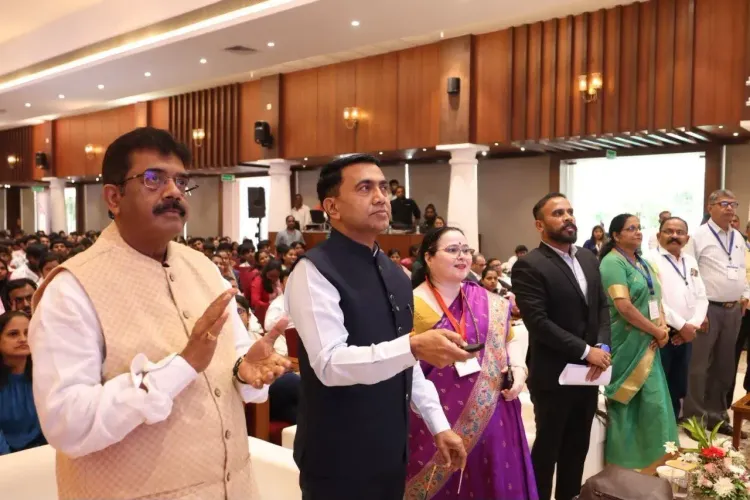
Goa Chief Minister Pramod Sawant inaugurated the Yuva Kaushal Mahotsav at Lok Bhavan, Dona Paula, anchoring the event around DDU-GKY 2.0 and announcing a target to skill and employ 9,000 rural youth in 2026–27.
Key Takeaways
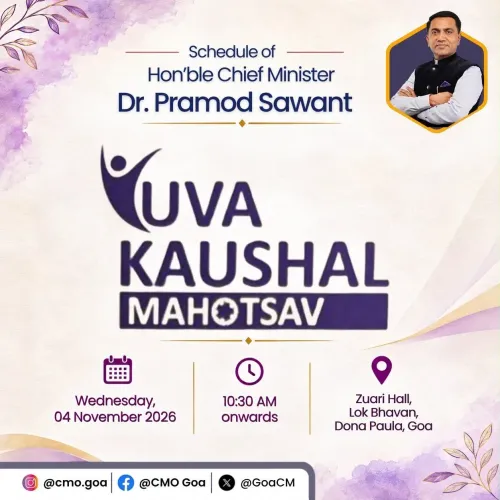
Yuva Kaushal Mahotsav was inaugurated by Goa CM Pramod Sawant at Lok Bhavan, Dona Paula on 4 November 2026 .
The event was organised by the Department of Rural Development, Government of Goa .
The mahotsav focuses on awareness of skill development, career opportunities, and employment under DDU-GKY 2.0 .
Goa has set a target to reach 9,000 rural youth through DDU-GKY 2.0 in 2026–27 .
Sawant urged youth to move beyond conventional careers and acquire industry-relevant skills.
DDU-GKY was originally launched in 2014 as a placement-linked rural skilling programme under the National Rural Livelihoods Mission.
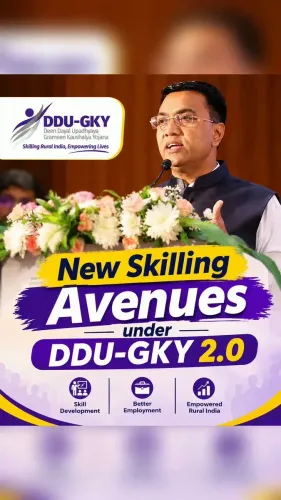
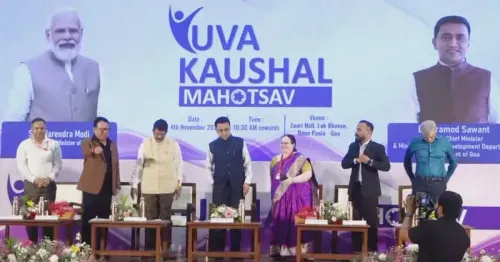
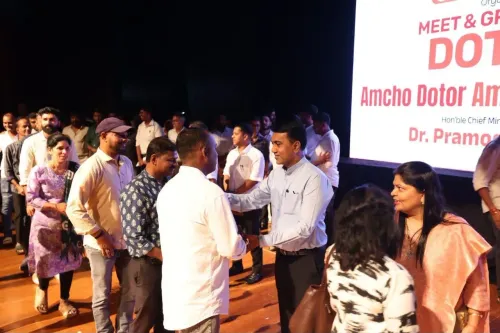
A skill fair at Lok Bhavan, Dona Paula on Wednesday, 4 November 2026 marked a pointed message from Goa Chief Minister Pramod Sawant: rural youth must look beyond conventional career paths — and the state will meet them halfway. Sawant inaugurated the Yuva Kaushal Mahotsav, organised by the Department of Rural Development, Government of Goa, to spotlight skill development, career options, and employment avenues under the Deen Dayal Upadhyaya Grameen Kaushalya Yojana (DDU-GKY 2.0).
What DDU-GKY 2.0 promises Goa's villages
Originally launched in 2014 under the National Rural Livelihoods Mission, DDU-GKY was designed as a placement-linked skill training programme — meaning training is not complete until a job follows. The updated DDU-GKY 2.0, operated through the Union Ministry of Rural Development, asks states to align training with actual industry demand rather than generic vocational courses. For Goa, that means tailoring rural skilling to sectors where the coastal state genuinely employs people: hospitality, construction, retail, and allied trades.
The numbers Sawant put on the table are specific: Goa aims to reach 9,000 rural youth in 2026–27 through the scheme, connecting them to formal employment opportunities. That target, announced from the stage of a government-organised mahotsav, sets a measurable benchmark against which the state's performance can be tracked.
The 'Mahotsav' format — awareness as strategy
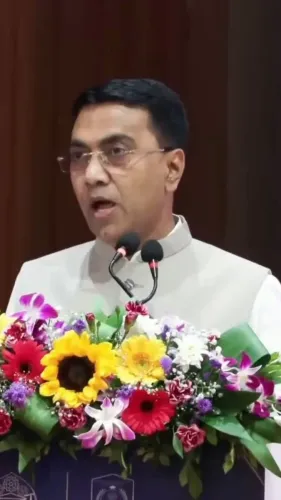
Calling it a mahotsav (festival) rather than a seminar or workshop is deliberate. The event format — open, festive, designed to draw footfall — is increasingly common in state-level skill drives because it lowers the threshold for a first-time enquiry. Young people from Goa's rural belt can walk in, speak to trainers, and understand enrolment pathways without the formality of a government office. Sawant used the platform to personally encourage the gathered youth to 'equip themselves with industry-relevant skills,' reinforcing the message from the top of the administration.
Goa's rural skilling gap — and why 2026–27 matters
Goa is a small state, but its rural-urban divide in employment quality is real. Tourism and services dominate the coastal economy, yet many rural households remain outside formal employment pipelines. The Department of Rural Development has been tasked with bridging that gap through central schemes. The 2026–27 target of 9,000 youth represents a scaling-up ambition — the actual rollout of training batches and verified placement outcomes will determine whether the mahotsav's energy translates into lasting economic mobility.
The watch item now is execution: how quickly training batches are constituted, which industry partners sign on for placements, and whether the 9,000-youth target registers in year-end state reports. Chief Ministers who announce targets at public events own the accountability that comes with them.
Point of View
000-youth target for 2026–27 — a rare, trackable commitment that future audits can test. DDU-GKY's national record on placement outcomes has been uneven, and Goa's small scale could work either as an advantage — tighter monitoring, faster correction — or as a limitation if local industry absorptive capacity is thin. The choice of the 'mahotsav' format also signals that the state recognises awareness and enrolment as the first real bottleneck, before training quality or placements even come into play.
NationPress
4 Nov 2026
Frequently Asked Questions
What is the Yuva Kaushal Mahotsav in Goa?
The Yuva Kaushal Mahotsav is a skill development awareness event organised by the Department of Rural Development, Government of Goa, inaugurated by Chief Minister Pramod Sawant on 4 November 2026 at Lok Bhavan, Dona Paula. It aims to inform rural youth about career and employment opportunities under DDU-GKY 2.0.
What is DDU-GKY 2.0 and how does it work?
DDU-GKY (Deen Dayal Upadhyaya Grameen Kaushalya Yojana) is a placement-linked skill training scheme launched in 2014 under the National Rural Livelihoods Mission. DDU-GKY 2.0 is the updated version, requiring states to align training with actual industry demand and ensuring trainees are placed in formal employment after completing their courses.
How many youth does Goa plan to train under DDU-GKY 2.0?
Goa has announced a target of 9,000 rural youth to be reached under DDU-GKY 2.0 during the 2026–27 period, as stated by Chief Minister Pramod Sawant at the Yuva Kaushal Mahotsav.
Where was the Yuva Kaushal Mahotsav held?
The Yuva Kaushal Mahotsav was held at Lok Bhavan, Dona Paula, Goa, on 4 November 2026.
What did CM Pramod Sawant say at the Yuva Kaushal Mahotsav?
Chief Minister Pramod Sawant encouraged youth to look beyond conventional career paths and equip themselves with industry-relevant skills, emphasising the employment opportunities available through DDU-GKY 2.0.