CM Yogi Warns Anarchy-Mongers: 'New India Won't Tolerate Chaos'
Synopsis
Uttar Pradesh CM Yogi Adityanath issued a stark warning on November 4, 2026, telling those threatening to replicate the instability of Bangladesh, Nepal or Sri Lanka that 'New India' has zero tolerance for anarchy — continuing BJP's consistent law-and-order messaging framed around neighbouring crises.
Key Takeaways
CM Yogi Adityanath posted on X on November 4, 2026 , warning those threatening to 'make India another Bangladesh, Nepal, or Sri Lanka.' He declared that naya Bharat (New India) will not tolerate anarchy — invoking the BJP's signature governance brand.
The post cited three specific neighbouring countries, each carrying a distinct symbol of political or economic collapse.
No specific group, event, or trigger was named in the post, keeping the warning deliberately broad.
The language mirrors BJP's established rhetorical pattern used during the 2019-2020 anti-CAA protests and after Sri Lanka's 2022 crisis .
The statement signals that the UP government views the unnamed threat as serious enough to warrant a high-visibility public response.
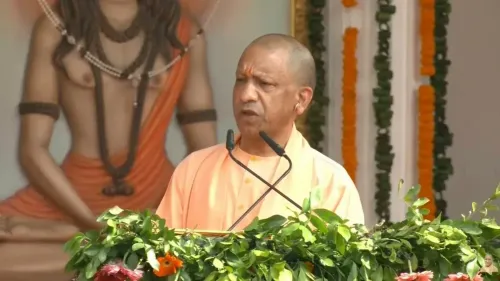
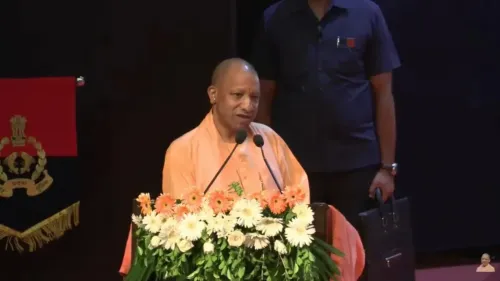
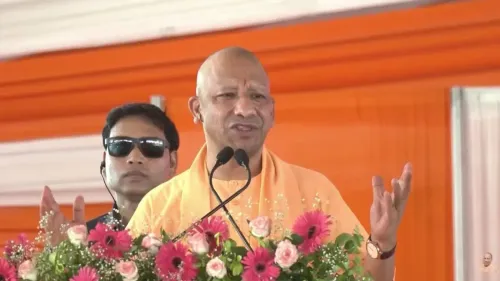
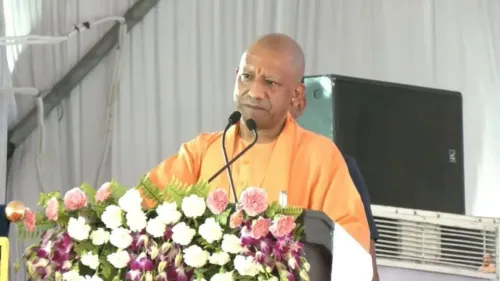
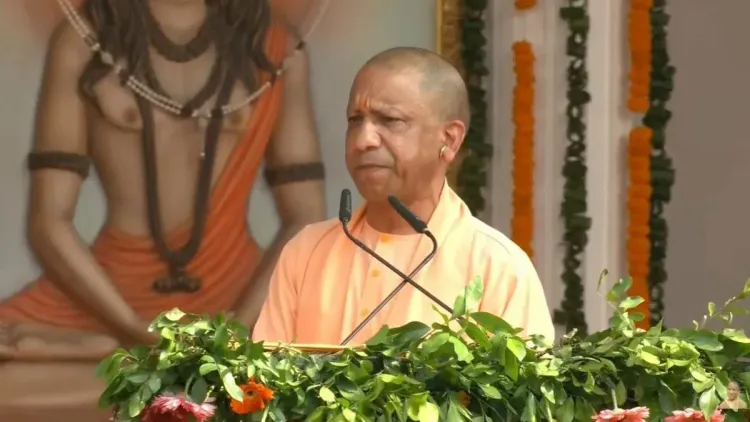
A sharp warning shot rang out from Lucknow on Wednesday, November 4, 2026 — Uttar Pradesh Chief Minister Yogi Adityanath put those threatening to turn India into 'another Bangladesh, Nepal, or Sri Lanka' on notice, declaring in unambiguous terms that 'naya Bharat' (New India) will not absorb anarchy.
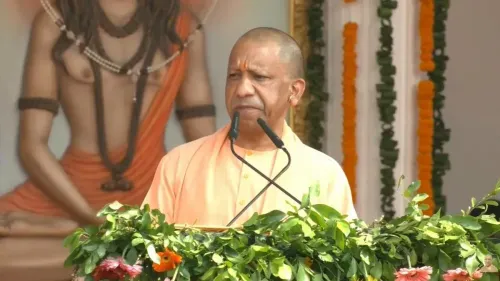
Posting on X, CM Yogi Adityanath stated: 'Those who are creating anarchy, those who are threatening to make a Bangladesh, threatening to make a Nepal or Sri Lanka — they must remember... New India does not tolerate anarchy.' The post, carrying a video, made no reference to a specific group or incident, but its invocation of three neighbouring countries in rapid succession was anything but accidental.
Why Bangladesh, Nepal, and Sri Lanka? The Three-Country Warning
Each country name carries a distinct political charge in this context. Bangladesh's 2024 upheaval — marked by street agitations that swept away an entrenched government — has been referenced repeatedly by BJP leaders as a cautionary tale of mob-driven regime change. Nepal evokes prolonged political instability and shifting power centres. Sri Lanka's 2022 economic collapse, which saw protesters storming the presidential palace, became the go-to image for what happens when a state loses control of the streets.
Invoking all three in a single breath is a rhetorical device CM Yogi and other BJP leaders have deployed before — framing any challenge to public order not as domestic dissent but as a drift toward the kind of systemic breakdown India's neighbours have experienced.
The 'New India' Doctrine and Its Law-and-Order Spine
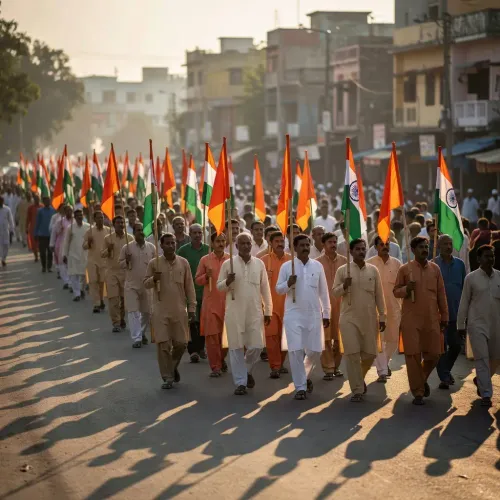
The phrase 'naya Bharat' is not incidental decoration — it is load-bearing. Popularised under Prime Minister Narendra Modi, the 'New India' brand carries a specific promise: a state strong enough to resist destabilisation, one that will not be paralysed by street protests the way older, 'weaker' governments reputedly were. CM Yogi has been among its most forceful enforcers at the state level, building a political identity in Uttar Pradesh around zero tolerance for disorder.
The lineage of this language stretches back to the 2019-2020 anti-CAA protests, when Yogi Adityanath issued explicit warnings to demonstrators and authorised property seizures against those accused of inciting violence. That playbook — strong public statement, invocation of neighbouring chaos, implicit promise of firm state action — is precisely what Wednesday's post reprises.
Who Issued the Threat? The Unanswered Question
The post names no organisation, leader, or specific incident as the trigger. That deliberate vagueness does two things: it broadens the warning to cover any potential actor while keeping the government from directly elevating a fringe statement into a formal confrontation. The specific context of November 2026 that prompted this particular warning has not been officially stated.
What is clear is that the UP Chief Minister chose to respond publicly, at scale, through his official X account — signalling that the threat, whatever its source, was deemed serious enough to require a televised-level declaration rather than a quiet administrative response.
Opposition voices and civil society groups are likely to question both the unnamed threat and the breadth of the response — a clash worth watching as it develops in the coming days.
Point of View
Reinforcing vertical political coherence ahead of any potential electoral cycle.
NationPress
4 Nov 2026
Frequently Asked Questions
What did CM Yogi Adityanath say about Bangladesh and Sri Lanka in his November 2026 post?
CM Yogi Adityanath warned that those threatening to turn India into 'another Bangladesh, Nepal, or Sri Lanka' by creating anarchy must remember that New India will not tolerate disorder.
What does 'New India' mean in Yogi Adityanath's statement?
'New India' — naya Bharat — is a political slogan championed by PM Modi and adopted by BJP leaders to describe a strong, development-focused state that will not be destabilised by protests or unrest.
Who is CM Yogi Adityanath warning with this statement?
The post does not name a specific group or individual. It issues a broad warning to anyone threatening to create chaos or instability in India.
Has Yogi Adityanath issued similar warnings before?
Yes. During the 2019-2020 anti-CAA protests, CM Yogi repeatedly warned against attempts to create disorder and authorised strong police action in Uttar Pradesh.
Why does CM Yogi specifically reference Bangladesh, Nepal, and Sri Lanka?
Each country represents a recent episode of political or economic collapse — Bangladesh's 2024 upheaval, Nepal's chronic instability, and Sri Lanka's 2022 economic crisis — which BJP leaders use as cautionary examples of what unchecked disorder can produce.