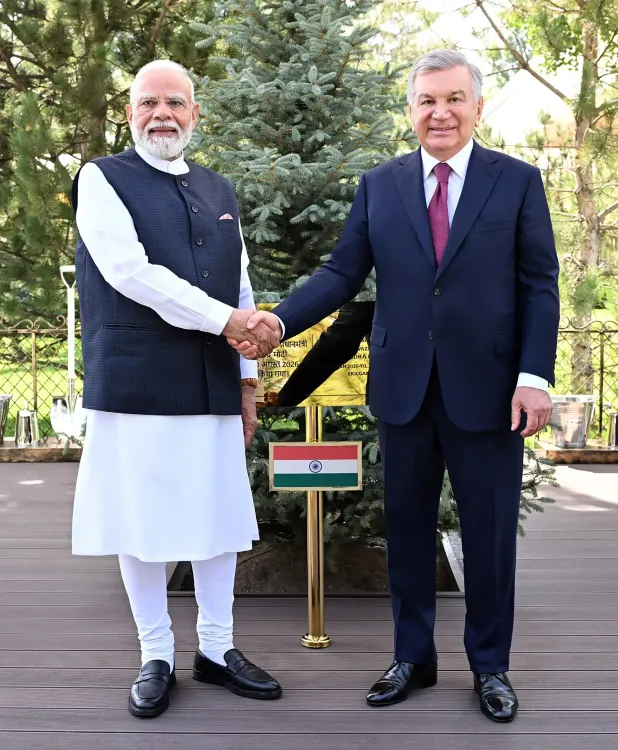
Modi, Uzbek President plant sapling in Tashkent under 'Ek Ped Maa Ke Naam'
Synopsis
On the sidelines of high-level bilateral talks in Tashkent, PM Modi and Uzbekistan President Mirziyoyev planted a sapling linking two national green programmes — a moment that doubled as diplomacy and soft power. With trade, investment, and yoga also on the agenda, the visit signals India's intent to build a multi-dimensional partnership with Central Asia's most populous nation.
Key Takeaways
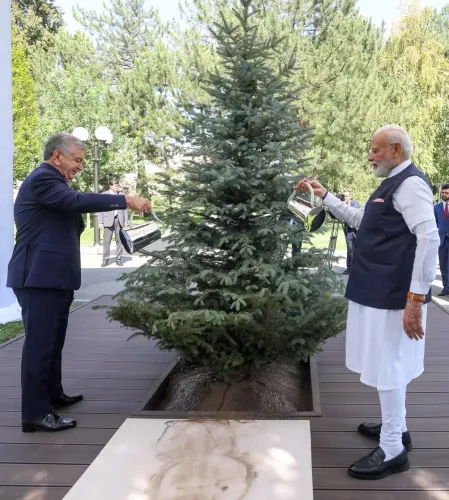
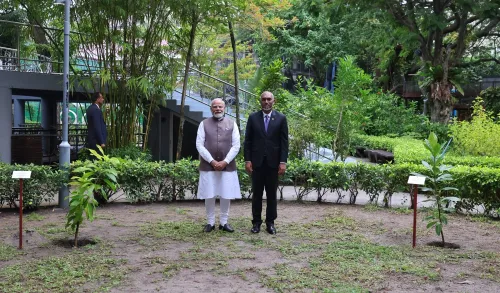
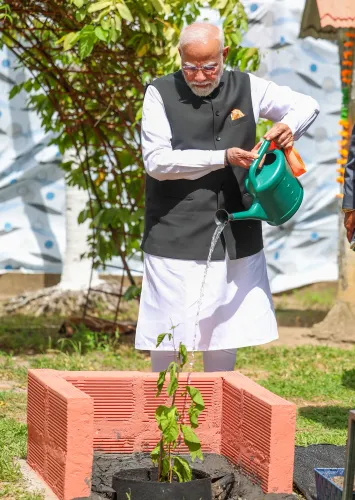
PM Modi and Uzbekistan President Shavkat Mirziyoyev jointly planted a sapling at the Presidential Palace in Tashkent on 30 August .
The act linked India's 'Ek Ped Maa Ke Naam' initiative with Uzbekistan's 'Yashil Makon' green programme.
Delegation-level talks covered trade, investment, industrial, interregional, and cultural cooperation ; both sides agreed to elevate bilateral relations.
The Indian delegation included EAM S.
Jaishankar , NSA Ajit Doval , and Foreign Secretary Vikram Misri .
Modi witnessed a yoga session by 52 Uzbek practitioners , including six who competed at the First World Yogasana Championship 2026 in Ahmedabad.
The visit was a two-day state visit , with Modi arriving in Uzbekistan on Saturday .
Prime Minister Narendra Modi and Uzbekistan President Shavkat Mirziyoyev jointly planted a sapling at the Presidential Palace in Tashkent on 30 August, symbolising a shared environmental commitment between the two nations. The gesture brought together India's 'Ek Ped Maa Ke Naam' (A Tree for Mother) initiative and Uzbekistan's 'Yashil Makon' green programme, underscoring the bilateral push for sustainability during Modi's two-day state visit.
The Symbolism Behind the Sapling
Posting on X, Prime Minister Modi wrote: 'From Tashkent, a shared commitment for a better planet. President Shavkat Mirziyoyev and I planted a sapling, bringing together India's Ek Ped Maa Ke Naam initiative and Uzbekistan's Yashil Makon programme. We will always work to expand green cover and build a more sustainable future.'
The Ministry of External Affairs (MEA) also posted on X, describing the gesture as reflecting 'the shared commitment of India and Uzbekistan towards nurturing a greener and more sustainable future.' The symbolic act came on the sidelines of high-level bilateral talks, elevating the environmental dimension of what was otherwise a trade-and-security-focused state visit.
High-Level Delegation Talks
Earlier on Sunday, Modi held delegation-level talks with President Mirziyoyev at the Kuksaroy Residence in Tashkent, covering trade, investment, industrial cooperation, interregional ties, and cultural exchanges. The two leaders agreed to take Uzbekistan-India relations to a new level, according to the Press Service of the Uzbekistan President.
The Indian delegation included External Affairs Minister S. Jaishankar, Foreign Secretary Vikram Misri, National Security Advisor Ajit Doval, and Secretary (West) Sibi George, among other senior officials. Modi had earlier received a ceremonial welcome at the Presidential Palace, where President Mirziyoyev personally received him.
Yoga Diplomacy in Tashkent
Adding a cultural layer to the visit, Prime Minister Modi witnessed a special yoga session featuring 52 practitioners from Uzbekistan. Sharing glimpses on his X account, Modi said: 'Namaste, you all have showcased excellent Yoga performance today. People of all ages are present here. I express my gratitude to my friend, the President, for connecting Uzbekistan with Yoga. Many congratulations.'
Notably, six of the participants were members of the Yoga Federation of Uzbekistan who had represented their country at the First World Yogasana Championship 2026, held in Ahmedabad in June 2026. The session highlighted Yoga's growing traction across Central Asia and reinforced India's soft-power outreach in the region.
Visit in Context
Prime Minister Modi arrived in Uzbekistan on Saturday for the two-day state visit, his first to the Central Asian nation in this term. This visit comes amid India's broader diplomatic engagement with Central Asian nations, a region where both connectivity and energy cooperation have gained strategic salience. The dual focus on green initiatives and economic cooperation reflects New Delhi's intent to deepen multi-dimensional ties with Tashkent well beyond traditional diplomatic optics.
Point of View
But it serves a precise function: it anchors India's bilateral narrative in Uzbekistan around shared values — sustainability, culture, soft power — rather than just trade ledgers. Modi's pairing of 'Ek Ped Maa Ke Naam' with Uzbekistan's own 'Yashil Makon' is a studied move, signalling that India is willing to meet Central Asian partners on their own policy terrain. What the visit also reveals is the growing strategic importance New Delhi places on Central Asia, a region where China's Belt and Road footprint is significant and where India has historically been a late mover. The real test of this visit will be whether the agreements on trade and investment translate into measurable outcomes — or remain, like the sapling, symbolic.
NationPress
31 Aug 2026
Frequently Asked Questions
What did PM Modi and Uzbekistan President Mirziyoyev do in Tashkent on 30 August?
PM Modi and President Mirziyoyev jointly planted a sapling at the Presidential Palace in Tashkent, linking India's 'Ek Ped Maa Ke Naam' initiative with Uzbekistan's 'Yashil Makon' green programme. The gesture was described by the Ministry of External Affairs as reflecting both nations' shared commitment to a greener future.
What is India's 'Ek Ped Maa Ke Naam' initiative?
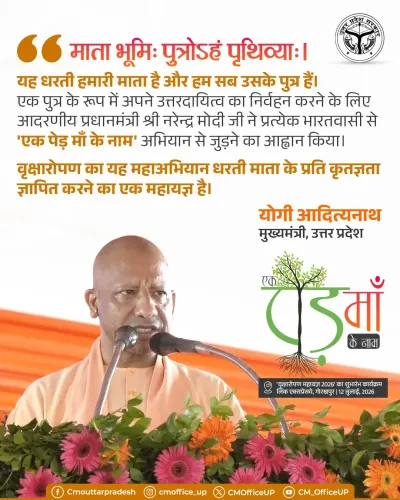
'Ek Ped Maa Ke Naam' (A Tree for Mother) is an Indian government initiative that encourages citizens to plant trees as a tribute to their mothers, aimed at expanding green cover across the country. PM Modi has championed the programme internationally, including during this state visit to Uzbekistan.
What was discussed during PM Modi's bilateral talks with President Mirziyoyev?
The two leaders held delegation-level talks at the Kuksaroy Residence in Tashkent, covering trade, investment, industrial cooperation, interregional ties, and cultural exchanges. Both sides agreed to take India-Uzbekistan relations to a new level.
Who accompanied PM Modi during the Uzbekistan state visit?
The Indian delegation included External Affairs Minister S. Jaishankar, Foreign Secretary Vikram Misri, National Security Advisor Ajit Doval, and Secretary (West) Sibi George, among other senior officials.
What was the significance of the yoga session during PM Modi's Tashkent visit?
PM Modi witnessed a yoga session performed by 52 Uzbek practitioners, six of whom had represented Uzbekistan at the First World Yogasana Championship 2026 in Ahmedabad in June. The session highlighted Yoga's growing popularity in Uzbekistan and reinforced India's cultural diplomacy in Central Asia.