CM Yogi Invokes Vedic Verse for Ek Ped Maa Ke Naam
Synopsis
On World Environment Day 2026, CM Yogi Adityanath's office invoked the Vedic verse 'Mata Bhumih Putro'ham Prithivyah' to promote the national Ek Ped Maa Ke Naam tree-plantation campaign, framing ecological duty as a civilisational and spiritual responsibility rooted in Indian tradition.
Key Takeaways
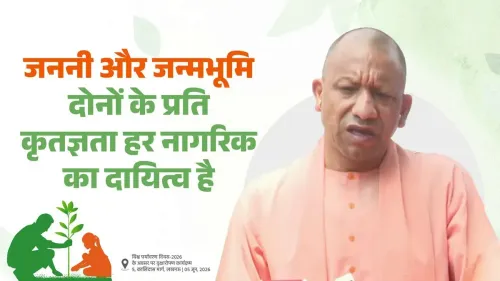
The Chief Minister's Office of Uttar Pradesh posted a World Environment Day message on 5 June 2026 on behalf of CM Yogi Adityanath .
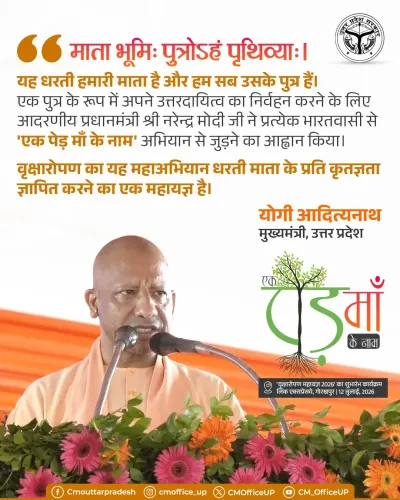
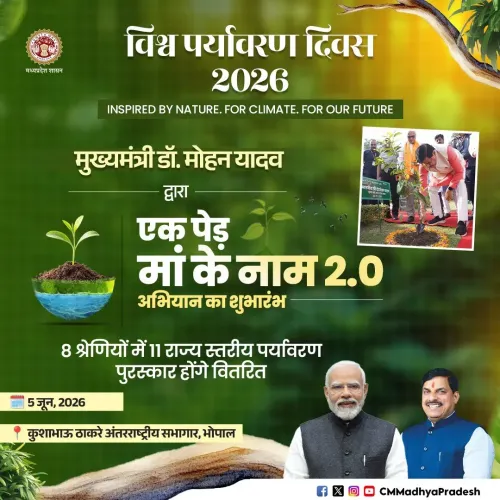
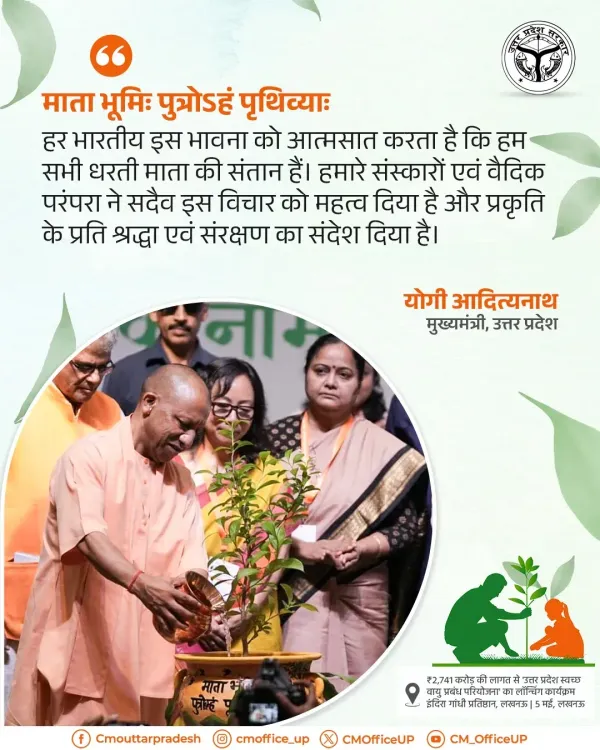
The post opens with the Atharva Veda verse Mata Bhumih Putro'ham Prithivyah — 'The Earth is my mother; I am her son.' The message promotes the national Ek Ped Maa Ke Naam campaign, originally launched by PM Modi on World Environment Day 2024 .
Uttar Pradesh has a consistent pattern of framing environmental action through Vedic and cultural references .
State-level plantation targets and sapling survival rates for the 2026 monsoon season are the key metrics to watch.
The Chief Minister's Office of Uttar Pradesh, on behalf of Chief Minister Yogi Adityanath, invoked a Sanskrit verse from the Atharva Veda on World Environment Day, 5 June 2026, to rally citizens behind the national tree-plantation campaign Ek Ped Maa Ke Naam (One Tree in Mother's Name).
Context
The post opens with the Sanskrit line Mata Bhumih Putro'ham Prithivyah — 'The Earth is my mother; I am her son' — drawn from the Atharva Veda's Bhumi Sukta. The Chief Minister's message states that 'every Indian internalises the feeling that we are all children of Mother Earth' and that 'our traditions and Vedic heritage have always valued this idea, giving the message of reverence and conservation towards nature.' The statement was issued on World Environment Day, observed globally on 5 June each year.
Policy Backdrop
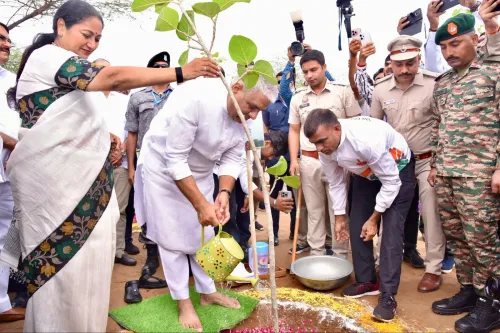
The Ek Ped Maa Ke Naam campaign was formally launched by Prime Minister Narendra Modi on World Environment Day 2024, calling on every Indian to plant a tree as a tribute to their mother. States were directed to organise mass plantation drives under the campaign banner. Uttar Pradesh has consistently framed its environmental messaging through Vedic and cultural references, a pattern visible in earlier state initiatives around river conservation and afforestation targets. Several other states have similarly tied tree-planting drives to the same Sanskrit verse and the national scheme.
The choice of the Bhumi Sukta verse is deliberate: it positions ecological responsibility not as a regulatory obligation but as a civilisational and spiritual duty, broadening the campaign's emotional appeal beyond policy circles to ordinary households.
Stakeholders and Impact
The primary audience is the general citizenry of Uttar Pradesh, India's most populous state, where even a modest per-household participation in plantation drives can translate into millions of saplings. State forest department officials and district administrations are the operational stakeholders tasked with organising drives, distributing saplings, and maintaining survival-rate records. Schools, religious institutions, and gram panchayats have historically served as mobilisation nodes for such campaigns in the state.
By anchoring the campaign in a widely recognised Vedic verse, the messaging seeks to cut across urban-rural and literacy divides, making the act of planting a tree feel culturally resonant rather than government-mandated.
What's Next
Attention will now turn to whether Uttar Pradesh announces specific plantation targets or district-level drives for the 2026 monsoon season, the primary window for tree planting in northern India. The state's performance on sapling survival rates — a metric that has drawn scrutiny in past plantation campaigns nationally — will be a key indicator of whether the cultural messaging translates into durable ecological outcomes. World Environment Day declarations from state governments are typically followed by ground-level drives in the weeks leading up to the monsoon onset in late June and July.
Point of View
CM Yogi Adityanath aligns the BJP's civilisational narrative with a national scheme, reinforcing the party's positioning as the custodian of India's ancient heritage. The approach also insulates the campaign from the criticism that plantation drives are bureaucratic box-ticking exercises, since spiritual framing is harder to dismiss than statistics. Whether this translates into measurable afforestation gains in India's most populous state remains the open question heading into the 2026 monsoon planting season.
NationPress
20 Oct 2026
Frequently Asked Questions
What is the Ek Ped Maa Ke Naam campaign?
Ek Ped Maa Ke Naam, meaning 'One Tree in Mother's Name,' is a national tree-plantation campaign launched by Prime Minister Narendra Modi on World Environment Day in June 2024, urging every Indian to plant a tree as a tribute to their mother.
What does the Sanskrit verse 'Mata Bhumih Putro'ham Prithivyah' mean?
The verse, drawn from the Atharva Veda's Bhumi Sukta, translates as 'The Earth is my mother; I am her son.' It is one of the oldest recorded expressions of ecological reverence in Indian literature.
Why did CM Yogi Adityanath post about environment on 5 June 2026?
5 June is observed globally as World Environment Day, and the Chief Minister's Office used the occasion to promote the Ek Ped Maa Ke Naam plantation campaign through a culturally rooted message.
How is Uttar Pradesh participating in Ek Ped Maa Ke Naam?
Uttar Pradesh has aligned its environmental messaging with the national campaign, with the state government framing tree planting as a Vedic duty. Specific plantation targets and district-level drives for the 2026 monsoon season are expected to follow.
What is the significance of linking Vedic tradition to tree planting in UP?
By connecting the campaign to a widely known Vedic verse, the Uttar Pradesh government broadens the emotional appeal of tree planting beyond regulatory compliance, making it resonate with citizens across urban and rural settings through cultural and spiritual identity.