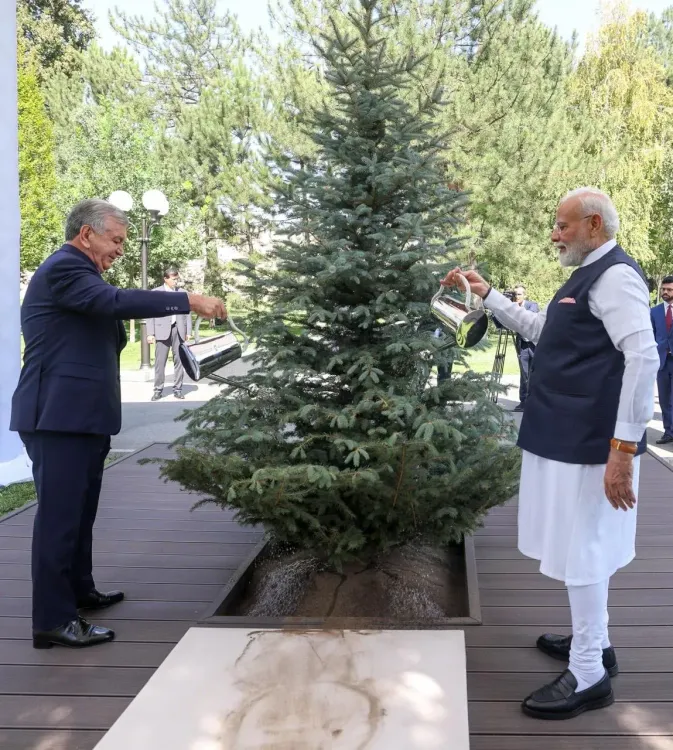
Modi, Mirziyoyev plant tree in Tashkent under 'Ek Ped Maa Ke Naam' initiative
Synopsis
On the sidelines of high-level bilateral talks in Tashkent, PM Modi and President Mirziyoyev planted a tree together — a small act that carried outsized diplomatic symbolism. With India's 'Ek Ped Maa Ke Naam' meeting Uzbekistan's 'Yashil Makon', the gesture signals that India's Central Asia outreach is now weaving environmental and cultural threads alongside trade and security.
Key Takeaways
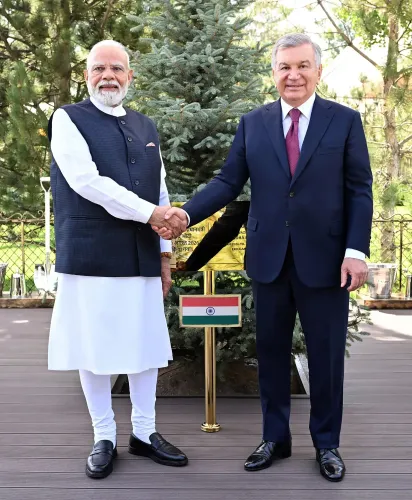
PM Narendra Modi and Uzbekistan President Shavkat Mirziyoyev jointly planted a tree at the Presidential Palace, Tashkent on 30 August 2026 .
The act linked India's 'Ek Ped Maa Ke Naam' initiative with Uzbekistan's 'Yashil Makon' greening programme.
Delegation-level talks at Kuksaroy Residence covered trade, investment, industrial, interregional, and cultural cooperation.
The Indian delegation included EAM S.
Jaishankar , NSA Ajit Doval , and Foreign Secretary Vikram Misri .
Modi witnessed a yoga session by 52 Uzbek practitioners , including 6 who competed at the First World Yogasana Championship 2026 in Ahmedabad.
Modi arrived in Tashkent on 29 August for a two-day state visit.
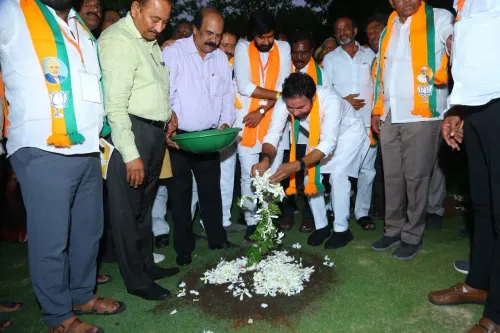
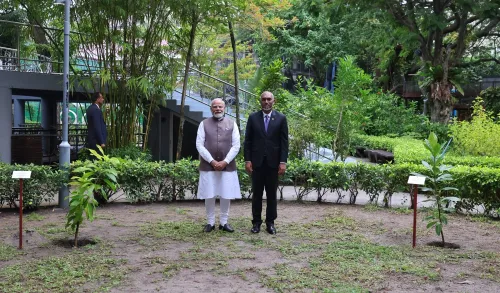
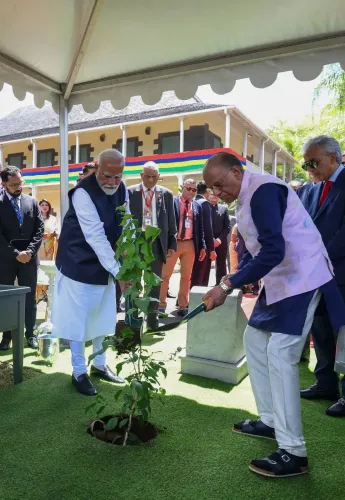
Prime Minister Narendra Modi and Uzbekistan President Shavkat Mirziyoyev jointly planted a tree at the Presidential Palace in Tashkent on Sunday, 30 August, symbolising the two nations' shared environmental commitment under India's 'Ek Ped Maa Ke Naam' initiative and Uzbekistan's 'Yashil Makon' greening programme. The gesture came on the second day of Modi's two-day state visit to the Central Asian nation.
What the Tree-Planting Symbolised
Ministry of External Affairs (MEA) spokesperson Randhir Jaiswal described the joint act as a reflection of the two countries' resolve to nurture a greener and more sustainable future. 'Ek Ped Maa Ke Naam' — meaning 'One Tree in Mother's Name' — is India's nationwide tree-planting drive, while Uzbekistan's 'Yashil Makon' translates to 'Green Space' and is part of President Mirziyoyev's broader urban greening agenda. The convergence of the two programmes at a presidential setting underscored the depth of the bilateral engagement beyond trade and security.
High-Level Talks at Kuksaroy Residence
Earlier on Sunday, Prime Minister Modi held delegation-level talks with President Mirziyoyev at the Kuksaroy Residence — the official presidential venue — covering trade, investment, industrial cooperation, interregional ties, and cultural exchange. Both leaders agreed to elevate Uzbekistan-India relations to a new level, according to the Press Service of the Uzbekistan President.
The Indian delegation included External Affairs Minister S. Jaishankar, Foreign Secretary Vikram Misri, National Security Advisor Ajit Doval, and Secretary (West) Sibi George of the Ministry of External Affairs, among other senior officials.
Yoga Session Adds Cultural Dimension
In a distinctive cultural highlight, Prime Minister Modi witnessed a special yoga session featuring 52 practitioners from Uzbekistan. The participants included six members of the Yoga Federation of Uzbekistan who had represented their country at the First World Yogasana Championship 2026, held in Ahmedabad in June 2026.
Modi shared glimpses of the session on his X account, saying: 'Namaste, you all have showcased excellent Yoga performance today. People of all ages are present here. I express my gratitude to my friend, the President, for connecting Uzbekistan with Yoga. Many congratulations.' The session highlighted Yoga's growing footprint across Central Asia.
State Visit: Key Context
Prime Minister Modi arrived in Tashkent on Saturday, 29 August, for the two-day state visit, and was accorded a ceremonial welcome at the Presidential Palace. President Mirziyoyev personally received Modi at the palace entrance, and both leaders exchanged warm greetings. This visit is part of India's sustained diplomatic outreach to Central Asia, a region where New Delhi has been deepening connectivity, trade, and people-to-people ties. Notably, the visit follows a broader pattern of India-Uzbekistan engagement that has grown steadily since the two nations elevated their ties to a Strategic Partnership.
The outcomes of the talks — including any agreements or memoranda of understanding signed — are expected to be detailed in a joint statement. Both nations are likely to build on the framework established during previous bilateral meetings.
Point of View
But it points to something more deliberate: India is consciously broadening its Central Asia playbook beyond connectivity corridors and trade routes to include soft power and green diplomacy. Linking 'Ek Ped Maa Ke Naam' to Uzbekistan's own greening agenda gives both leaders a domestic narrative — Modi reinforces the initiative's global reach, Mirziyoyev signals alignment with international sustainability norms. The deeper question is whether the trade and investment commitments discussed at Kuksaroy will translate into measurable outcomes; India-Central Asia bilateral trade has historically underperformed its stated ambitions. The yoga session and the tree together suggest New Delhi understands that durable partnerships in the region need cultural roots, not just commercial ones.
NationPress
15 Oct 2026
Frequently Asked Questions
Why did PM Modi and President Mirziyoyev plant a tree together in Tashkent?
The joint tree-planting on 30 August 2026 was a symbolic act linking India's 'Ek Ped Maa Ke Naam' initiative with Uzbekistan's 'Yashil Makon' green programme, reflecting both nations' stated commitment to environmental sustainability. It took place at the Presidential Palace in Tashkent during Modi's two-day state visit.
What is the 'Ek Ped Maa Ke Naam' initiative?
'Ek Ped Maa Ke Naam' — meaning 'One Tree in Mother's Name' — is India's nationwide tree-planting drive. By linking it to Uzbekistan's 'Yashil Makon' programme during the state visit, India extended the initiative's international profile.
What did PM Modi and President Mirziyoyev discuss during bilateral talks?
The two leaders held delegation-level talks at the Kuksaroy Residence, covering trade, investment, industrial cooperation, interregional ties, and cultural exchange. They agreed to take India-Uzbekistan relations to a new level, according to the Uzbekistan President's Press Service.
Who accompanied PM Modi during his Tashkent visit?
The Indian delegation included External Affairs Minister S. Jaishankar, Foreign Secretary Vikram Misri, National Security Advisor Ajit Doval, and Secretary (West) Sibi George of the Ministry of External Affairs, among other senior officials.
What was the significance of the yoga session during Modi's Uzbekistan visit?
PM Modi witnessed a yoga session featuring 52 Uzbek practitioners, including six members of the Yoga Federation of Uzbekistan who had competed at the First World Yogasana Championship 2026 in Ahmedabad in June. The session highlighted Yoga's growing popularity in Central Asia and added a cultural dimension to the state visit.