Chang'e-7 moon mission delayed as Long March 5 rocket returns to assembly building
Synopsis
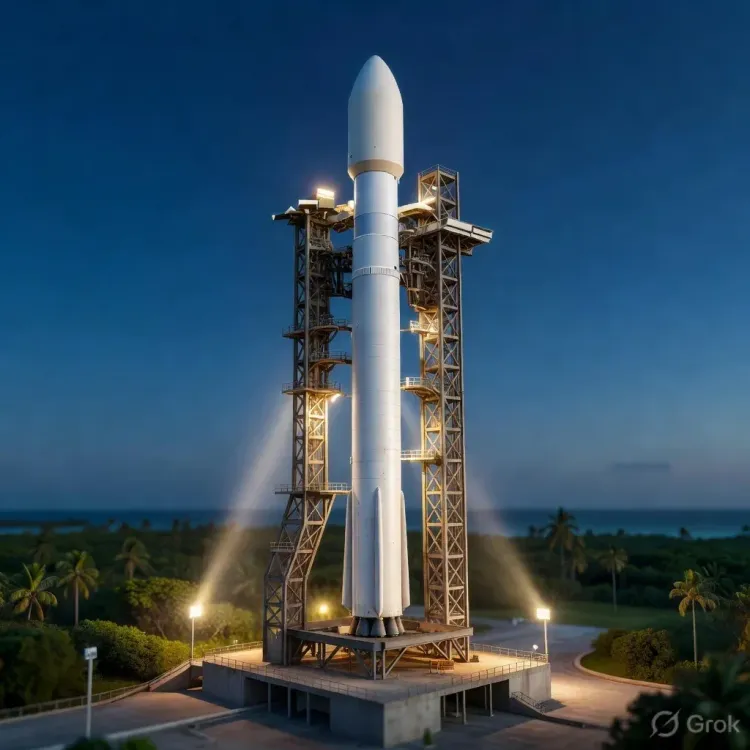
China's Chang'e-7 moon mission — tasked with drilling for ice at the lunar south pole — was postponed at Wenchang after safety checks on the Long March 5 Y14 rocket, exposing the high-stakes pressure on a programme racing the US to establish a permanent lunar presence.
Key Takeaways
Chang'e-7 , China's mission to drill for water ice near the moon's south pole , was postponed from its scheduled Monday morning, August 2026 launch at Wenchang Space Launch Site .
The Long March 5 Y14 rocket was rolled back to the vertical assembly building at approximately 4:00 pm local time following mandatory safety and reliability checks.
Wenchang Space Launch Site has been operational since 2016 and is a cornerstone of China's deep-space launch infrastructure.
The broader Wenchang International Aerospace City project integrates commercial, educational, and industrial space-sector entities including Chang Guang Satellite , Jovo Energy , and a Tsinghua University High School campus.
Confirming lunar south pole ice deposits is central to both China's and NASA's long-term crewed lunar base strategies.
A revised launch window for Chang'e-7 has not yet been officially announced.
China's Chang'e-7 lunar mission, designed to drill for ice near the moon's south pole, suffered a launch postponement at Wenchang Space Launch Site on Hainan island after safety and reliability checks flagged concerns with the Long March 5 Y14 carrier rocket. The setback is a temporary hiccup for a programme that has transformed a once-quiet coastal city into one of the world's most active rocket corridors.
The launch delay and what happened on the pad
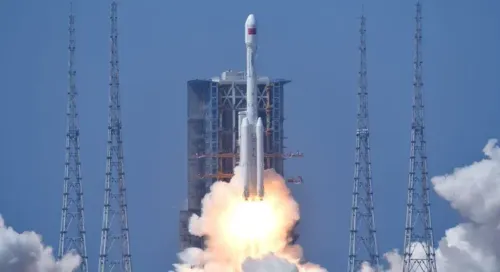
The Long March 5 Y14 rocket had been scheduled to lift off on a Monday morning in late August 2026, carrying the Chang'e-7 spacecraft toward the lunar south pole, where the probe is tasked with drilling for water ice — a resource considered critical for future crewed lunar bases. Following mandatory safety and reliability checks, the launch was postponed without a revised date being announced immediately.
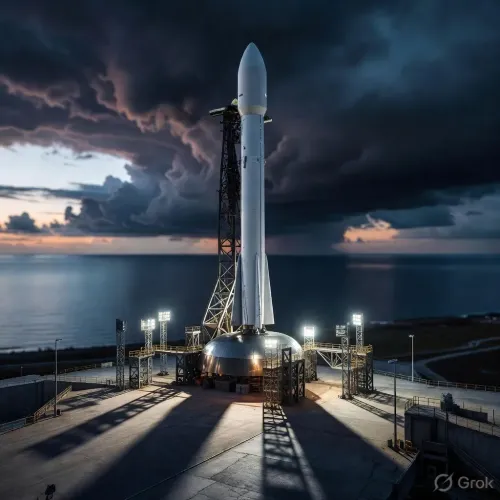
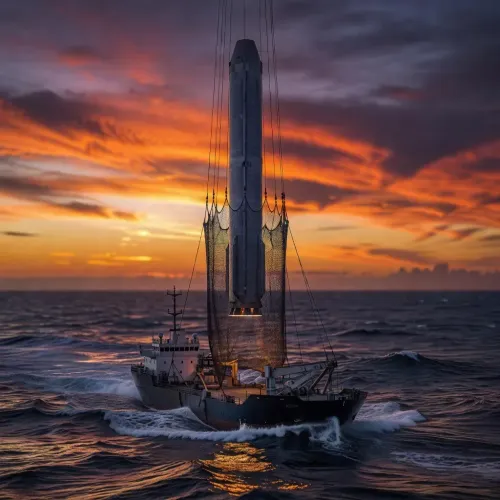
At approximately 4:00 pm local time on the same day, the rocket was observed making a slow, deliberate return from the launch pad to the vertical assembly building — a standard rollback procedure used when pre-launch anomalies require further inspection or component replacement.
Why it matters
The Chang'e-7 mission is among the most scientifically ambitious in China's deep-space programme. Confirming the presence and accessibility of water ice at the lunar south pole would validate a core assumption underpinning both China's and NASA's long-term lunar colonisation strategies. A delay, while frustrating, does not alter the mission's strategic importance.
Industry analysts note that launch postponements for complex deep-space missions are not unusual globally — NASA's Artemis I programme experienced multiple scrubs before its successful November 2022 launch. The critical factor is whether the underlying technical issue can be resolved without requiring a full rocket replacement.
Wenchang's rise as a space city
Wenchang Space Launch Site conducted its first launch in 2016 and has since grown into one of China's premier orbital facilities, benefiting from its low-latitude coastal position that provides a fuel efficiency advantage for geostationary and deep-space missions. The broader Wenchang International Aerospace City development — anchored by institutions including a Tsinghua University High School campus and aerospace-adjacent enterprises such as Jovo Energy and Chang Guang Satellite — reflects Beijing's ambition to build an integrated space-industry ecosystem on Hainan.
The Hainan Commercial Space Launch Site, a separate facility under construction nearby, is designed to accommodate the surge in private launch demand, signalling that Wenchang is being positioned as China's answer to Cape Canaveral. The Hainan Free Trade Port framework further accelerates foreign investment and talent inflows into the zone.
The competitive backdrop
China and the United States are in an open race to the lunar south pole, with NASA's Artemis programme targeting a crewed landing and China aiming for a robotic precursor mission ahead of a crewed touchdown before 2030. Chang'e-7 is a pivotal data-gathering step: its findings on subsurface ice will directly inform site selection for a future International Lunar Research Station that China is co-developing with Russia and partner nations.
What's next
Engineers at Wenchang are expected to conduct a thorough review of the Long March 5 Y14 systems inside the vertical assembly building before any new launch window is confirmed. Given the mission's complexity and the narrow orbital windows available for lunar south pole trajectories, a revised launch date is likely to be announced within weeks. The global space community — and the residents of Wenchang, whose city has staked its identity on the stars — will be watching closely.
Point of View
And a rushed launch risks a billion-dollar payload. What mainstream coverage often misses is the parallel infrastructure story: Wenchang is being deliberately engineered as a dual-use launch corridor, with the commercial Hainan site absorbing private-sector traffic while the state facility handles flagship missions, mirroring the SpaceX-NASA division of labour at Cape Canaveral. The deeper geopolitical read is that China's lunar timeline is now tight enough that any multi-month delay to Chang'e-7 compresses the data-gathering window before its planned crewed landing before 2030 — increasing pressure on every subsequent mission in the chain. Investors in the Hainan Free Trade Port aerospace cluster and international partners in the International Lunar Research Station programme are the stakeholders most exposed to schedule slippage.
NationPress
25 Aug 2026
Frequently Asked Questions
Why was the Chang'e-7 moon mission launch delayed?
The Chang'e-7 launch was postponed after safety and reliability checks on the Long March 5 Y14 rocket raised concerns, prompting engineers to roll the rocket back to the vertical assembly building for further inspection. No specific technical fault has been publicly identified, and a revised launch date has not yet been announced.
What is the Chang'e-7 mission designed to do?
Chang'e-7 is a Chinese robotic lunar probe designed to drill for water ice near the moon's south pole. Confirming accessible ice deposits is a key scientific and strategic objective, as water ice could be converted into fuel and drinking water for future crewed lunar bases.
Where is Wenchang Space Launch Site located?
Wenchang Space Launch Site is located on the northeastern coast of Hainan island, China. It conducted its first launch in 2016 and has become one of China's primary facilities for heavy-lift and deep-space missions, benefiting from its low-latitude coastal geography.
How does the Chang'e-7 delay affect China's lunar programme timeline?
The delay adds pressure to China's lunar programme, which aims to land astronauts on the moon before 2030. Chang'e-7's ice-drilling data is needed to select a site for the planned International Lunar Research Station, meaning a prolonged postponement could cascade through subsequent mission schedules.
What is the Wenchang International Aerospace City?
Wenchang International Aerospace City is a state-backed development project on Hainan island that clusters space-industry enterprises, research institutions, and educational facilities — including a Tsinghua University High School campus and companies such as Chang Guang Satellite and Jovo Energy — around the existing launch infrastructure. It operates within the broader Hainan Free Trade Port framework designed to attract foreign investment and talent.