China postpones Chang'e-7 lunar south pole ice-drilling mission
Synopsis
China's Chang'e-7 — a four-component spacecraft built to drill for water ice at the lunar south pole — has been postponed beyond 2026 after failing to meet launch conditions, with Tropical Storm Narra and a razor-thin launch window closing the door on any near-term rescheduling.
Key Takeaways
China 's Chang'e-7 mission has been postponed and will not launch within its scheduled window in 2026 , the China Manned Space Agency confirmed on 23 August 2026 .
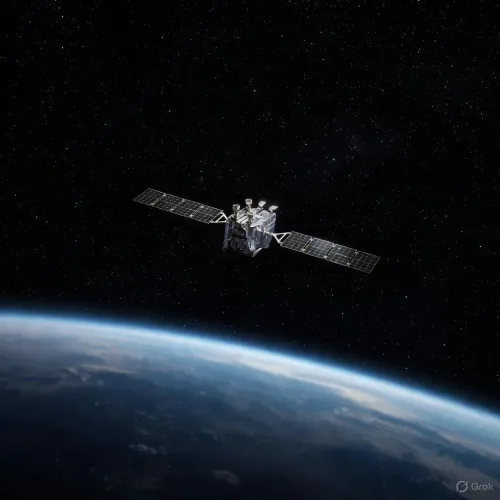
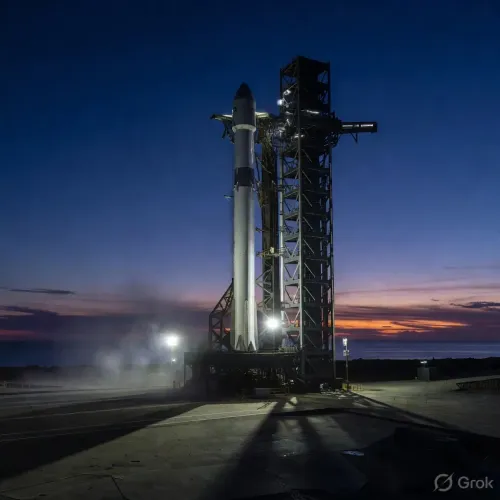
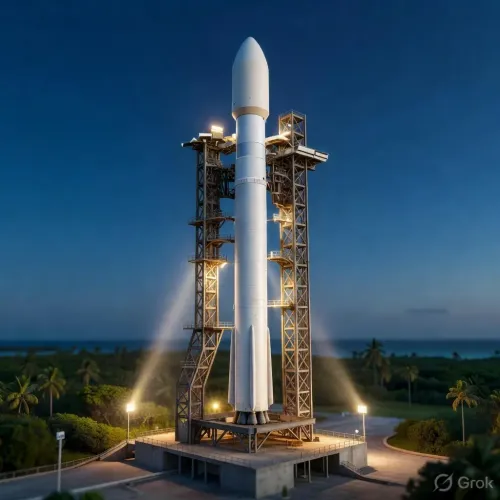
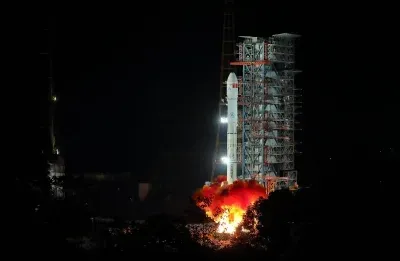
The spacecraft — comprising an orbiter, lander, rover, and hopper — was set to lift off on a Long March 5 rocket from Wenchang , Hainan , as early as 24 August 2026 .
The China Manned Space Agency cited a comprehensive safety and reliability assessment; the National Astronomical Research Institute of Thailand (Narit) also pointed to Tropical Storm Narra in the South China Sea .
Narit , which built a scientific instrument for the mission, warned that even a few days' delay would push the launch to the next available window — at least a month away.
The postponement is expected to have knock-on effects for China 's Chang'e-8 mission and the International Lunar Research Station (ILRS) programme.
China's Chang'e-7 lunar mission — designed to drill for water ice near the moon's south pole — has been postponed, the China Manned Space Agency announced on Sunday, 23 August 2026, citing safety and reliability concerns after a comprehensive assessment.
Why it matters
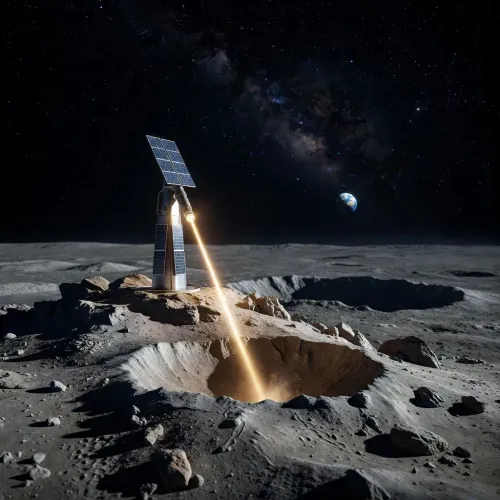
The Chang'e-7 spacecraft carries an orbiter, a lander, a rover, and a hopper, making it one of the most complex robotic lunar missions ever attempted. Its primary objective — confirming and sampling water ice deposits at the lunar south pole — is considered a critical precursor to future crewed lunar bases and long-duration deep-space exploration.
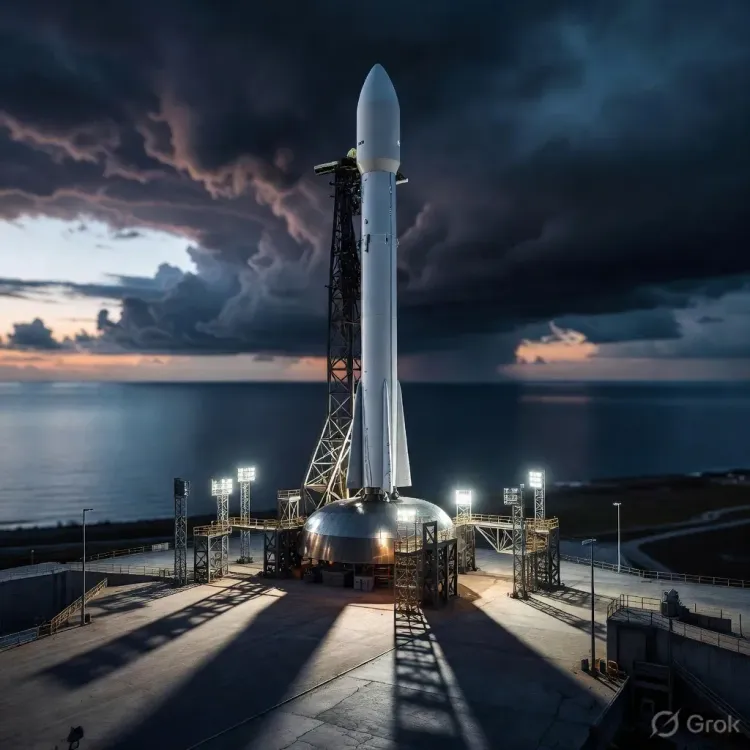
The mission had been scheduled to lift off aboard a Long March 5 rocket from the Wenchang Space Launch Centre in Hainan province, southern China, as early as Monday, 24 August 2026.
The announcement
The China Manned Space Agency stated on Sunday evening that the mission 'does not meet the launch conditions and cannot be carried out within the scheduled launch window this year,' according to state news agency Xinhua. The agency said the postponement follows a comprehensive assessment conducted in adherence to principles of safety and reliability.
Earlier the same day, the National Astronomical Research Institute of Thailand (Narit) — which developed a scientific instrument aboard the spacecraft — had already flagged the delay, attributing it to the development of Tropical Storm Narra in the South China Sea.
The launch window constraint
Narit explained that the lunar south pole target landing site creates a highly specific launch window, requiring precise solar alignment over the target lunar crater. 'Due to the target landing site on the lunar south pole, this makes for a very particular launch window in which the sun lined up just right for the lunar crater,' the institute said.
The institute added that 'a delay by a few days would mean postponing to the next launch window in a month at the earliest,' effectively ruling out any near-term rescheduling for 2026.
Competitive backdrop
The postponement comes amid intensifying competition over lunar south pole access. NASA's Artemis programme and several commercial and international partners have similarly identified the region's ice deposits as strategically vital. India's Chandrayaan-3 mission in 2023 was the first to successfully soft-land near the south pole, raising the geopolitical stakes around lunar resource claims.
What's next
With the launch window now closed for 2026, the earliest opportunity for Chang'e-7 to depart is expected to be no sooner than late 2027, pending the next favourable alignment. The delay will have downstream implications for China's broader lunar exploration roadmap, including the planned Chang'e-8 mission and the proposed International Lunar Research Station (ILRS) project.
Point of View
Where launch windows are measured in hours and a tropical storm on Earth can cascade into a year-long delay. What mainstream coverage underplays is the geopolitical cost: every month China's programme slips is a month NASA, ISRO, and commercial actors gain to consolidate their own south pole strategies. The involvement of Thailand's Narit also signals how Beijing is quietly building a coalition of scientific partners for the ILRS — partners who now face their own programme disruptions. Investors and policymakers tracking the lunar resource race should watch whether the delay forces a renegotiation of Chang'e-8 timelines, which would in turn affect the credibility of China's broader 2030s crewed lunar landing schedule.
NationPress
8 Oct 2026
Frequently Asked Questions
Why has China's Chang'e-7 mission been delayed?
The Chang'e-7 mission was postponed because it 'does not meet the launch conditions,' according to the China Manned Space Agency . The agency cited a comprehensive safety and reliability assessment, while Thailand's Narit institute also attributed the delay to Tropical Storm Narra developing in the South China Sea near the Wenchang launch site.
When will Chang'e-7 launch now?
The mission will not launch in 2026 . The National Astronomical Research Institute of Thailand noted that even a few days' delay would push the launch to the next available window — at least a month away — making an early 2027 attempt the earliest realistic prospect.
What is the Chang'e-7 mission designed to do?
Chang'e-7 is designed to search for and drill into water ice deposits near the moon's south pole . The spacecraft carries four components — an orbiter, a lander, a rover, and a hopper — and its findings are intended to inform the design of future crewed lunar bases.
Why is the lunar south pole launch window so narrow?
The lunar south pole target site requires the sun to be aligned precisely over the target crater at the moment of landing, creating an extremely tight launch window. According to Narit , missing the window by even a few days means waiting at least another month for the next viable alignment.
Which countries are competing to reach the lunar south pole?
China , the United States (via NASA's Artemis programme), and India (whose Chandrayaan-3 became the first spacecraft to soft-land near the south pole in 2023 ) are the primary competitors. The region is strategically vital because its ice deposits could supply water, oxygen, and hydrogen fuel for long-duration space missions.